
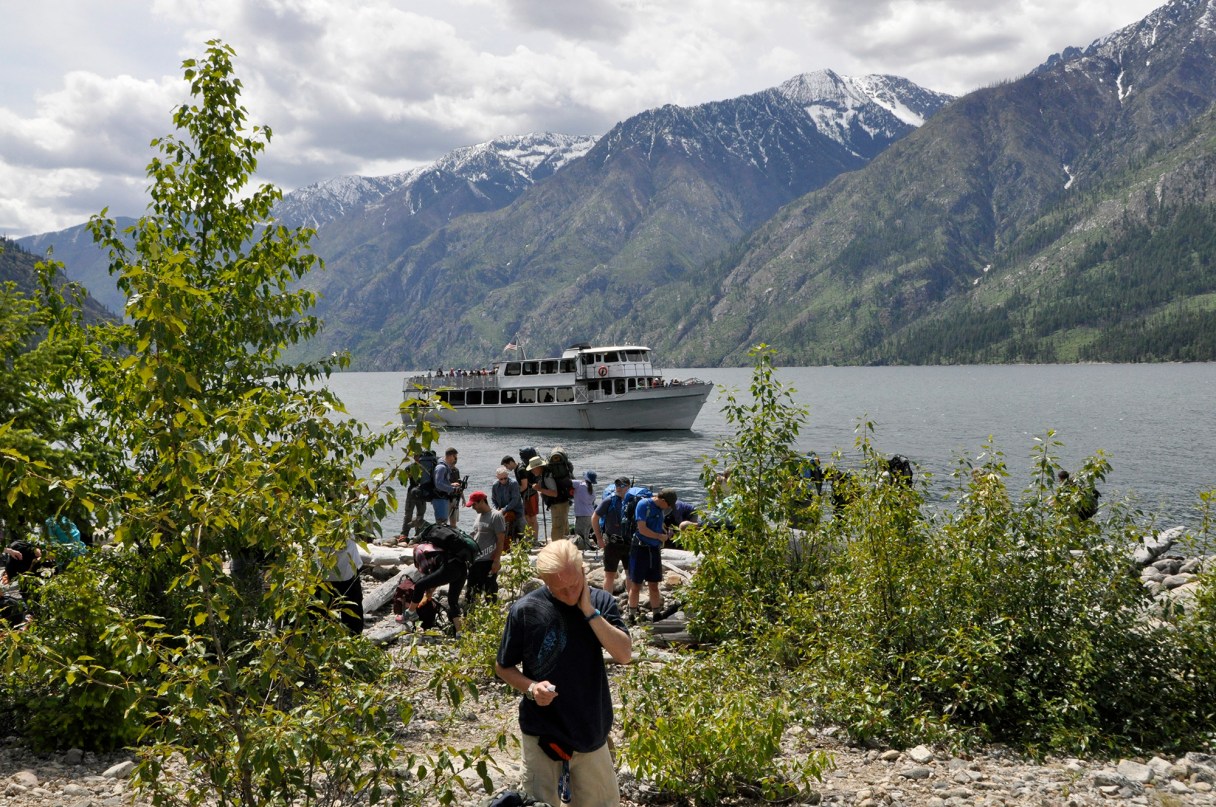
SPOKANE, Wash. (AP) – Toxic mine pollution is no longer flowing into Washington state’s picturesque Lake Chelan for the first time in nearly 60 years because of a $500 million cleanup to contain contamination from the a mine, officials said this week.
The payoff of the mine cleanup means that clean water now flows into a creek that feeds the lake, a prime recreation destination, said Kari Grover Wier, district ranger for the Wenatchee National Forest, where the lake is located.
“This is an important milestone and a significant win for aquatic species, wildlife species, and humans that depend on water from Railroad Creek and Lake Chelan,” Wier said Monday.
The Holden Mine operated from 1938 to 1957, extracting copper, zinc, gold and silver. It was abandoned in 1957, but continued to contaminate the environment with toxic metals including aluminum, cadmium, copper, iron and zinc.
The metals also created a hazardous, hard orange coating on the creek’s streambed. Unstable waste rock and tailings piles from about 10 million tons of mined ore further compounded the problem, the U.S. Forest Service said.