
Friday, November 13, 2026Nov 13

Netanyahu: Deal must ‘significantly’ curb Iran nuke program

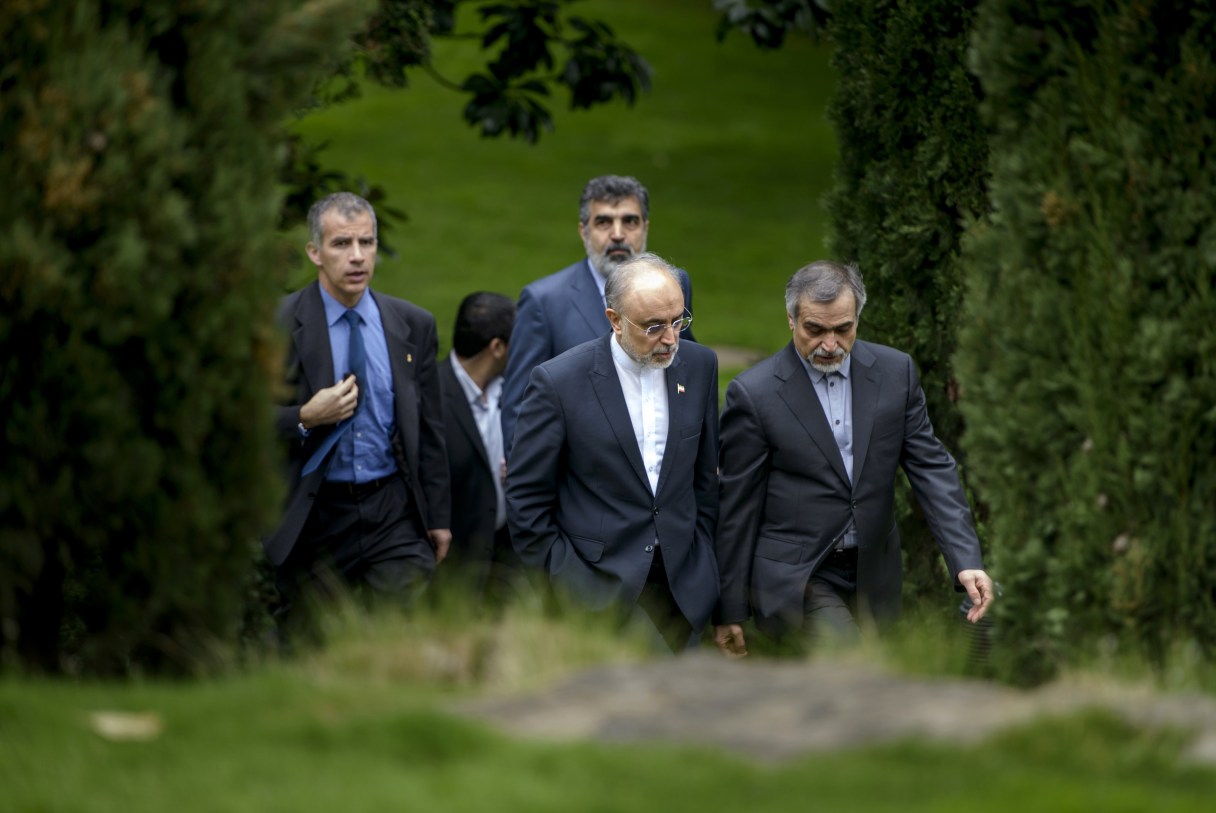
The Head of Iranian Atomic Energy Organization Ali Akbar Salehi, 2nd right, talks with Hossein Fereydoon, special assistant to the Iranian president, while walking through a garden at the Beau Rivage Palace Hotel during an extended round of talks on Iran's nuclear programme, in Lausanne, Switzerland, Thursday April 2, 2015. Iran's foreign minister says his country and six others have made "significant progress" at marathon all-night nuclear talk sessions. But Mohammad Javad Zarif said Thursday that agreement still remains to be written, adding there is not yet a "final result." (AP Photo/Brendan Smialowski, Pool)
The Head of Iranian Atomic Energy Organization Ali Akbar Salehi, 2nd right, talks with Hossein Fereydoon, special assistant to the Iranian president, while walking through a garden at the Beau Rivage Palace Hotel during an extended round of talks on Iran's nuclear programme, in Lausanne, Switzerland, Thursday April 2, 2015. Iran's foreign minister says his country and six others have made "significant progress" at marathon all-night nuclear talk sessions. But Mohammad Javad Zarif said Thursday that agreement still remains to be written, adding there is not yet a "final result." (AP Photo/Brendan Smialowski, Pool) The Head of Iranian Atomic Energy Organization Ali Akbar Salehi, 2nd right, talks with Hossein Fereydoon, special assistant to the Iranian president, while walking through a garden at the Beau Rivage Palace Hotel during an extended round of talks on Iran's nuclear programme, in Lausanne, Switzerland, Thursday April 2, 2015. Iran's foreign minister says his country and six others have made "significant progress" at marathon all-night nuclear talk sessions. But Mohammad Javad Zarif said Thursday that agreement still remains to be written, adding there is not yet a "final result." (AP Photo/Brendan Smialowski, Pool)

JERUSALEM (AP) – Israeli leaders on Thursday voiced concerns about the announced deal between Iran and world powers, demanding that it “significantly” roll back the Islamic Republic’s nuclear program and vowing to fight the agreement before it is finalized in the coming months.

Prime Minister Benjamin Netanyahu has been a leading critic of the nuclear talks, which aim to curb Iran’s suspect nuclear program. After days of negotiations, U.S.-led world powers and Iran held a press conference in Lausanne, Switzerland, announcing the outlines of the deal reached.

Netanyahu has said he believes the deal, which must be finalized in the coming months, will leave too much of Iran’s nuclear infrastructure intact. Israel, like many other nations, believes Iran is trying to develop a nuclear weapon.

“Any deal must significantly roll back Iran’s nuclear capabilities and stop its terrorism and aggression,” Netanyahu said on Twitter, minutes before the announcement from Lausanne.

Netanyahu has said he believes that the deal will leave Iran just months away from the point where it could make a nuclear bomb. He has also pointed to Iran’s support for Islamic militants across the region and its development of long-range missiles as cause for concern.