
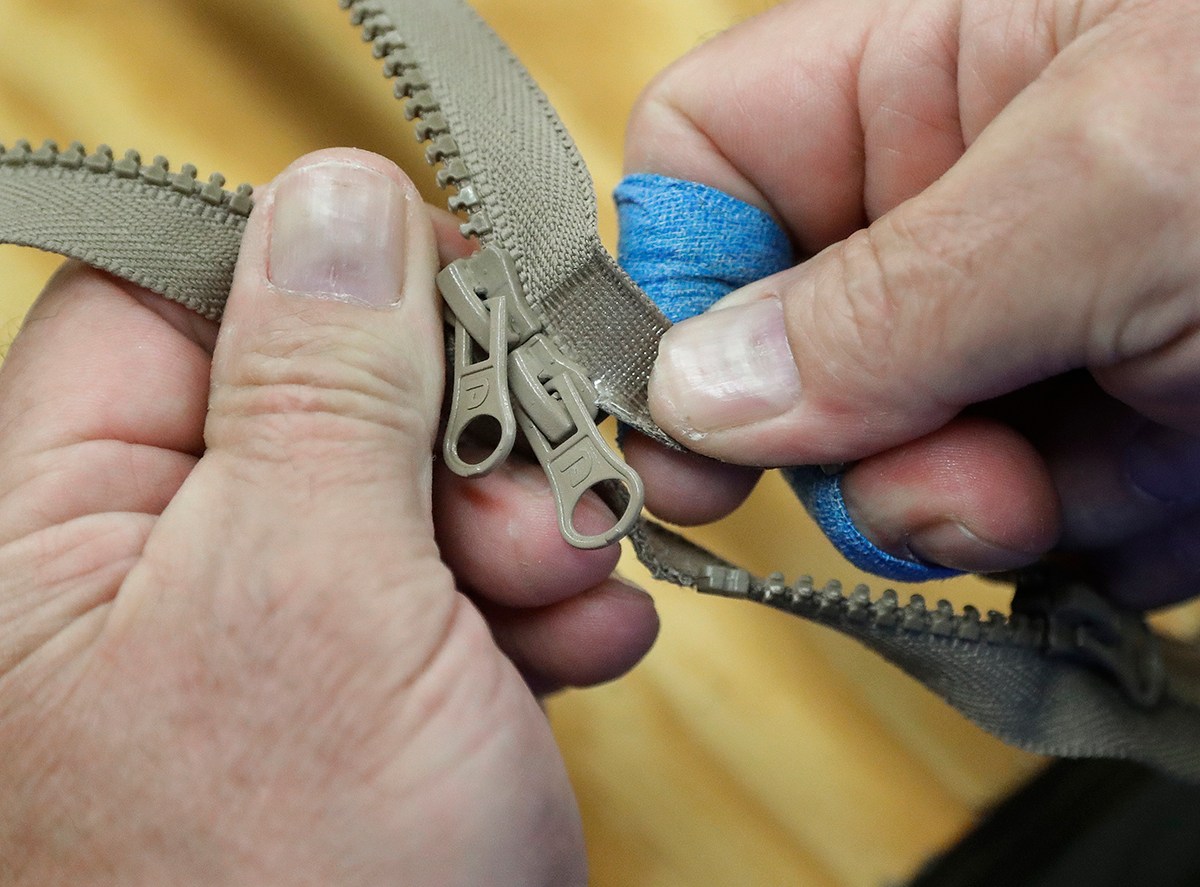
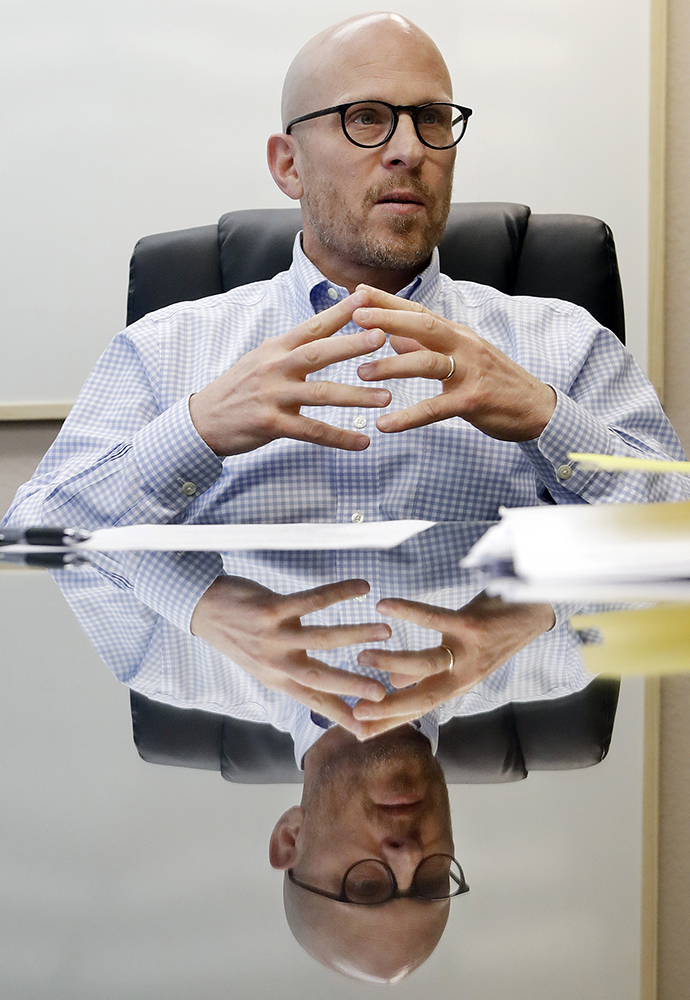
 In this May 17, 2018, photo, Robert Kwasnik, president of Dunlap Industries, talks about the problems his company faces in Dunlap, Tenn. The small zipper-making company is fighting to keep its pared-down staff occupied after it lost federal contracts to provide zippers for military uniforms. (AP Photo/Mark Humphrey)
DUNLAP, Tenn. (AP) – Robert Kwasnik has a zipper problem – and it has come to the attention of the highest levels of the U.S. government.
Kwasnik is president of Dunlap Industries, a small manufacturing company in Appalachia that for more than 15 years made zippers for U.S. military uniforms – until last year, when a competitor complained that not all of the parts the company was using were from the U.S.
The irony? It was a Japanese company that filed the complaint.
A federal law known as the Berry Amendment requires the government to give preference to products made and sourced in America. But in today’s global economy, Kwasnik says it is next to impossible to have every component of a product sourced in the U.S. As a result, he says, the law – which was introduced around the time of World War II to protect U.S. defense businesses – is now benefiting Japan-based YKK Corp., the world’s largest manufacturer of zippers.
The company’s YKK North America division manufactures zippers in Georgia – and now has some of the contracts Dunlap lost. Division president Jim Reed said in a statement that his company filed the complaint against Dunlap because the price of products offered by “certain competitors” was too low for them to have been completely manufactured in the U.S.