
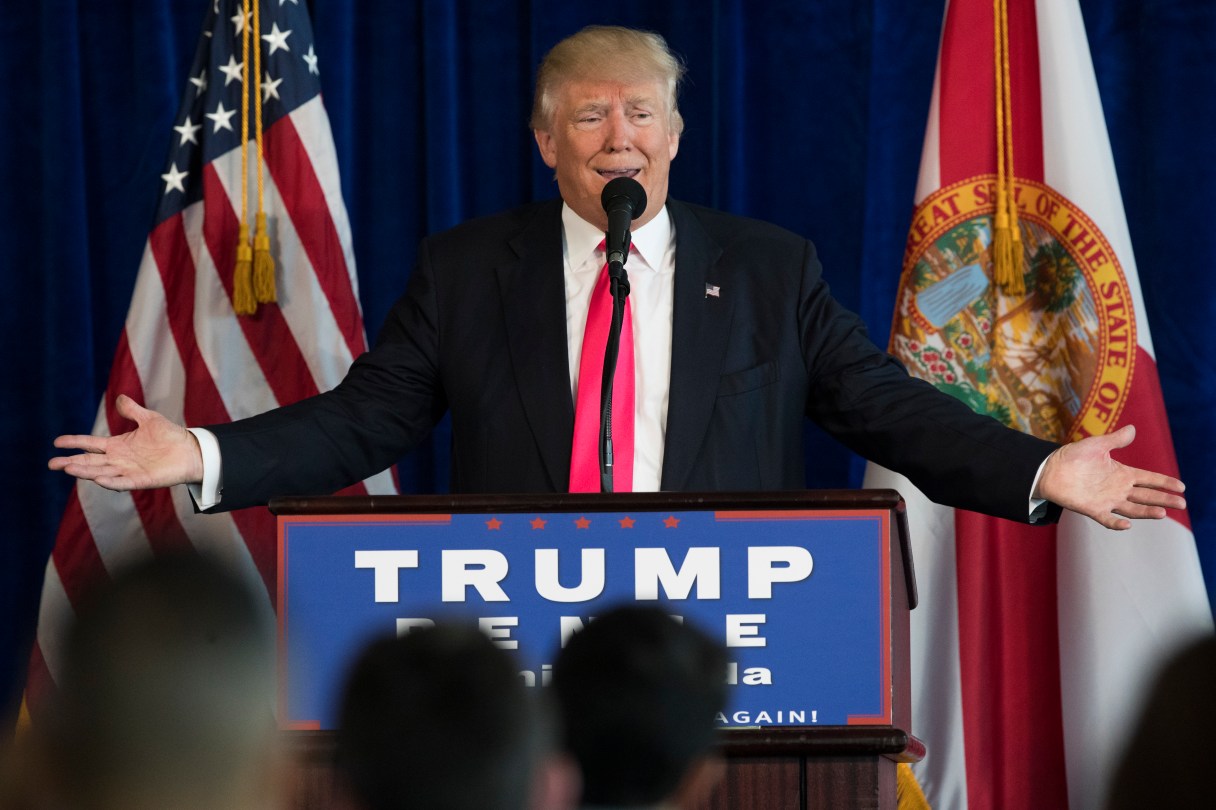
MOSCOW (AP) – Bias is often in the eye of the beholder, and President Barack Obama’s claim that Russia’s news media favor Donald Trump isn’t an open-and-shut case. But informal surveys of Russia’s main outlets suggest that Trump gets plenty of praise – especially for his “anti-establishment” stance – and that favorable assessments of Hillary Clinton are comparatively rare.
Trump’s unorthodox campaign often draws a kind of backhanded praise. Dmitry Kiselyov, whose vehement and provocative views have made him Russian television’s most prominent commentator, chose colorful phrasing to describe him in one broadcast: “He’s a dangerous person … He is anti-establishment … In the Republican nest, Trump is like a chicken among cuckoos.”
In June, he noted that Trump had become a tough competitor against Clinton and then called forth a dark image: “She’s tried to call Trump insane and incompetent. To some extent, it resembles the Soviet punitive psychiatry experience, where those who disagreed with the system were declared insane.”
Kiselyov also heads the Rossiya Segodnya state media complex, whose outlets include two of the media that are most prominent outside Russia: the RT satellite TV channel and the Sputnik multi-lingual news website.
These outlets, aimed at foreign audiences, are hugely important to the Kremlin’s aim of propagating its views and countering what it claims to be Western news media’s determination to portray Russia unfavorably. How much influence top officials exert on the editorial policy is unclear, but the outlets are widely assumed to reflect the thinking at the top.