
NEW YORK (AP) – As COVID-19 ravaged the world last year, CEOs’ big pay packages seemed to be under as much threat as everything else.
Fortunately for those CEOs, many had boards of directors willing to see the pandemic as an extraordinary event beyond their control. Across the country, boards made changes to the intricate formulas that determine their CEOs’ pay – and other moves – that helped make up for losses created by the crisis.
As a result, pay packages rose yet again last year for the CEOs of the biggest companies, even though the pandemic sent the economy to its worst quarter on record and slashed corporate profits around the world. The median pay package for a CEO at an S&P 500 company hit $12.7 million in 2020, according to data analyzed by Equilar for The Associated Press. That means half the CEOs in the survey made more, and half made less. It’s 5% more than the median pay for that same group of CEOs in 2019 and an acceleration from the 4.1% climb in last year’s survey.
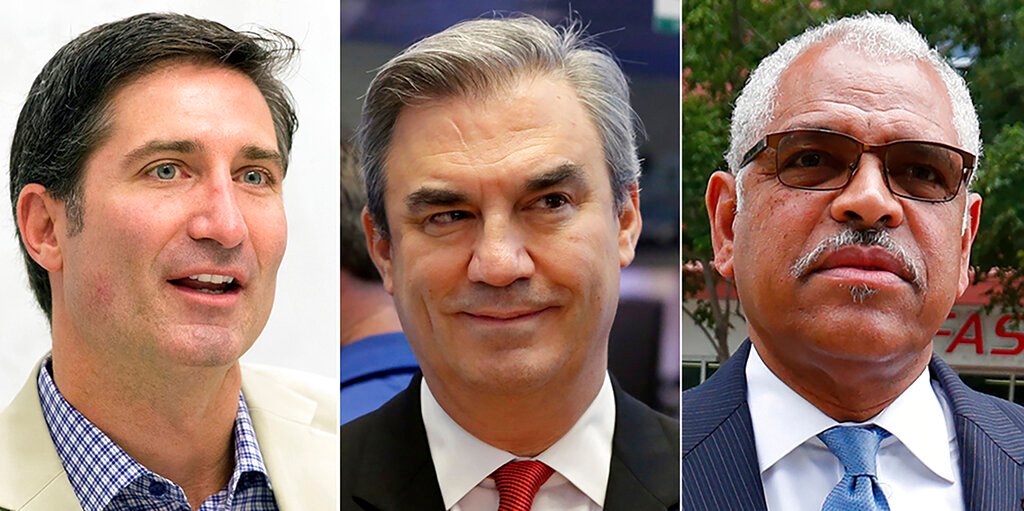
At Advance Auto Parts, CEO Tom Greco’s pay for 2020 was in line to take a hit because of a mountain of pandemic-related costs. Extended sick-pay benefits and expenses for hand sanitizer and other safety equipment totaling $60 million dragged on two key measurements that help set his performance pay. But because the board’s compensation committee saw these costs as extraordinary and unanticipated, it excluded them from its calculations. That helped Greco’s total compensation rise 4.7% last year to $8.1 million.
At Carnival, the cruise operator gave stock grants to executives, in part to encourage its leaders to stick with the company as the pandemic forced it to halt sailings and furlough workers. For CEO Arnold Donald’s 2020 compensation, those grants were valued at $5.2 million, though their full value will ultimately depend on how the company performs on carbon reductions and other measures in coming years. That helped Donald receive total compensation valued at $13.3 million for the year, up 19% from a year earlier, even as Carnival swung to a $10.2 billion loss for the fiscal year.