
Have you heard the latest news in the hearing aid industry? On target to enter the market in 2020, over-the-counter (OTC) will be a new category of hearing aids. Keep in mind that as with any new device that enters the medical arena, consumers need to be educated in the way they treat hearing loss and in how they choose hearing technology. Read on for background information on how hearing devices have been categorized historically, the changes that are forthcoming and what you should know to cut through the OTC hype and make the best, most informed decision.
First, let’s differentiate between the current two categories of hearing devices-hearing aids and personal sound amplification products, or PSAPS.
Hearing aids
For years, programmable hearing aids have been classified by the U.S. Food and Drug Administration (FDA) as Class I or Class II medical devices. The difference between Class I and Class II hearing aids is that Class II hearing aids are those that integrate wireless technology, including ear-to-ear communication and Bluetooth. In order to be fit with one of these Class I or Class II hearing aids, a patient would see a licensed hearing care professional, namely an audiologist or a hearing aid dispenser. The hearing care professional conducts a diagnostic hearing test to determine the level of hearing loss, takes measurements and/or custom earmolds, and fits the person with hearing aids based on a thorough review of the person’s unique hearing loss, common listening environments, and other needs. During the fitting process, live measurements are made while the hearing aids are in the patient’s ear with the hearing care professional using the hearing aid manufacturer’s computer software to minimize feedback and adjust for optimal sound quality. Additionally, real-ear measurements can be used to verify targets are met to insure the person is receiving proper amplification.
Personal Sound Amplification Products, or PSAPS
Available for many years and often confused with hearing aids are PSAPs, or personal sound amplification products, that are available in retail stores and through purchase online, by mail order or over the phone. PSAPs are not hearing aids. Instead, they amplify all sounds without discernment and, therefore, are not intended for those with hearing loss. Devices for those with hearing loss need to be tailored and programmed to an individual’s specific needs. Because of the low cost of PSAPs (anywhere from $10 to $500), many have sought to treat their hearing loss with these devices, however. Historically, the FDA has differentiated between hearing aids and PSAPs as a way of protecting consumers from the potential damage that PSAPs can do to a person’s hearing since the devices can be purchased without a prescription and without a hearing evaluation or ongoing care from a trained hearing care professional.
Enter OTC devices
In 2017, the FDA Reauthorization Act was signed into law. This sweeping act included revisions and extensions for things like user-fee programs for drugs, generic drugs, and other similar biological products. It also included revisions for medical devices, thus opening the door for a third category of hearing devices-an over-the-counter category.
As new FDA guidelines outline, the OTC class of hearing products are for people with “self-perceived mild-to-moderate hearing loss.” OTC devices will be available without a prescription or the involvement of a licensed professional for fitting and programming the hearing aids.
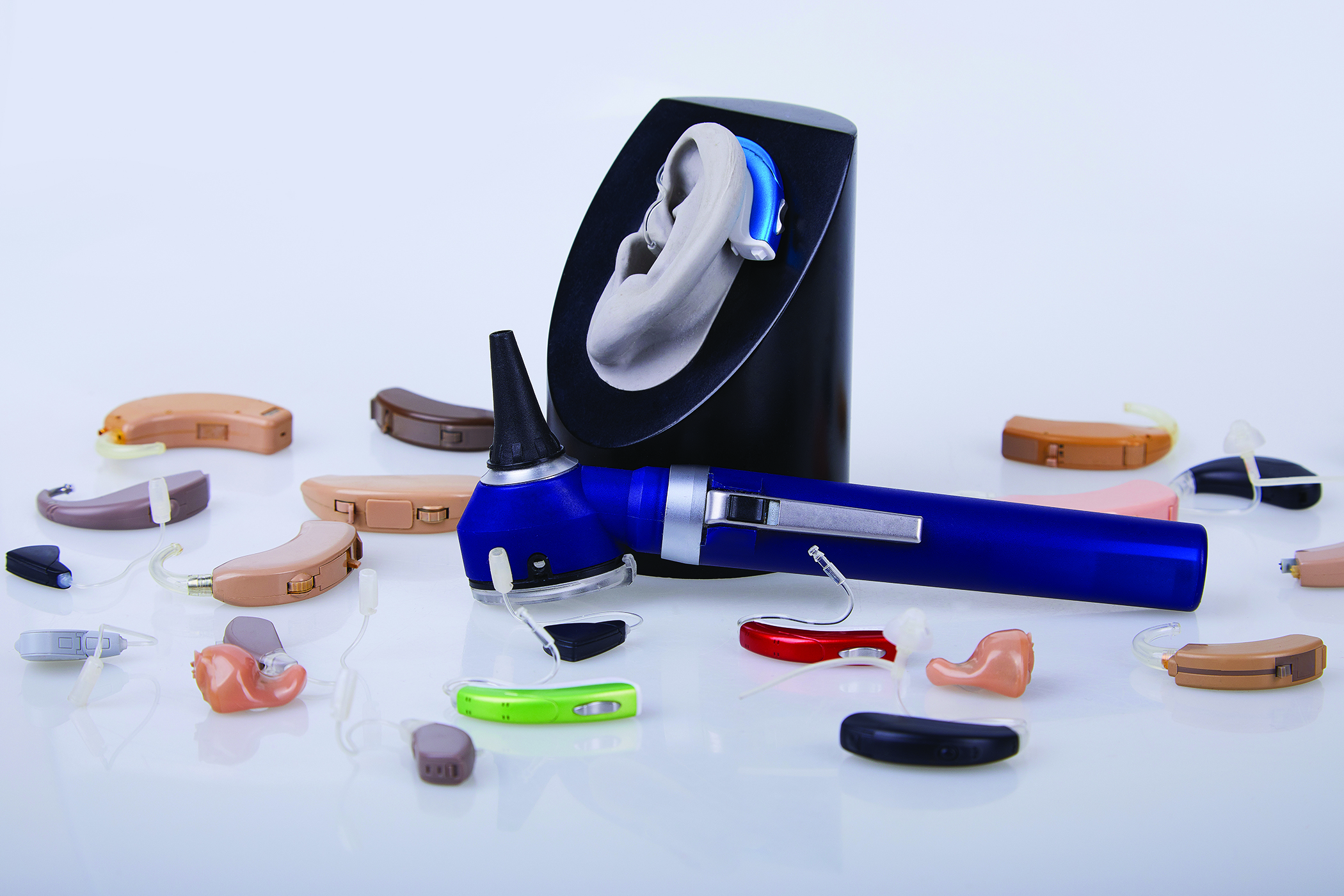
What to consider when addressing hearing loss and choosing hearing aids
The role of your audiologists
Traditional hearing aids are programmed by a licensed professional, such as an audiologist and this important step cannot be overstated.
Audiologists are doctoral-level professionals who complete years of training to treat hearing loss. They have the expertise to correctly diagnose the degree and type of hearing loss a person has and work with the patient to identify the most appropriate device, fit and program for the patient’s optimal results. Choosing the most trained professional, or not, has a huge bearing on a person’s success with hearing aids or, conversely, their failure. If an appropriate device is not selected or the selected device isn’t programmed correctly, not only might the device not provide benefit, but it could actually be harmful. Additionally, a person’s hearing loss can change over time so establishing an ongoing partnership with your audiologist can be likened to the relationship people seek to make with their primary care physician, one where your healthcare professional can really get to know you and offer a continuum of care over years.
Many people think of hearing aids simply as a commodity to be purchased and, therefore, are unduly influenced by cost. This mentality often leads to purchases of inferior hearing devices, like PSAPs, or to hearing devices purchased off the internet, through mail order, at big box stores or from franchise stores, and, soon, to OTC. Purchasing through these methods leaves the person struggling to make a self-diagnosis, choose technology, and then leaves the person with no support or follow-up care after purchase. Also, bear in mind that an established audiology practice is the most likely to work with a host of health insurance companies and third party health care providers so that a person can take full advantage of any benefits that are available through the policy, leading to the best care at the best price
Who will be entering the hearing aid market
The recent FDA changes allowing OTC hearing aid sales will likely signal a rush of new companies entering the hearing aid industry as a way of diversifying and increasing their bottom line. A case in point is Bose Corporation, which is primed and ready to enter the OTC hearing aid realm. Savvy consumers should note that while Bose has brand recognition among consumers because of their well-known electronic equipment like stereo speakers and headphones, they have not been a part of the research and development that has been going on in the hearing aid industry for decades. Reputable hearing aid manufacturers have made significant investment in time and financial resources over the course of the last 60+ years. This has led to highly sophisticated hearing aids that provide superior sound quality, programming that adjusts amplification in real-time depending on the listening environment, Bluetooth connectivity, rechargeability and many other features. The new kids on the block-like Bose and Apple-will seek to ride the wave of their own brand, but buyers should be aware of these companies’ limited knowledge base when it comes to hearing aid technology.
Making a sound choice
Megan Johnson, Au.D., who has been an audiologist for more than 17 years, said, “I urge people to always see an audiologist at the first onset of hearing loss for a full diagnostic hearing test and to discuss strategies for improving hearing.” She said, “The audiology profession aims to educate new hearing aid users that fitting a hearing aid is a much more complicated process than, say, buying a pair of over-the-counter reading glasses to treat vision problems. Initially, new patients can easily perceive even the slightest benefit as impressive. With hearing loss, a person often doesn’t fully realize what they are missing until after the loss is properly corrected.” Longtime hearing aid users understand the “process” of fitting a hearing aid as well as the commitment to success. Working with an audiologist can offer superior results. Many who have sought to self-treat their hearing loss are pleasantly surprised to see that their hearing capability increases by 50 percent or more simply by working with an audiologist who can fit and program appropriately.
Johnson also mentioned that the initial media fanfare she has seen surrounding OTC hearing aids portrays the devices as an equivalent to traditional hearing aids. “The expertise that goes into choosing the right device, making sure the fit and programming are correct, offering ongoing support and monitoring outcomes and changes is completely discounted in the initial marketing I’ve seen with OTC,” she cautions. She encourages people to educate themselves fully when it comes to hearing devices. After all, she said, “spending less money on a hearing device that provides limited benefit can actually cost you more in the long run.”