
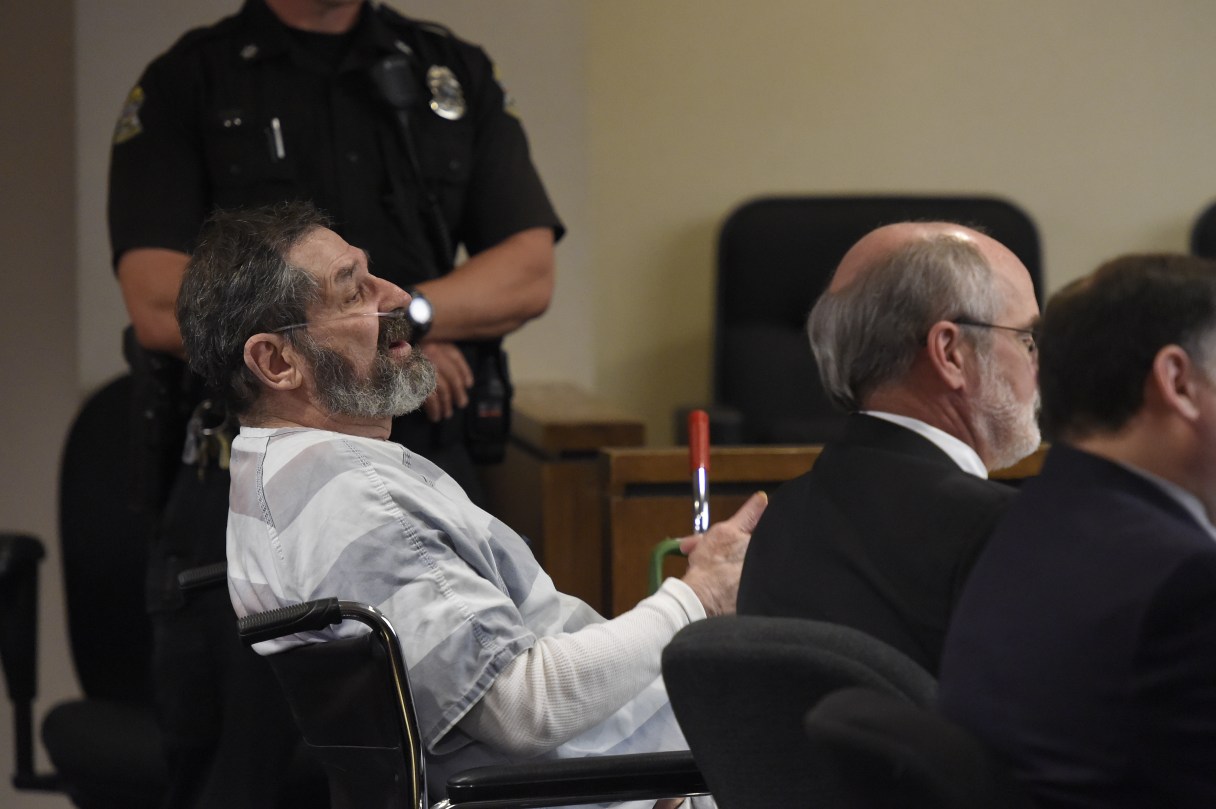
OLATHE, Kan. (AP) – A white supremacist accused of killing three people outside two Kansas Jewish sites fired his attorneys on Thursday, telling the judge that he thought representing himself was the only way he’d be allowed to speak at the capital murder trial.
A hearing for Frazier Glenn Miller, 74, of Aurora, Missouri, came to an abrupt halt after a testy exchange between him and Johnson County District Judge Kelly Ryan that ended with Miller demanding the right to fire his lawyers.
The outburst followed testimony by District Attorney Steve Howe that Miller’s attorneys had twice offered guilty pleas in return for taking the death penalty off the table. Howe said he rejected both of those offers.
Defense attorney Mark Manna told the judge Miller wanted to respond to Howe, but Ryan asked what purpose that would serve. Miller, sitting in a wheelchair with an oxygen tank at his side, became irritated and declared loudly that he was firing his attorneys.
Ryan called a recess after Howe asserted that if Miller wanted to get rid of his attorneys, he had the legal right to do so.