
Monday, November 16, 2026Nov 16

What Trump’s trade and geopolitical moves mean for China

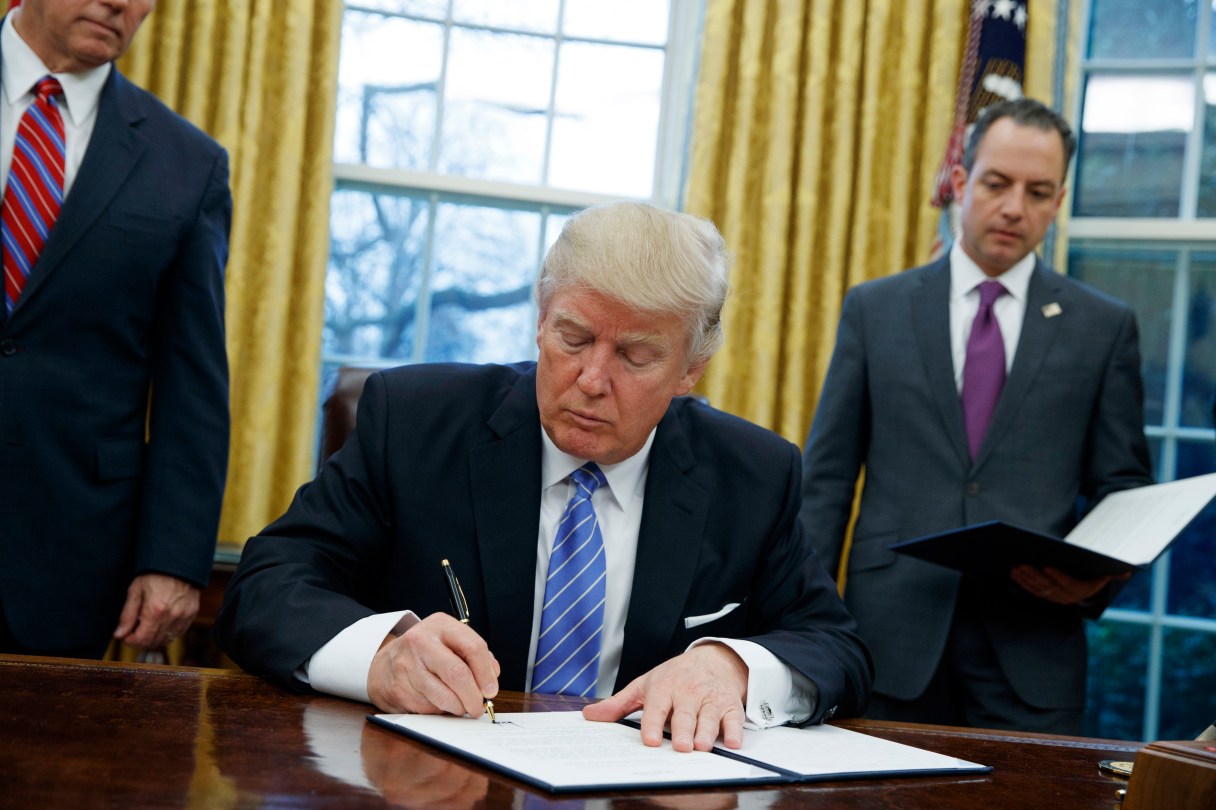
FILE - In this Monday, Jan. 23, 2017, file photo, President Donald Trump signs an executive order to withdraw the U.S. from the 12-nation Trans-Pacific Partnership trade pact agreed to under the Obama administration in the Oval Office of the White House in Washington. With his rejection of an Asian trade pact, Trump has started tackling policy changes that could inadvertently give China room to assert itself as a regional leader and worsen strains over the South China Sea and Taiwan. (AP Photo/Evan Vucci, File)

BEIJING (AP) – With his rejection of an Asian trade pact, U.S. President Donald Trump has tackled the first in a promised series of far-reaching policy changes that could inadvertently give China room to assert itself as a regional leader and worsen strains over the South China Sea and Taiwan.

The U.S. departure from the Trans-Pacific Partnership could help President Xi Jinping’s effort to cast Beijing as a champion of free trade and might increase official interest in a Chinese-led alternative trade deal. The TPP, which excluded China, has been seen as a gambit by Trump’s predecessor, Barack Obama, to counter Beijing’s influence.

It could also strengthen ties with China’s neighbors as Beijing prepares for potential challenges from Washington on thorny issues including claims over the South China Sea and the status of Taiwan, the self-ruled island Chinese leaders claim as part of their territory.

Here is a look at these issues and what they mean for China.

___