
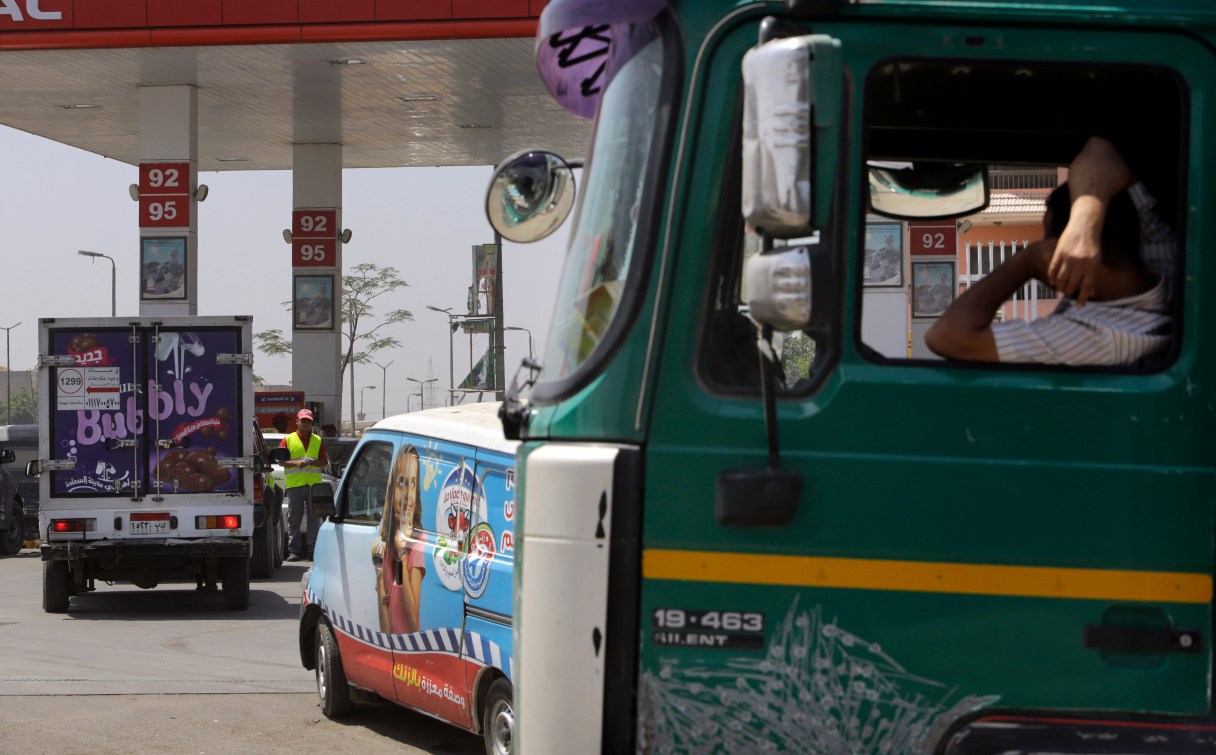
CAIRO (AP) – Egypt’s prime minister on Saturday defended his government’s decision to introduce a steep rise in fuel prices, saying energy subsidies have over the past decade cost the treasury a staggering 687 billion pounds (nearly $100 billion) that could have been used to bolster essential services.
The fuel price hikes of up to 80 percent came into force early on Saturday and follow promises to cut subsidies that eat up nearly a quarter of the state budget. They also come after an increase in electricity prices that were put in effect at the start of July.
Prime Minister Ibrahim Mahlab, addressing a televised news conference, said it would have been a “crime” if his government did not move to start lifting subsidies. He argued that 26.3 percent of Egypt’s estimated 86 million people live in poverty and that overall unemployment stands at 13.6 percent, reaching above 50 percent for Egyptians aged between 20 and 30.
“There will have to be political, social and economic reforms,” vowed Mahlab. “Debts are mounting and the question we must ask ourselves is whether we want to leave this legacy for future generations.”
Mahlab said the partial lifting of energy subsidies would free 51 billion pounds (about $7 billion) to be spent on education, health care, pensions and raising wages.