
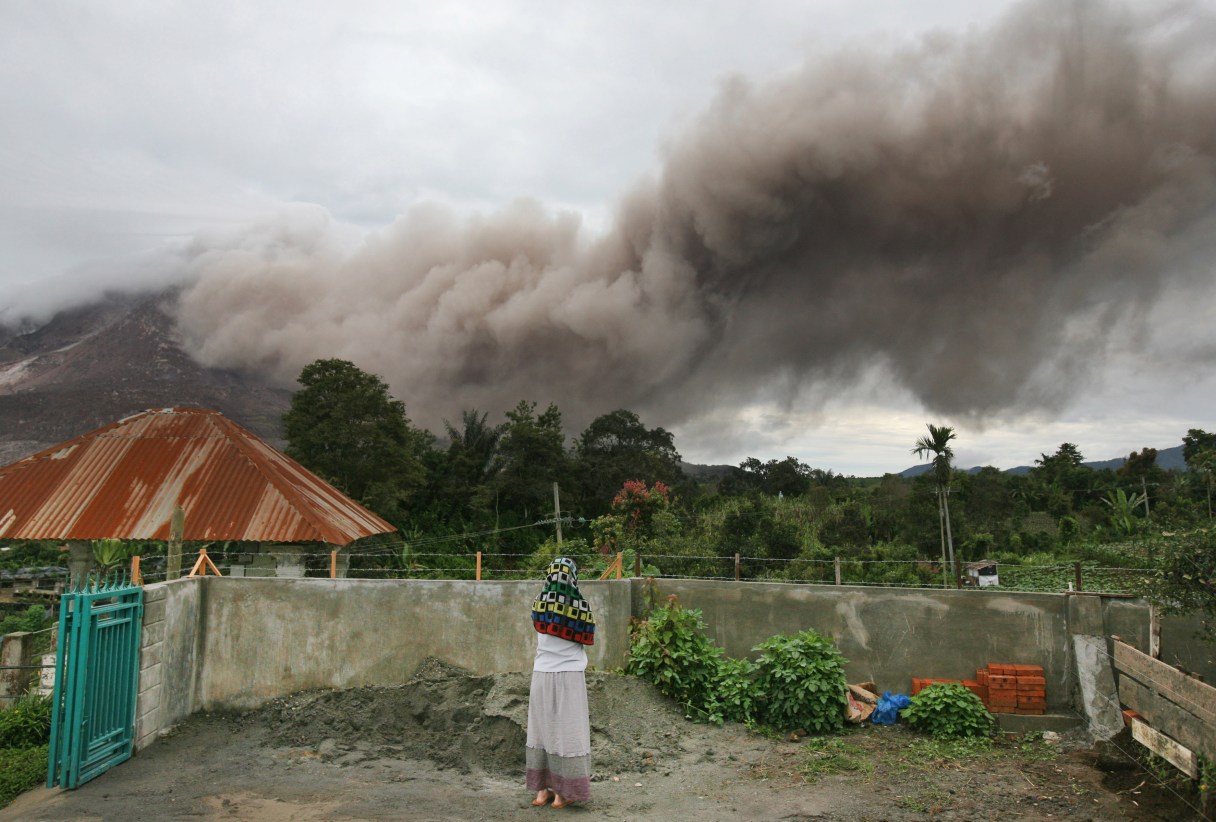
TANAH KARO, Indonesia (AP) – Thousands of villagers are refusing to leave their homes on the slopes of one of Indonesia’s most volatile volcanoes despite warnings that it is poised for a powerful eruption.
Mount Sinabung, one of about 130 active volcanoes in Indonesia, has been at the highest alert level for nearly two weeks. On Tuesday, at least 48 avalanches of hot ash barreled down its slopes, with the biggest reaching 2.5 kilometers (1.5 miles) southeastward. The volcano in northern Sumatra, one of Indonesia’s main islands, has also been shooting smoke and ash more than 700 meters (2,300 feet) into the air.
Several thousand people, including women carrying babies in slings, have left the mountain in police trucks since Monday after the volcanic activity intensified over the weekend. Some streamed down the scorched slopes on motorcycles, their faces caked in ash.
But Subur Tambun, who heads the local disaster mitigation agency, said only 10,000 of about 33,000 people living within the main danger zone have moved into tent camps or government buildings a safe distance from the volcano. No injuries have been reported from the recent eruptions.
“The villagers insisted on tending crops,” Tambun said. “They are confident of being able to escape a major eruption. All we can do is ask them to leave.”