
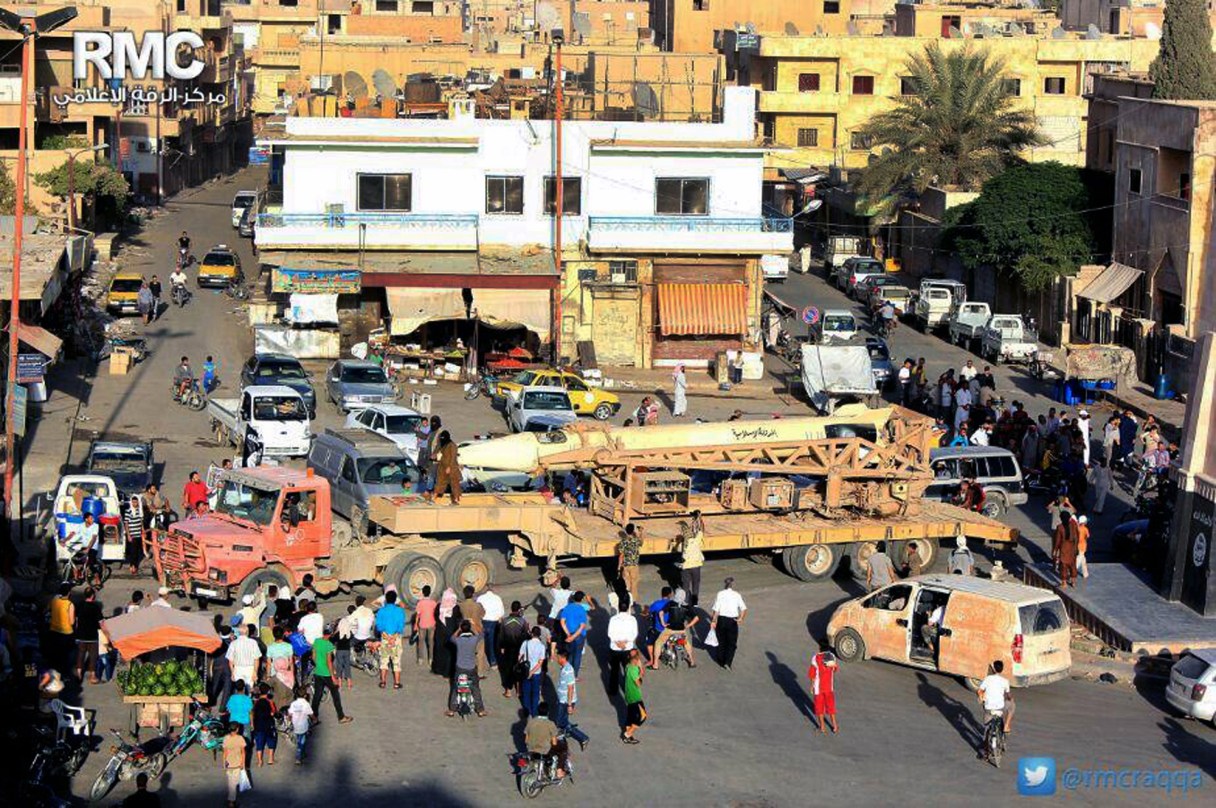
BAGHDAD (AP) – In their Syrian strongholds, extremists from the Islamic State group had been moving into civilian apartment buildings for cover days before the U.S. and its allies began pounding them before dawn Tuesday, activists say. It’s just one sign of the difficulties in trying to destroy the group by relying mainly on airstrikes.
Breaking the militants’ hold over the cities they have captured in both Iraq and Syria will be complicated because the group can easily melt into the population. In the Iraqi city of Mosul, the extremists have enough support among the mainly Sunni Muslim population that they have reduced the presence of their fighters in the streets without apparent worry about their grip on power.
Another problem is that there are no allied forces on the ground poised to move in to control territory should the militants retreat under the aerial bombardment.
That’s particularly the case in Syria, where rebels opposed to the Islamic State group have been almost completely driven from areas it controls. Across a broad stretch of eastern Syria, the only forces that could conceivably capitalize on the airstrikes at the moment are a few remaining units of President Bashar Assad’s military, holed up in isolated bases in the Deir el-Zour and Hassakeh areas. But the Obama administration says it still wants Assad’s ouster and doesn’t want to help him regain ground.
So far, the coalition also has resisted calls by Kurds in Syria for arms, training and air cover. Those Kurdish forces, fighting in a group known as the YPG, had successfully pushed back the Islamic State group for two years in a band of territory that hugs the Syrian-Turkish border in the north and northwest. In recent days, however, the extremists have made gains in the area near the town of Kobani, forcing more than 130,000 people – mostly Kurds – to flee into Turkey.