
By RUSS BYNUM
Associated Press
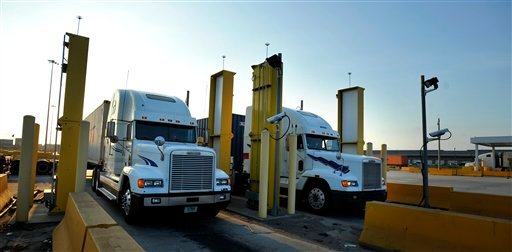
SAVANNAH, Ga. – The marshlands around the nation’s fourth-busiest container port used to be considered enough of a barrier that Port of Savannah officials didn’t bother to build a full fence around the bustling main terminal. Now security is so tight that roughly 4,000 times a day, steel containers from arriving ships are loaded onto tractor-trailers that, before hitting the highway, must pass through giant radiation detectors designed to sniff out nuclear bombs.
In the 10 years since the Sept. 11 attacks, the federal government has spent $2.5 billion on a sweeping security overhaul at U.S. seaports from Seattle to New Orleans to Eastport, Maine, paying for everything from perimeter fencing to motion sensors and training for security officers. Federal agencies with a direct role in safeguarding seaports, namely the Coast Guard and Customs and Border Protection, have added whopping sums such as $420 million for a unified ID card system for 1.6 million truck drivers, longshoremen and other port workers nationwide.
The big challenge has been keeping a closer watch on imported cargo without imposing a costly slowdown on foreign trade. There’s also a huge cost to the nation’s 185 public seaports themselves, often passed along in tariffs and fees to the shippers. The Savannah port, for example, tacks on a $5.75 security fee for every cargo container it handles.