
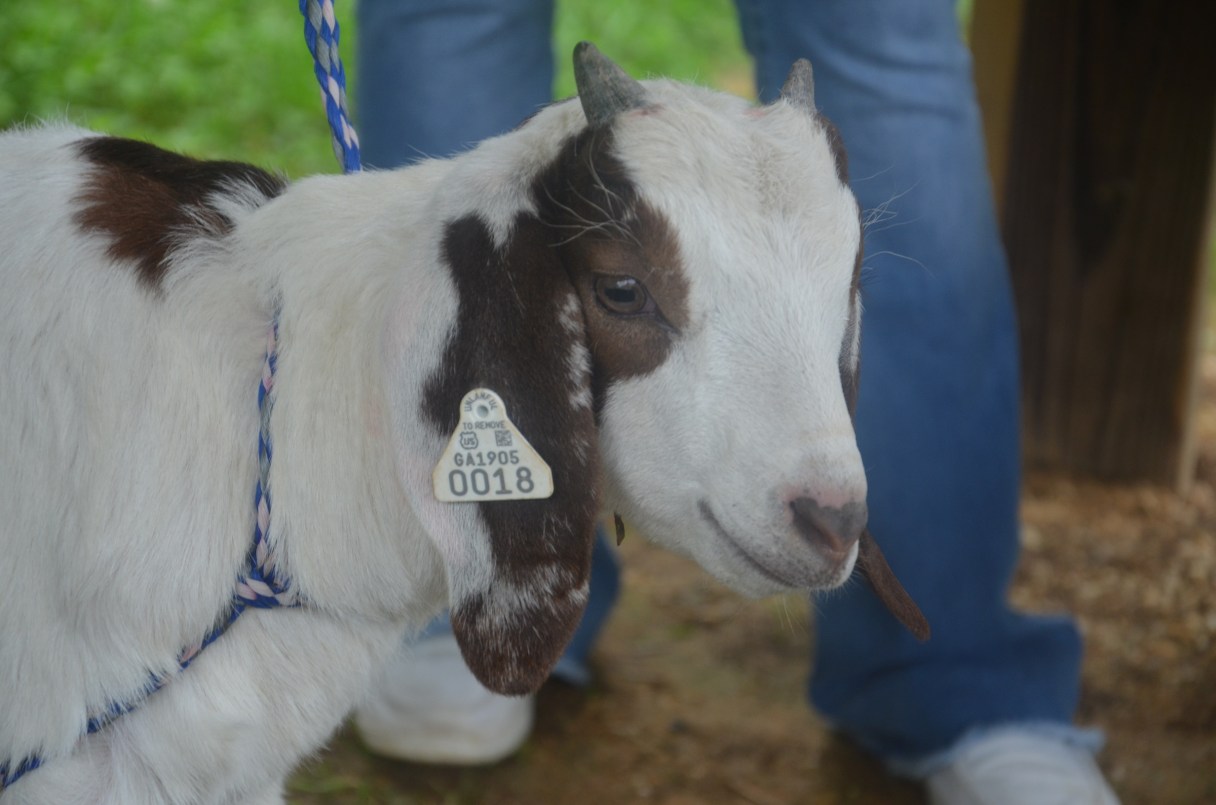
Tethered and out of their pens for the first time, Marshmallow and Daisy seemed a little leery as a class of kindergarteners filed through the grass into the new outdoor classroom at North LaFayette Elementary School. These two baby goats, just a couple of months old, were about to meet a gaggle of new friends.
The children bubbled with excitement. In twice-weekly Google Meets, they had watched their adopted white-and-brown Boer goats grow almost since birth. This was the first face-to-face meeting, and the communal urge for pets and cuddles was palpable.
The human kids giggled and wiggled on wooden benches. Michael Gardner paced the grass in front of them under a new metal-roofed structure that is the result of the community’s investment in its school.
Gardner is an award-winning agriculture education instructor at LaFayette High School. With the friendly excitement of a man adept at herding kindergarteners, he led a discussion on goat heart rates.
“Just like your heart, Daisy’s heart beats about 80 times per minute,” he told the children.