
Monday, November 16, 2026Nov 16

Rare Tyrannosaurus rex skull arrives at Seattle museum

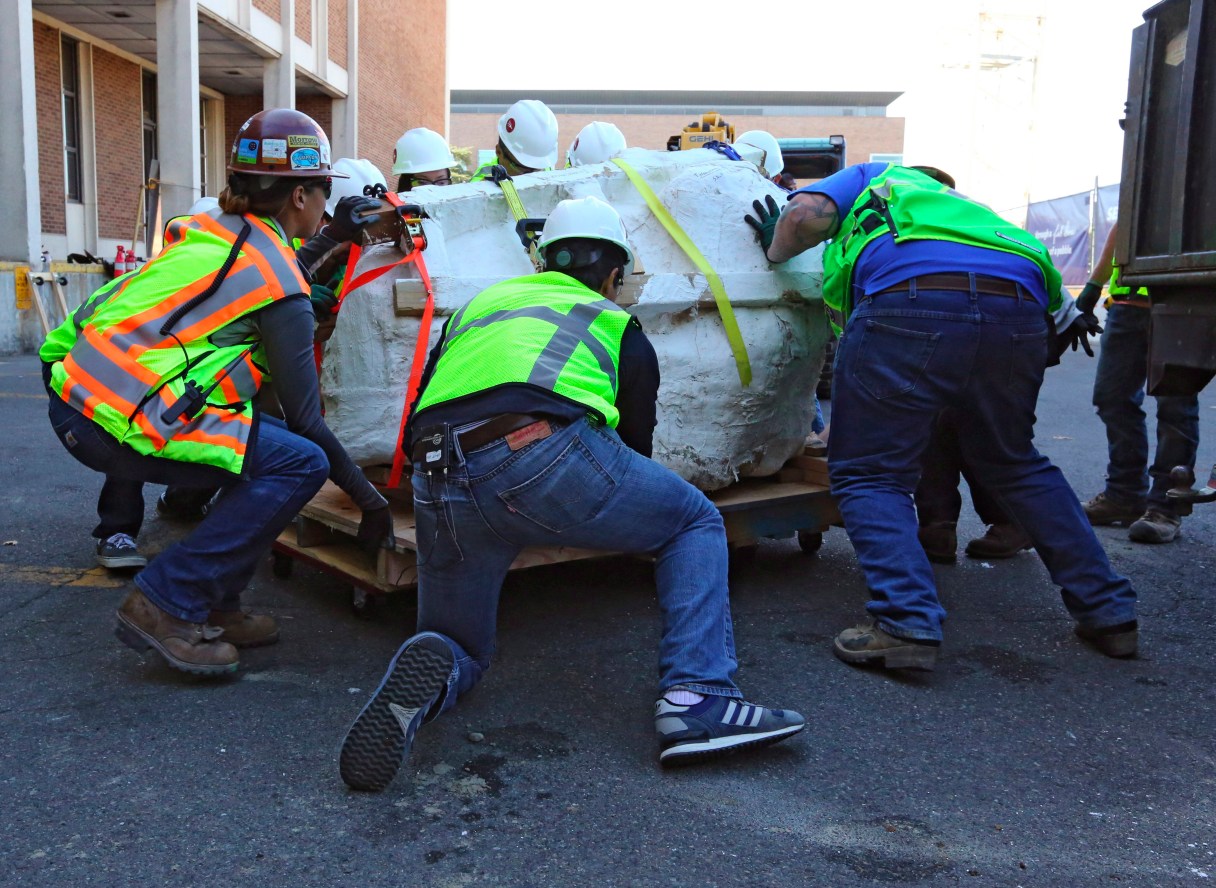
Encased in plaster, the 4-foot-long, 2,500-pound remains of a Tyrannosaurus rex skull, is moved by fork lift to a wheeled cart behind the loading dock of the Burke Museum on Thursday, Aug. 18, 2016 in Seattle. Paleontologists with Seattle's Burke Museum have unearthed the bones of a Tyrannosaurus rex that lived more than 66 million years ago, including a rare nearly complete 4-foot long skull. The remarkable discovery includes the carnivorous dinosaur's vertebrae, ribs, hips and lower jaw bones, and represents about 20 percent of the animal. (Alan Berner/The Seattle Times via AP)

SEATTLE (AP) – Paleontologists with Seattle’s Burke Museum have unearthed the bones of a Tyrannosaurus rex that lived more than 66 million years ago, including a rare nearly complete 4-foot long skull.

The remarkable discovery includes the dinosaur’s vertebrae, ribs, hips and lower jaw bones, and represents about 20 percent of the meat-eating predator.

Several dozen scientists, volunteers, students and others worked over the summer to excavate the bones in the Hell Creek Formation in Montana, a site well known for fossil finds.

The team later encased the massive skull in a protective plaster cast, lifted the 2,500-pound load onto a flatbed truck with the help of local Montana ranchers and drove it to Seattle. The skull was unloaded at the Burke Museum Thursday.

The plaster-covered skull will be on display to the public for several weeks starting Saturday. Over the next year, paleontologists will painstakingly work on removing the rock around the skull.