
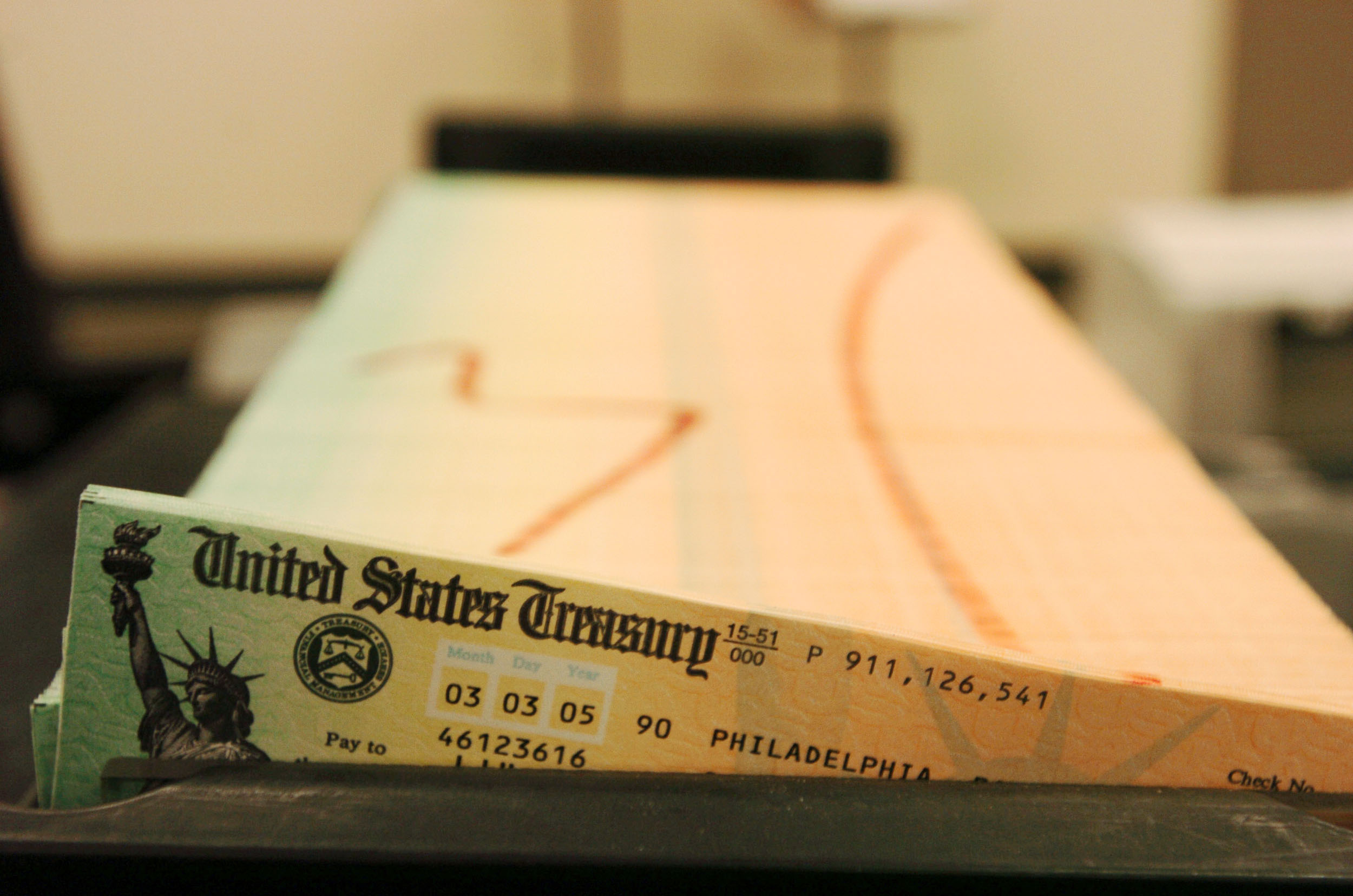
 This February 2005 file photo shows trays of printed social security checks, in Philadelphia, waiting to be mailed from the U.S. Treasury. People retiring today are part of the first generation of workers who have paid more in Social Security taxes during their careers than they will receive in benefits after they retire. It’s a historic shift that will only get worse for future retirees, according to an analysis by The Associated Press. Previous generations got a much better bargain, mainly because payroll taxes were very low when Social Security was enacted in the 1930s and remained so for decades.
Who gets it?About 56 million people receive monthly Social Security benefits. Who they are, and how much they get:36 million retired workers Average monthly benefit: $1,235.8.7 million disabled workers Average benefit: $1,111.2.5 million spouses Average benefit: $590.4.3 million children Average benefit: $564.4.4 million widows and widowers Average benefit: $1,152.Source: Social Security AdministrationOnlineSocial Security beneficiary data: http://tinyurl.com/26alhuu
WASHINGTON – People retiring today are part of the first generation of workers who have paid more in Social Security taxes during their careers than they will receive in benefits after they retire. It’s a historic shift that will only get worse for future retirees, according to an analysis by The Associated Press.
Previous generations got a much better bargain, mainly because payroll taxes were very low when Social Security was enacted in the 1930s and remained so for decades.
“For the early generations, it was an incredibly good deal,” said Andrew Biggs, a former deputy Social Security commissioner who is now a scholar at the American Enterprise Institute. “The government gave you free money, and getting free money is popular.”
If you retired in 1960, you could expect to get back seven times more in benefits than you paid in Social Security taxes, and more if you were a low-income worker, as long you made it to age 78 for men and 81 for women.