
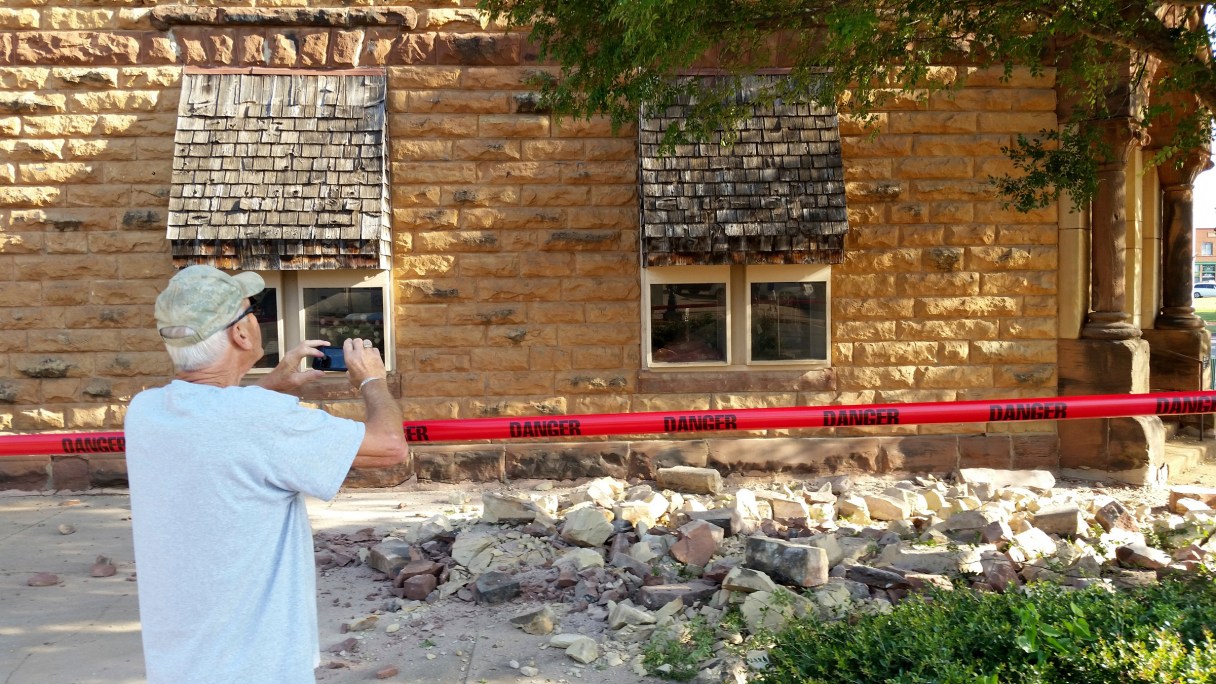
OKLAHOMA CITY (AP) – An Oklahoma-based Native American tribe filed a lawsuit in its own tribal court system Friday accusing several oil companies of triggering the state’s largest earthquake that caused extensive damage to some near-century-old tribal buildings.
The Pawnee Nation alleges in the suit that wastewater injected into wells operated by the defendants caused the 5.8-magnitude quake in September and is seeking physical damages to real and personal property, market value losses, as well as punitive damages.
The case will be heard in the tribe’s district court with a jury composed of Pawnee Nation members.
“We are a sovereign nation and we have the rule of law here,” said Andrew Knife Chief, the Pawnee Nation’s chief. “We’re using our tribal laws, our tribal processes to hold these guys accountable. The damage was done to the Pawnee Nation and the folks that live on trust land.”
Attorneys representing the 3,200-member tribe in north-central Oklahoma say the lawsuit is the first earthquake-related litigation filed in a tribal court. If an appeal were filed in a jury decision, it could be heard by a five-member tribal Supreme Court, and that decision would be final.