
Friday, November 13, 2026Nov 13

‘Fish fence’ being tested in Kentucky to stop Asian carp

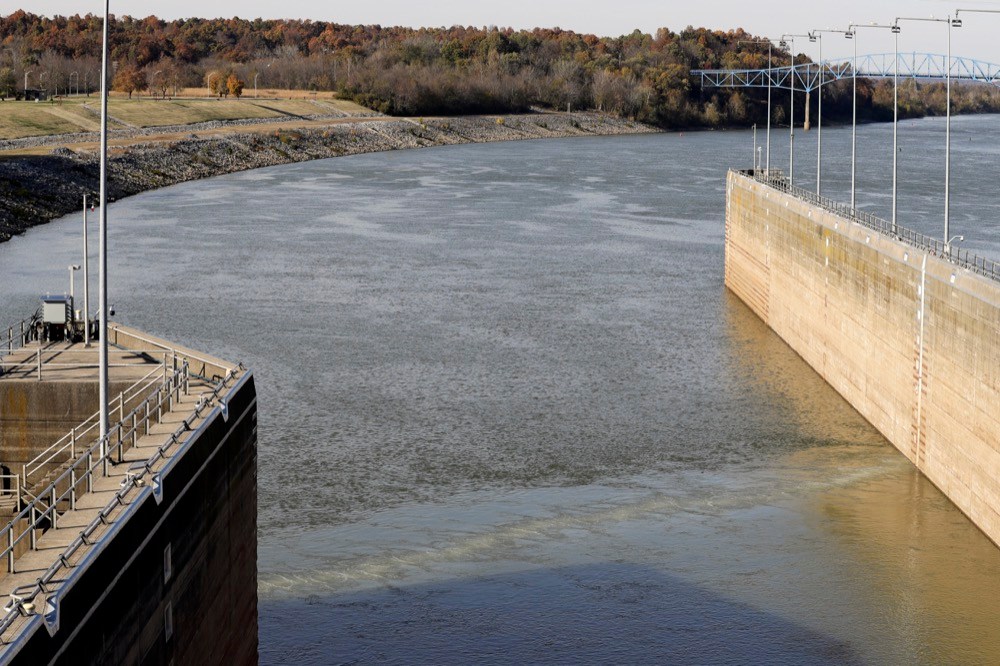
A line of bubbles from a bio-acoustic fish fence rises to the surface of the water at Barkley Lock and Dam where the Cumberland River meets Lake Barkley, Friday, Nov. 8, 2019, in Grand Rivers, Ky. The noise-making, bubbling, bio-acoustic barrier has been installed in the lock to deter the spread of destructive Asian carp . (AP Photo/Mark Humphrey)
A line of bubbles from a bio-acoustic fish fence rises to the surface of the water at Barkley Lock and Dam where the Cumberland River meets Lake Barkley, Friday, Nov. 8, 2019, in Grand Rivers, Ky. The noise-making, bubbling, bio-acoustic barrier has been installed in the lock to deter the spread of destructive Asian carp . (AP Photo/Mark Humphrey) A line of bubbles from a bio-acoustic fish fence rises to the surface of the water at Barkley Lock and Dam where the Cumberland River meets Lake Barkley, Friday, Nov. 8, 2019, in Grand Rivers, Ky. The noise-making, bubbling, bio-acoustic barrier has been installed in the lock to deter the spread of destructive Asian carp . (AP Photo/Mark Humphrey)

GRAND RIVERS, Ky. (AP) – Kentucky officials are hoping a noise-making, bubbling “fish fence” will help stop the spread of destructive Asian carp.

At Kentucky’s Barkley Dam on Friday, Senate Majority Leader Mitch McConnell and others gathered to commission the new bioacoustic fish fence near a lock at the bottom of the dam. The $7 million, three-year field trial will help wildlife officials determine whether the device effectively keeps Asian carp from entering the lock and moving upstream.

The fence works as a deterrent by broadcasting noise at a frequency that irritates the carp. The noise is contained within a wall of bubbles that are lit by strobes. The combination has worked well in the laboratory and in smaller-scale outdoor settings.

Asian carp is a catch-all term for four species of invasive carp that have spread up the Mississippi River from the Gulf of Mexico as far as Wisconsin and into the Missouri and Ohio rivers and other smaller tributaries.

(Read more: Taste testing Asian carp: Effort to market the invasive fish for consumer consumption continues)