
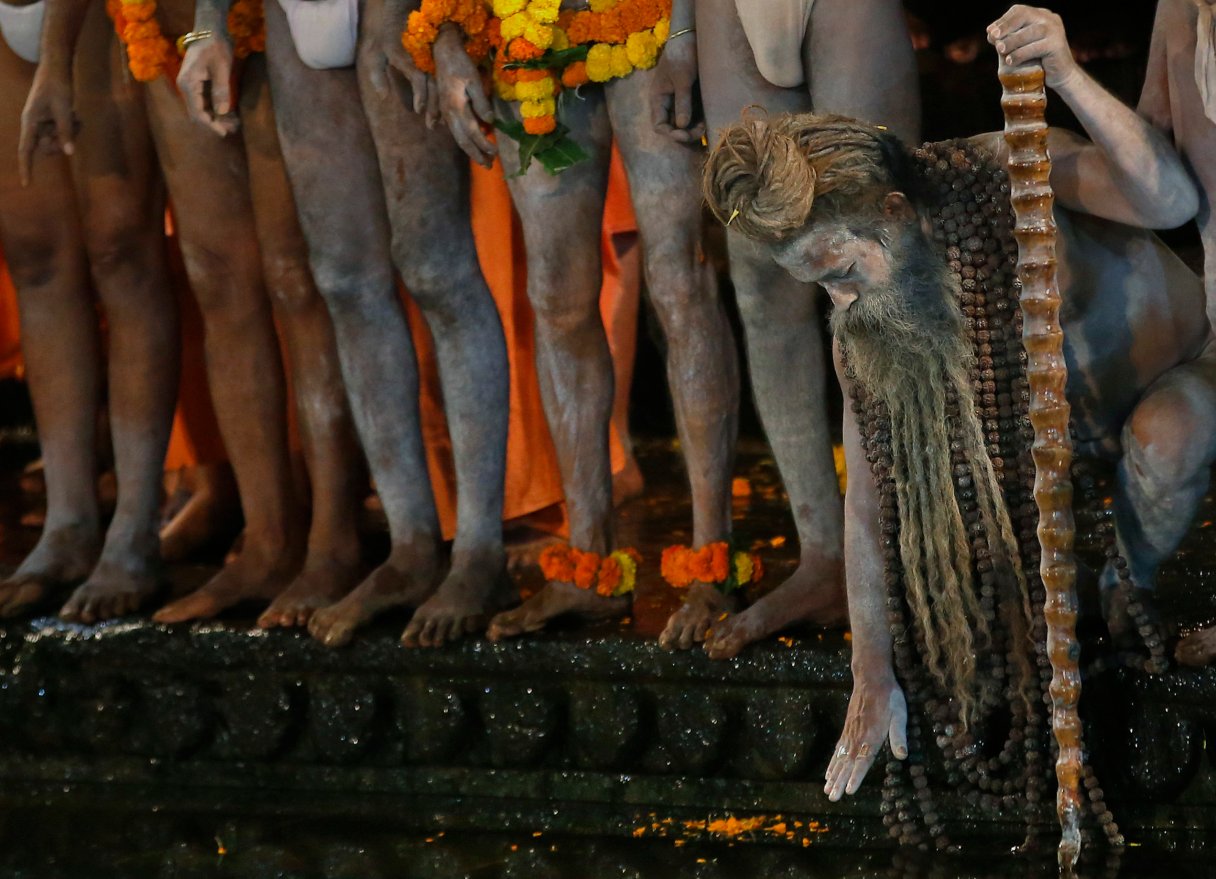
NASIK, India (AP) – Brass bands played and people passed out fruit and cookies as hundreds of thousands of Hindu holy men and believers plunged into the Godavari River to wash away their sins on the first “royal” day of bathing at one of the world’s largest religious gatherings.
The Kumbh Mela, or Pitcher Festival, is expected to draw millions over nearly two months, though Saturday marked the first of several auspicious days for ritual bathing.
More than 15,000 police officers were maintaining heavy security, with some ushering bathers out of the water as soon as they’d taken a dip in order to keep crowds from growing. The last time the festival was held in Nasik, scores of people died in a stampede triggered by a sadhu who threw coins into the crowd.
“During the last Kumbh, we watched from a building, we could see only heads and not the ground,” said Nasik resident Kishore Agharkar, adding that the crowds were not building up this year as during the four festivals he’s witnessed previously in his neighborhood.
Saturday’s bathing began with a crowd of Hindu holy men, or “sadhus,” leading a procession to the waterfront. Some had arrived atop mini-trucks because police would not allow them to use the more traditional transportation mode – elephants. Once the ash-covered sadhus had completed their ablutions, the public was then allowed into the water.