
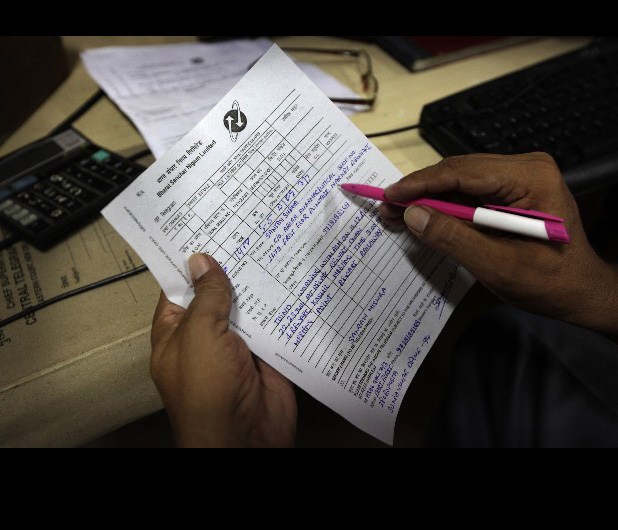
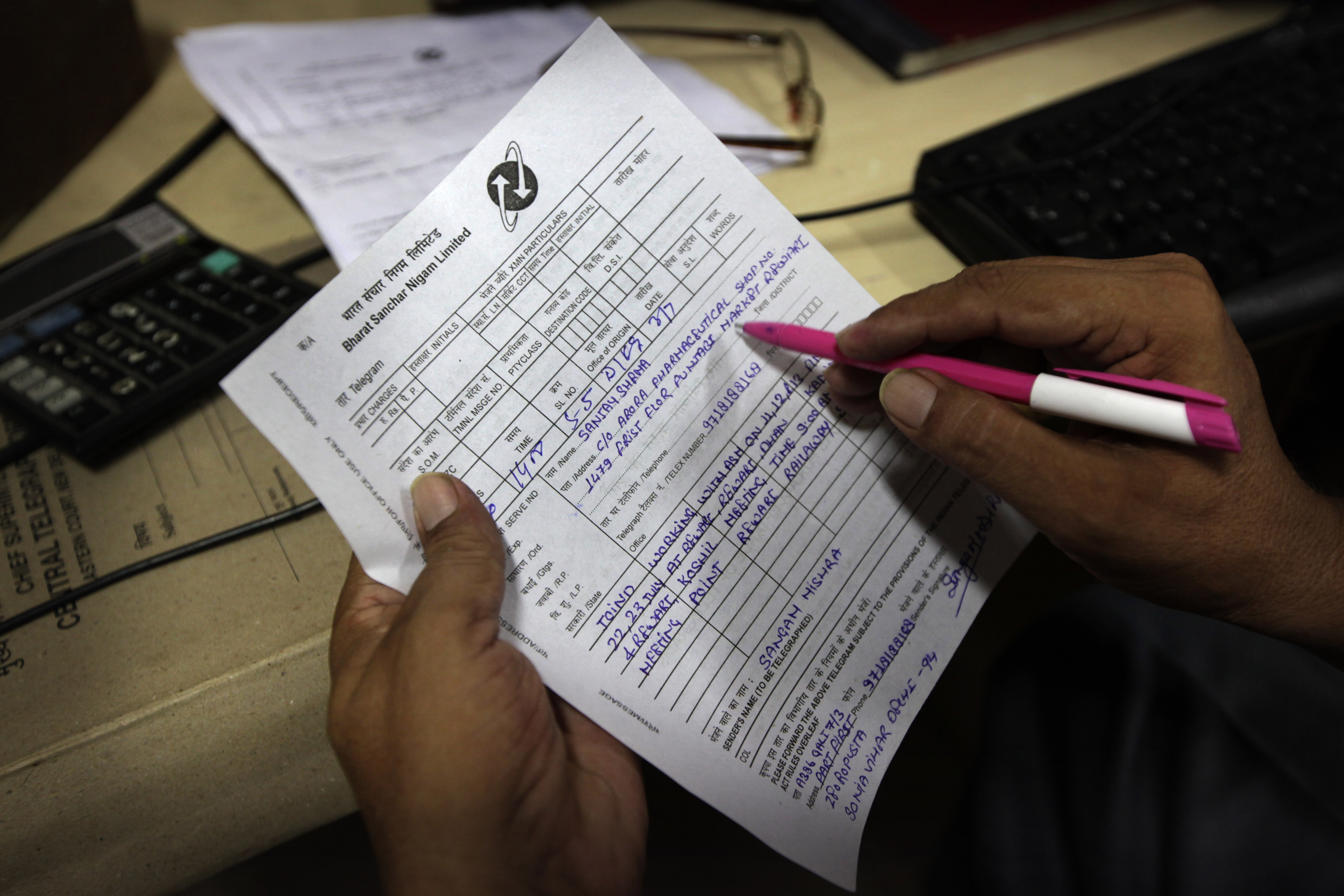
 Telegraph officer Baljit Singh checks a telegram message of a customers at the Kashmere Gate telegraph office in New Delhi, India. On Monday the state-run telecommunications company will send its final telegram, closing down a service that fast became a relic in an age of email, reliable landlines and cellphones. Singh, who became a telegraph operator in 1972 and will retire in a few months, recalled the frenetic rush following the 1984 assassination of Prime Minister Indira Gandhi and the days of political turmoil and street violence that followed.
NEW DELHI – For 163 years, lives across the vast Indian nation have been upended by the knock of the khaki-clad postal worker armed with a telegram.
Families used them to announce births and deaths, the government used them to post job openings, young lovers sent them to tell their folks that they had eloped.
No longer.
On Monday, the state-run telecommunications company will send its final telegram, closing down a service that fast became a relic in an age of email, reliable landlines and ubiquitous cellphones.
The fact that the telegram survived this long is a testament to how deeply woven it is into the fabric of Indian society. In much of the rest of the world, telegrams long ago were relegated to novelty services used by people who wanted to indulge in a bit of nostalgia.