
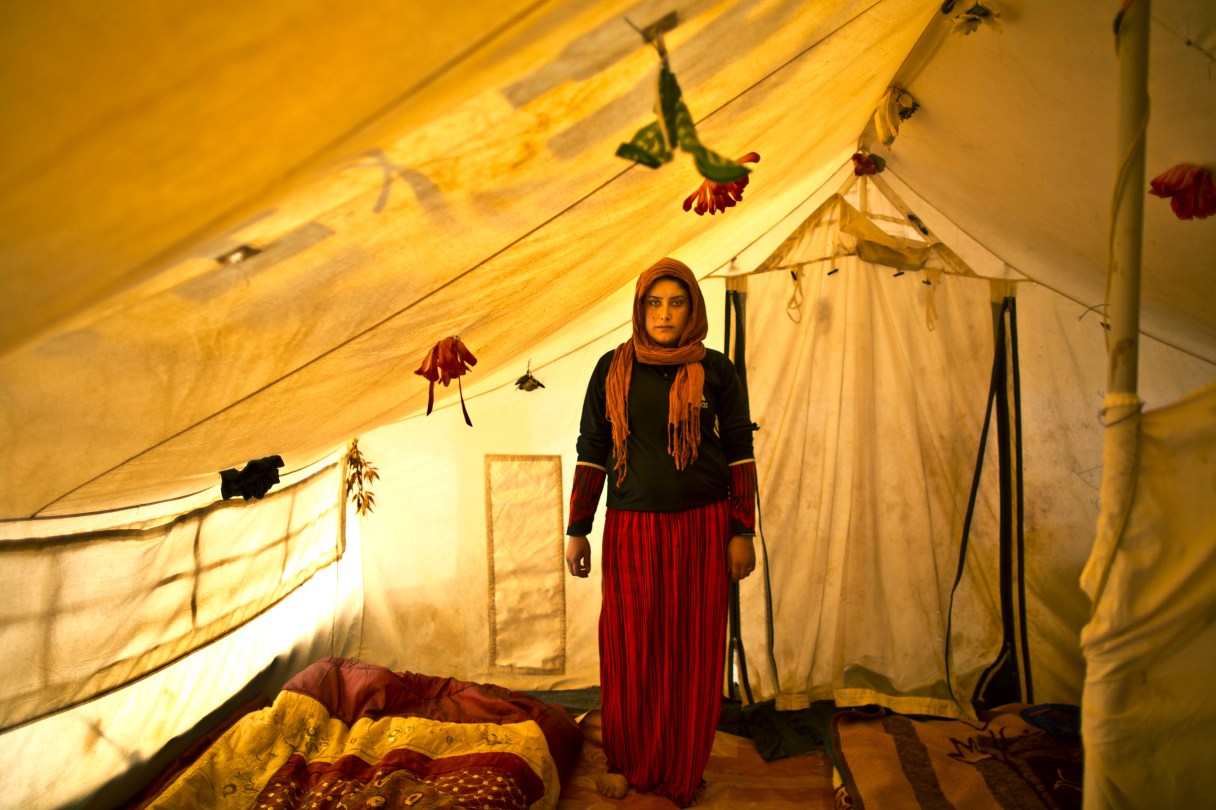
MAFRAQ, Jordan (AP) – Pregnant refugee women living in informal tent settlements are among the most vulnerable of the hundreds of thousands of Syrians who have found shelter in Jordan. They often can’t afford doctor visits and face potential health hazards because of lack of running water and other challenges.
By contrast, pregnant women in Jordan’s three official refugee camps have access to free services, including pre-natal care and delivery, according to the U.N. refugee agency. Zaatari, the largest camp, saw more than 3,500 births last year, out of a total more than 18,000 babies born to refugee mothers in 2014, the agency says.
Nearly 3.8 million Syrians have fled their country and are now registered as refugees, according to the United Nations. Most face increasingly desperate circumstances.
Pregnant women who spoke to The Associated Press in makeshift tent camps near the northern Jordanian town of Mafraq say they are fearful of an uncertain future.
“A couple of weeks ago, I couldn’t feel my baby moving in my belly so I panicked and didn’t know what to do since I can’t afford heading to a clinic and check,” says Huda Alsayil, who fled fighting in Hama three years ago and is five months pregnant.