
Friday, November 13, 2026Nov 13

Ultimate choice: Tennessee inmates wrestle with how to die

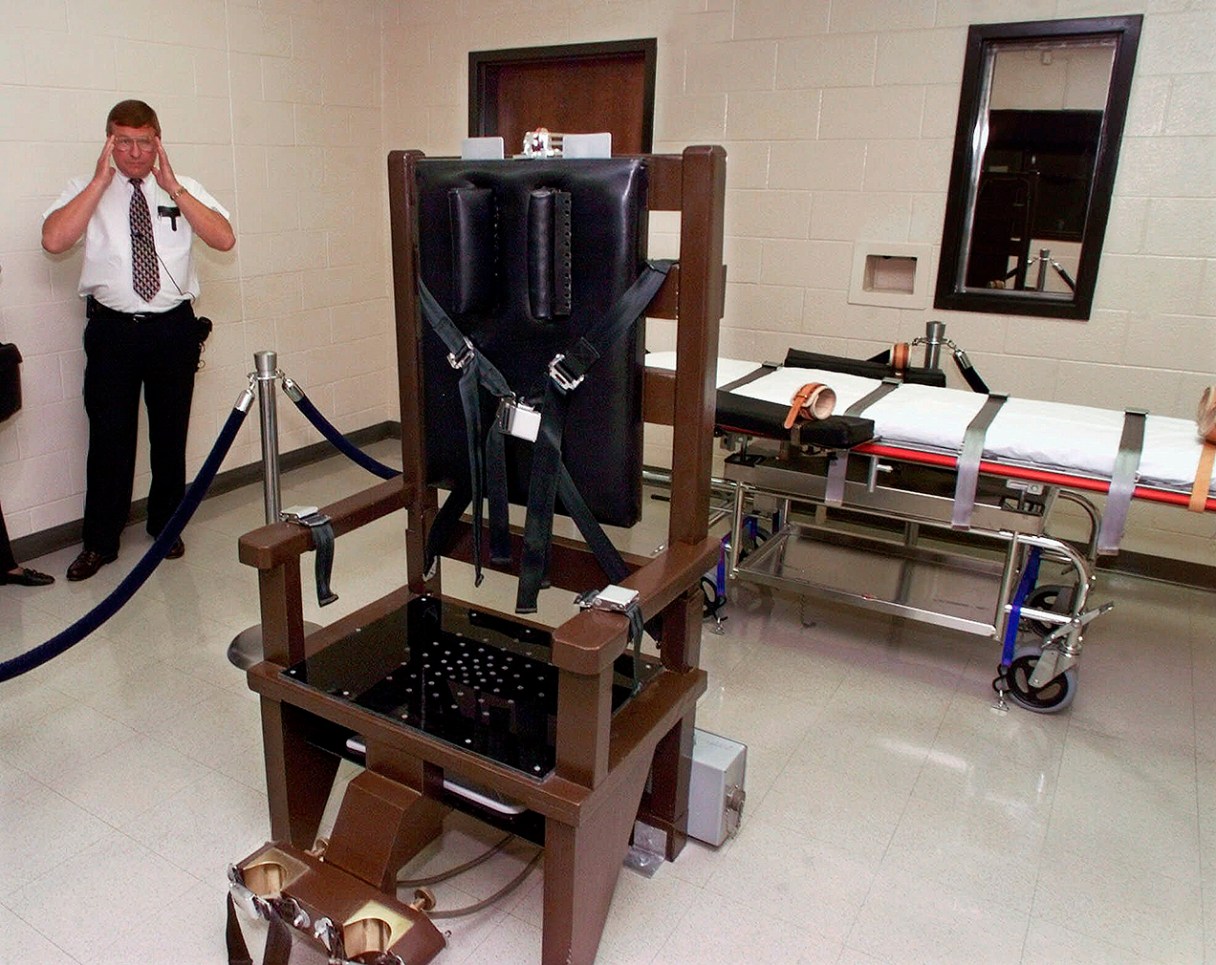
In this Oct. 13, 1999, file photo, Ricky Bell, then the warden at Riverbend Maximum Security Institution in Nashville, Tenn., gives a tour of the prison's execution chamber. Attorneys for Tennessee death row inmate Edmund Zagorski on Wednesday, Oct. 10, 2018, asked a federal court to force the state to use the electric chair to execute him, rather than lethal injection. The court battle over his Thursday execution played out over a solemn background in which prison staff and volunteers said the death of the well liked inmate will leave an impact. (AP Photo/Mark Humphrey, File)
In this Oct. 13, 1999, file photo, Ricky Bell, then the warden at Riverbend Maximum Security Institution in Nashville, Tenn., gives a tour of the prison's execution chamber. Attorneys for Tennessee death row inmate Edmund Zagorski on Wednesday, Oct. 10, 2018, asked a federal court to force the state to use the electric chair to execute him, rather than lethal injection. The court battle over his Thursday execution played out over a solemn background in which prison staff and volunteers said the death of the well liked inmate will leave an impact. (AP Photo/Mark Humphrey, File) In this Oct. 13, 1999, file photo, Ricky Bell, then the warden at Riverbend Maximum Security Institution in Nashville, Tenn., gives a tour of the prison's execution chamber. Attorneys for Tennessee death row inmate Edmund Zagorski on Wednesday, Oct. 10, 2018, asked a federal court to force the state to use the electric chair to execute him, rather than lethal injection. The court battle over his Thursday execution played out over a solemn background in which prison staff and volunteers said the death of the well liked inmate will leave an impact. (AP Photo/Mark Humphrey, File)

NASHVILLE, Tenn. (AP) – After more than three decades on death row, Don Johnson weighed the options for his own demise: He could keep a promise to his daughter that he wouldn’t die in the electric chair. Or, he could opt for the chair and avoid a method that he had heard might make him feel like he was being buried alive.

Last May, Johnson was strapped to a gurney and hooked up to an IV. He said a prayer and started singing as toxic drugs flowed into his body. Then came sounds resembling snoring or gurgling and gasping. Finally, after a high-pitched noise, he fell silent.

Johnson, who was convicted of suffocating his wife, was put to death by lethal injection, a method adopted by most states after the electric chair began losing public favor. However, the three-drug combination used by Tennessee and some other states has come under attack by attorneys for death row inmates who say it can cause intense suffering.

Most states have gotten rid of the electric chair, meaning the only option for most inmates across the country is lethal injection.That’s not the case in Tennessee, one of nine states that still allow electrocution, and one of six that allow inmates to choose which way they will die, according to the national Death Penalty Information Center.

In Tennessee, 38 of the state’s 53 death row inmates – those whose crimes predated Jan. 1, 1999 – not only know when they are going to die, but will have a hand in picking the method of their execution.