
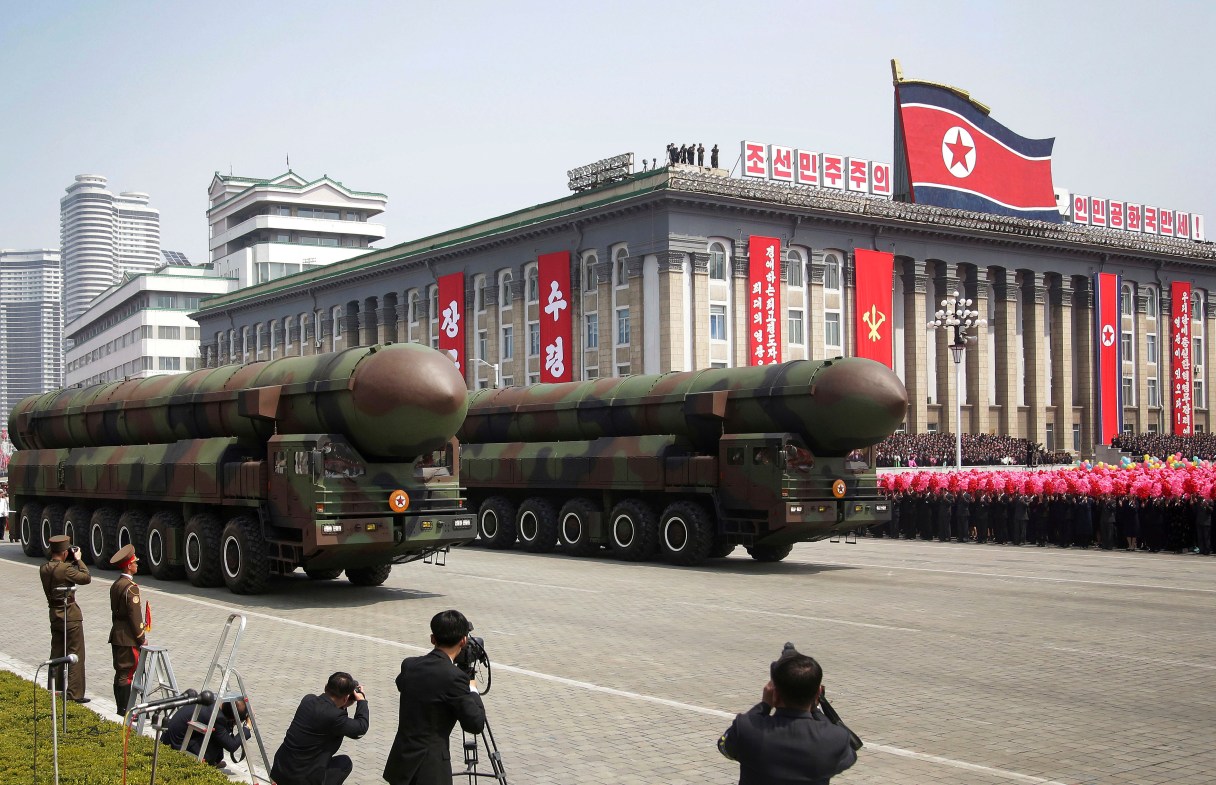
SEOUL, South Korea (AP) – Fresh off an immense North Korean parade that revealed an arsenal of intercontinental ballistic missiles, rival South Korea and its allies are bracing for the possibility that Pyongyang’s follow-up act will be even bigger.
North Korea often marks significant dates by displaying military capability, and South Korean officials say there’s a chance the country will conduct its sixth nuclear test or its maiden test launch of an ICBM around the founding anniversary of its military on Tuesday.
Such moves could test the developing North Korea policies of President Donald Trump, who has reportedly settled on a strategy that emphasizes increasing pressure on Pyongyang with the help of China, North Korea’s only major ally, instead of military options or trying to overthrow the North’s government.
Trump spoke by phone with both the Japanese and Chinese leaders Monday. China’s official broadcaster CCTV quoted President Xi Jinping telling Trump that China strongly opposed North Korea’s nuclear weapons program and hoped “all parties will exercise restraint and avoid aggravating the situation.”
Japanese Prime Minister Shinzo Abe and Trump agreed to urge North Korea to refrain from what Abe called provocative actions. “The North Korean nuclear and missile problem is an extremely serious security threat to not only the international community but also our country,” the Japanese leader told reporters in Tokyo afterward.