
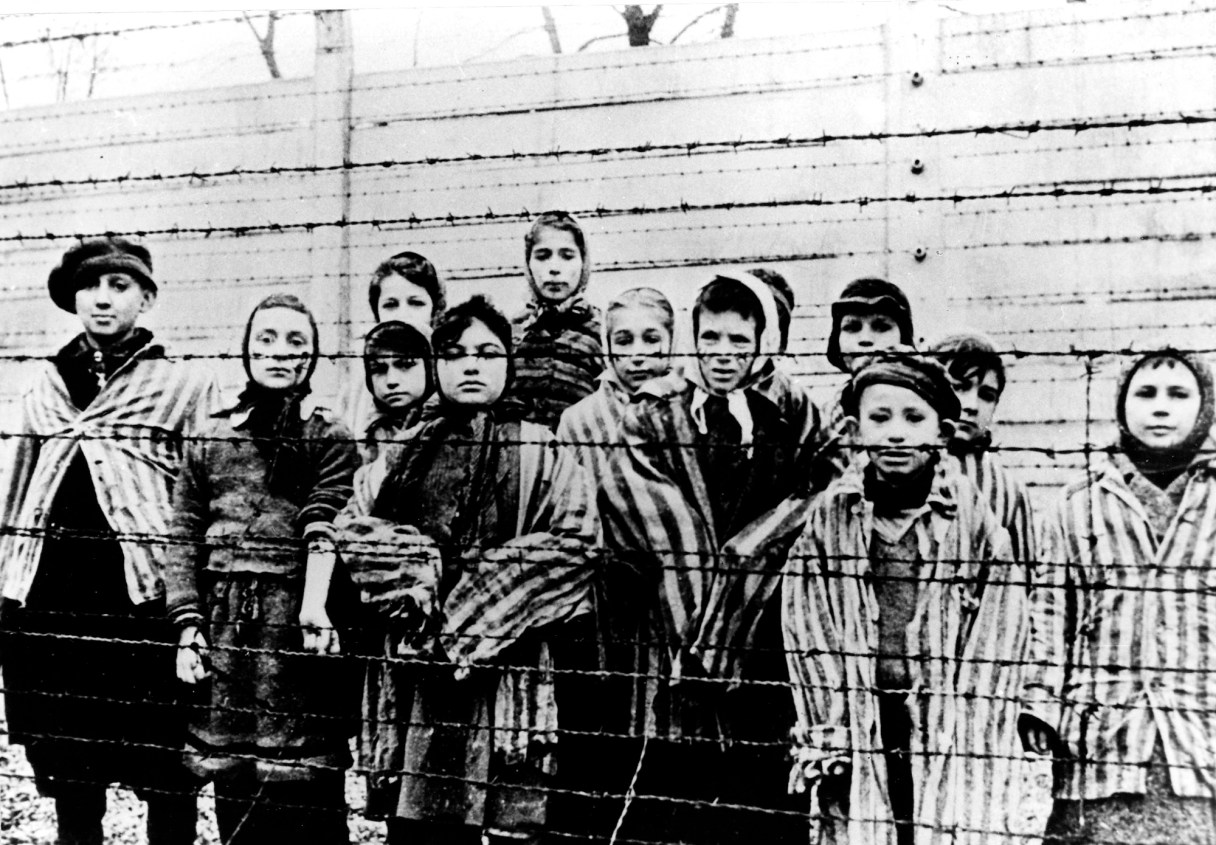
SARAJEVO, Bosnia-Herzegovina (AP) – The tattoo on her left arm has become unreadable but the habit of reading it aloud in Polish remains strong, seven decades after it first scarred her skin.
Greta Wienfeld Ferusic had to yell A9233, in Polish, for 10 months during the morning lineups at the Nazi-run death camp of Auschwitz, the last time shortly before the Red Army arrived on Jan. 27, 1945, liberating the emaciated inmates. Worldwide events this week are commemorating that agonizing moment in history.
“To physically survive is the easier part,” Ferusic, 90, said during an interview in her Sarajevo living room as she recalled her survival in a camp where more than 1.1 million Jews like her were killed. “What’s important is that you do not go insane. That’s the part you can work on. I kept repeating: I will survive, I will survive.”
Ferusic was 19 when she and her parents, two aunts and an uncle were forced from their homes in Novi Sad, Serbia, and loaded on a cargo train in April 1944.
Dr. Joseph Mengele, known as the Angel of Death, personally separated her from her mother but never performed any medical experiments on her. It was the last time she ever saw her family.