
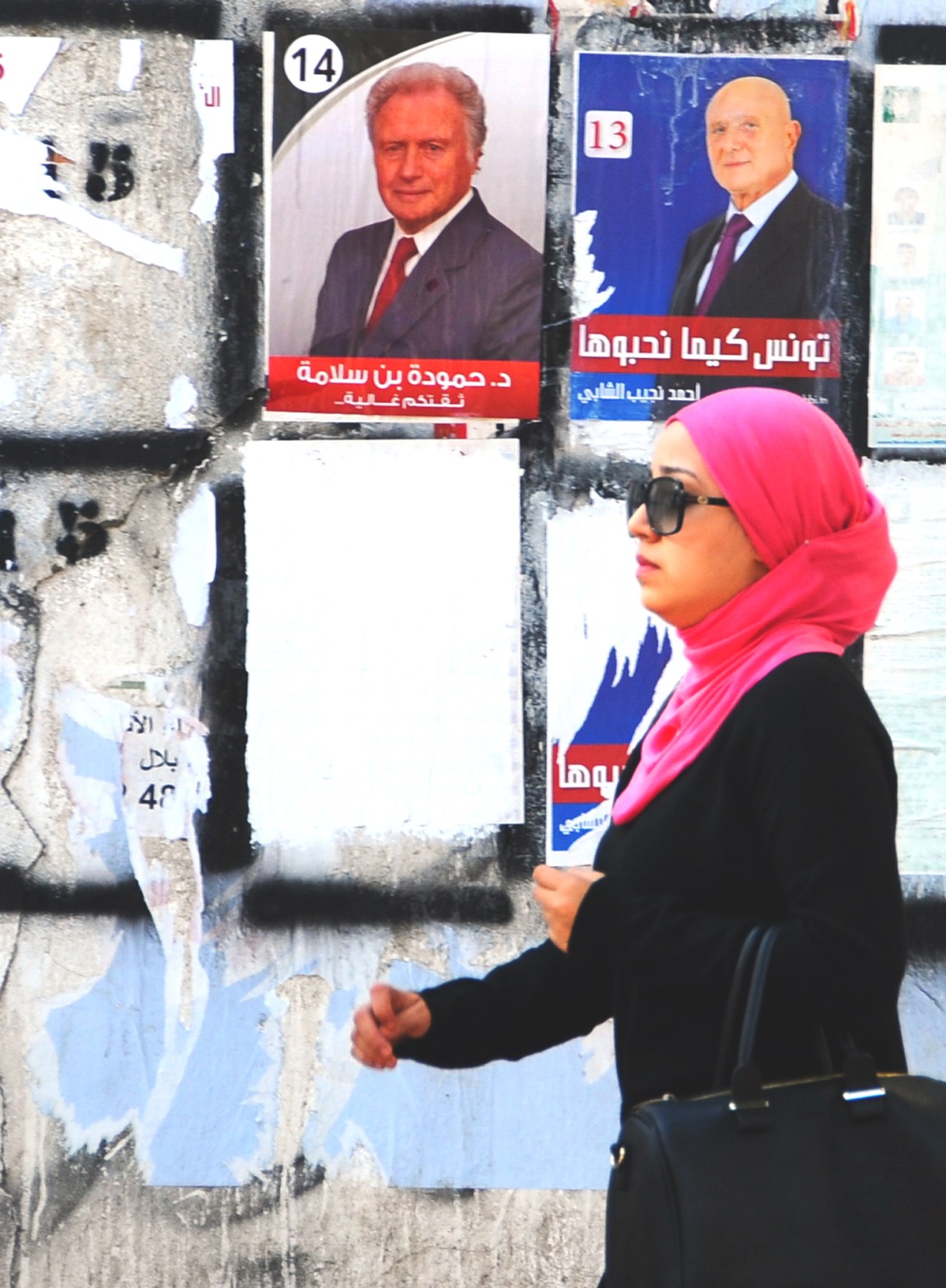
TUNIS, Tunisia (AP) – Tunisia took another step forward in its peaceful transition to democracy on Sunday by holding its first free presidential election, with voters hoping for more stability and a better economy.
Many Tunisians weighed security against the freedoms brought by their revolution and by its democratic transition, which has remained on track in sharp contrast to the upheavals brought by the Arab Spring elsewhere in the region, including the brutal military coup in Egypt and the conflicts in Syria, Yemen and Libya.
It hasn’t been easy for Tunisia, however, and the nearly four years since the revolution have been marked by social unrest, terrorist attacks and high inflation that has voters punishing the moderate Islamists that first came to power.
The front runner of the nearly two dozen candidates for the presidency is Beji Caid Essebsi, an 87-year-old former minister from the previous administrations who many are hoping will get the country back on track.
“He is a veteran politician with experience that can ensure security and stability,” said Mouldi Cherni, a middle age driver living in Tunis’ Carthage suburb who voted for Essebsi. “The people are tired, life has grown expensive and Tunisians don’t even have enough to make an ojja,” the local omelet favored by the poor.