
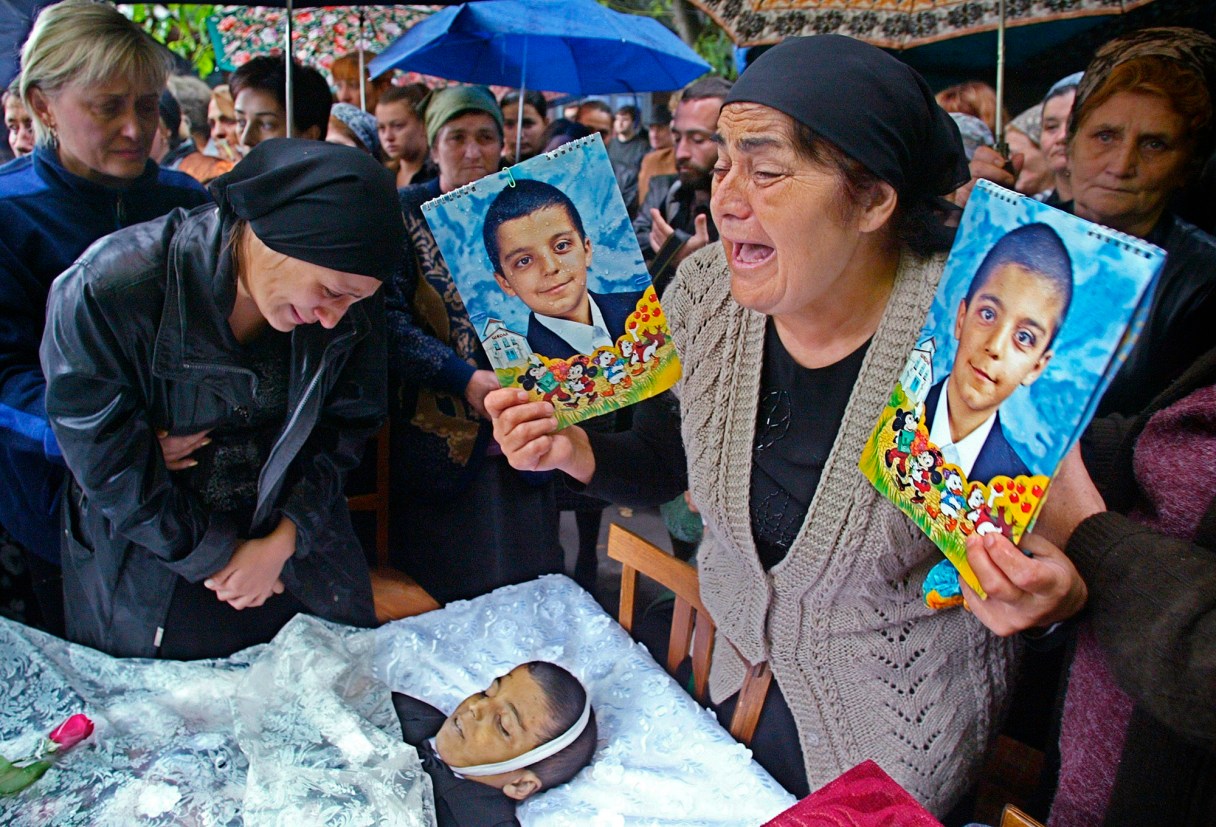
MOSCOW (AP) – The Kremlin’s spokesman on Thursday objected to a European Court of Human Rights ruling that Russia failed to adequately protect victims of a 2004 school siege in the city of Beslan that left more than 300 people dead.
The France-based court said authorities did not take necessary preventive measures to save lives. It said the security forces’ use of tank cannon, grenade launchers and flame-throwers contributed to casualties among the hostages. It noted failures to increase security before the attack despite imminent threats against schools in the area.
Armed radical Islamic assailants seized the school on the first day of class, prompting a long standoff that ended in explosions and gunfire two days later.
The court ordered that Russia pay nearly 3 million euros ($3.2 million) in total compensation to the 409 Russians who brought the case to the ECHR; they include people who were taken hostage, or injured or are relatives of the hostages or those killed and injured.
The Russian Justice Ministry said it would appeal the verdict. It contended that the judges failed to grasp the gravity of the situation during the siege and specifics of efforts taken to free the hostages.