
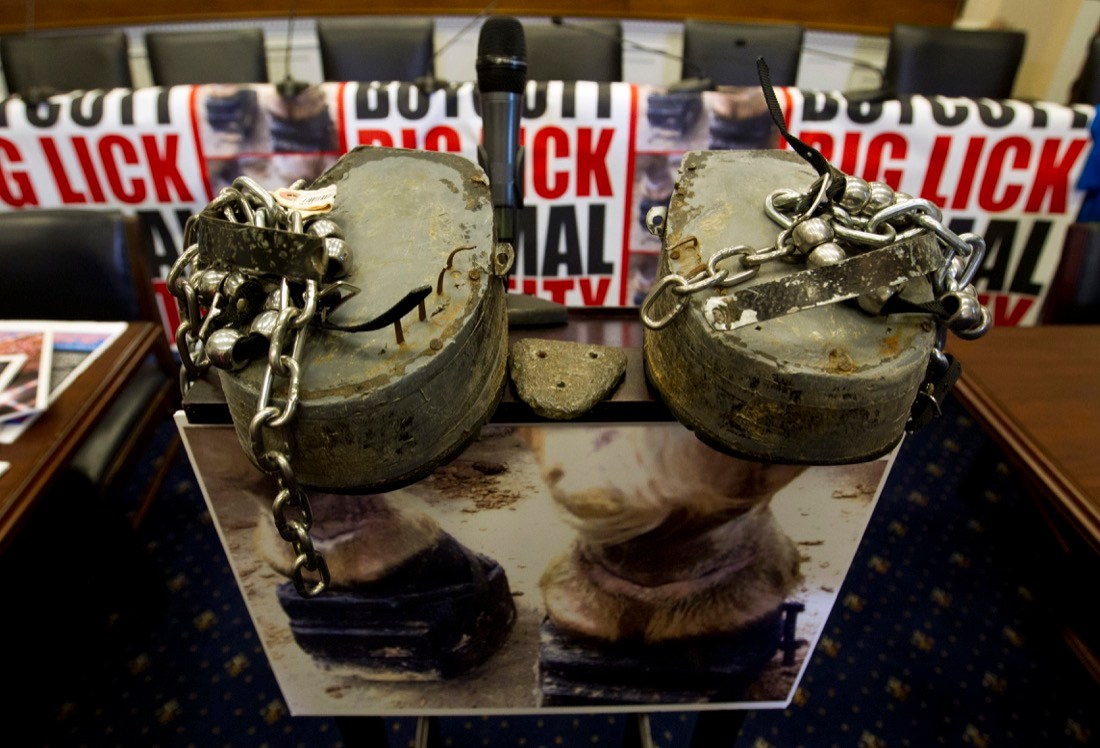
Members of the Nashville Metro Council are urging U.S. Sens. Lamar Alexander and Marsha Blackburn, R-Tenn., to support a bill they say will end the cruel practice of horse soring.
Soring is when humans intentionally injure horses’ forefeet to force an exaggerated, pain-induced step known as the “big lick.” The two senators representing Tennessee have repeatedly blocked the Prevent All Soring Tactics (PAST) Act, which the U.S. House passed by a 333-96 bipartisan vote in July, in favor of their own anti-soring legislation they say better preserves Tennessee tradition.
Unlike the PAST Act, their opposition bill allows “pad and action devices” – a phrase used to describe the stacked, weighted shoes and chains or bands placed on the front legs of Tennessee Walking Horses and similar breeds to create the “big lick.”
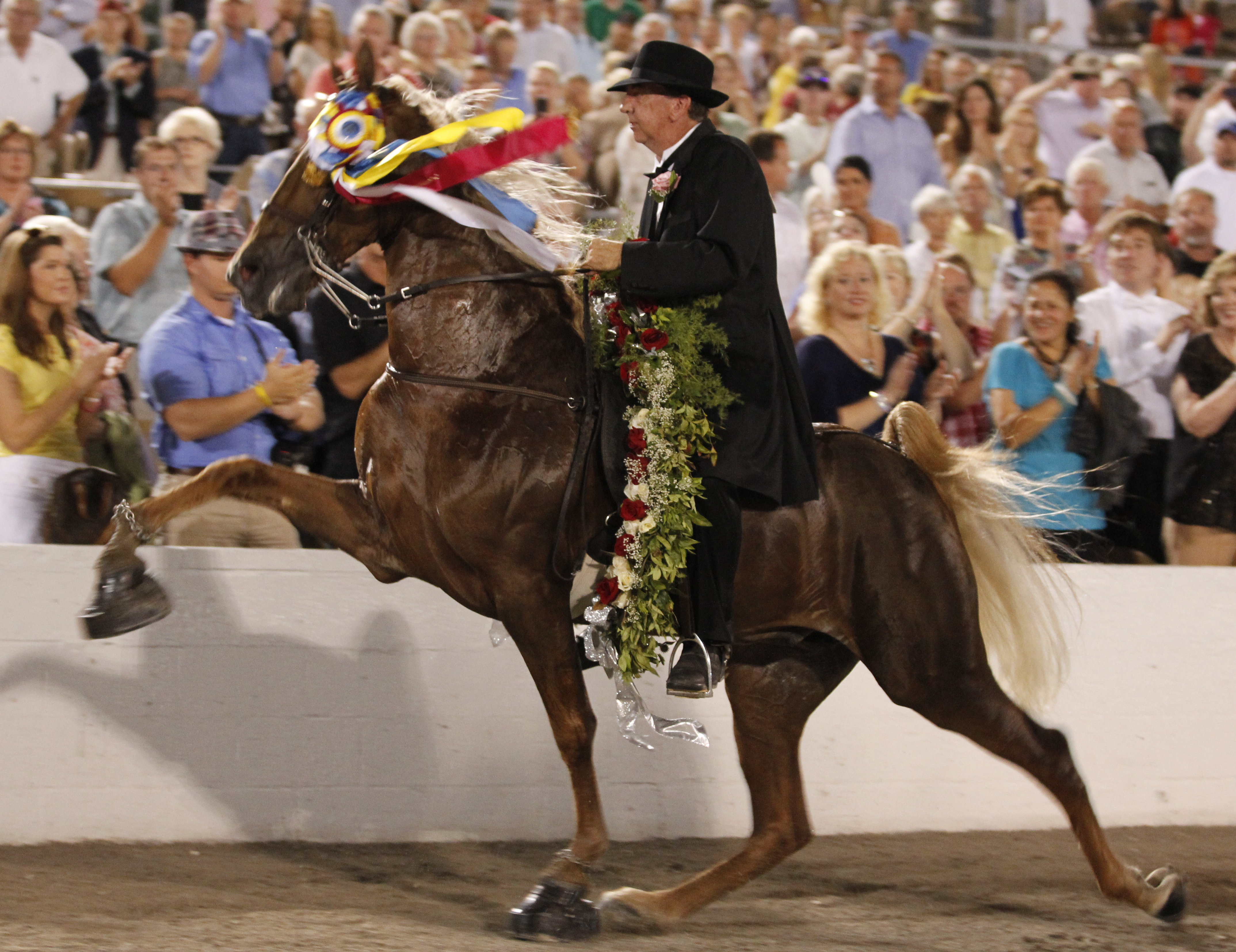 Chad Baucom shows the horse Walk Time Charlie on a victory lap around the arena after winning the World Grand Champion title on the final night of this year’s Tennessee Walking Horse National Celebration held in Shelbyville, Tenn., in 2012.
Councilwoman Nancy VanReece introduced the Nashville Metro Council’s resolution supporting the PAST Act, and it was approved at last night’s council meeting with an amendment by Councilwoman Kathleen Murphy.
“It was important that we went on the record saying we support the PAST Act,” said Murphy, District 24. “These action devices are frequently used to sore the horses … We don’t think that federal regulations go far enough now, and hopefully the PAST Act will close some of these loopholes.”