
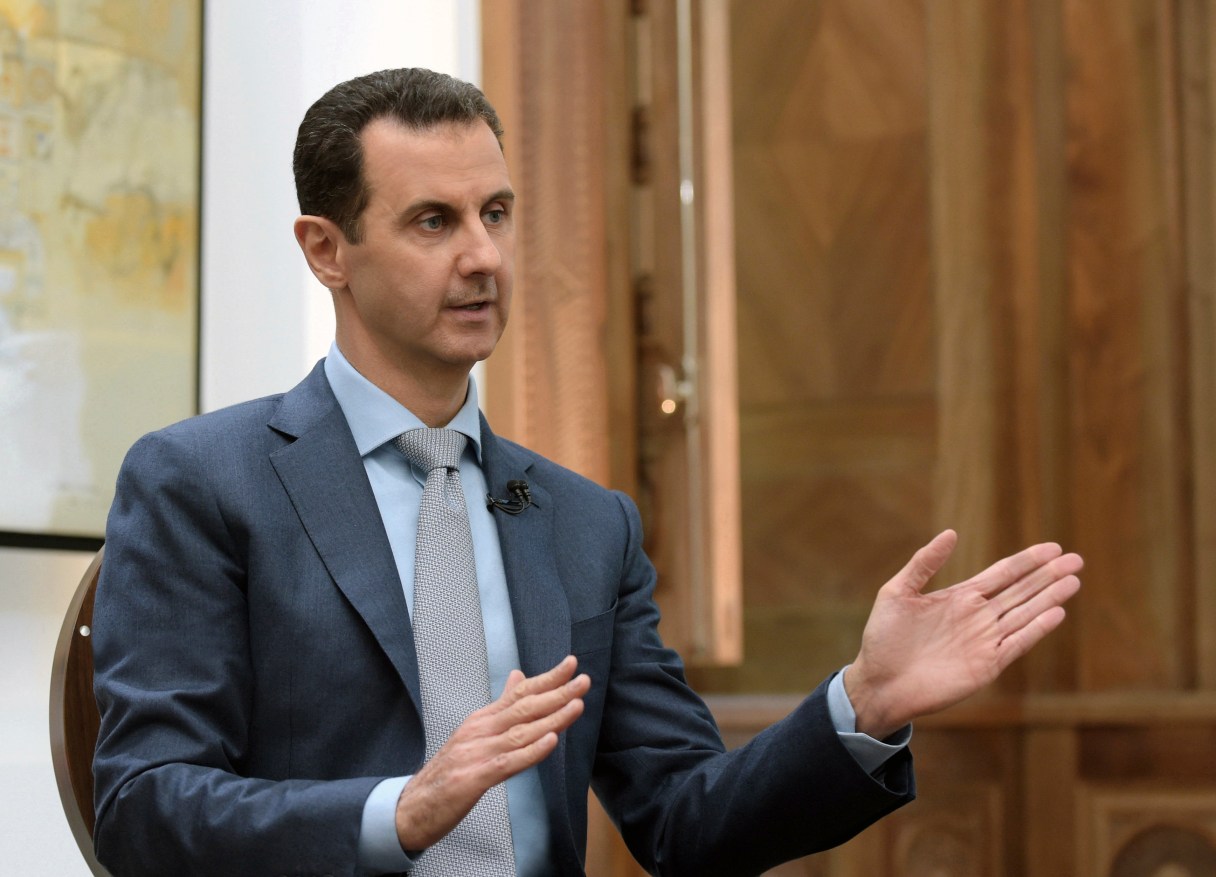
WASHINGTON (AP) – Can threatening war crimes charges persuade Syrian President Bashar Assad to leave power? What about guaranteeing his safety in exile? These long-shot proposals are at the center of the Trump administration’s new effort to resolve Syria’s six-year civil war.
Though still evolving, President Donald Trump’s plans for Syria have come into clearer view since he ordered cruise missiles fired on a Syrian air base to punish Assad for a chemical weapons attack. The strategy breaks down into three basic phases: defeating the Islamic State group, restoring stability in Syria region-by-region and securing a political transition in which Assad ultimately steps down.
The approach is little different than one that failed under the Obama administration, and arguably faces greater challenges.
Assad has violently resisted all attempts to end his rule, fueling a conflict that has killed as many as a half-million people. The opposition fighting Assad is far weaker after a series of battlefield defeats. And any U.S. plan for Assad will need the cooperation of key Syria ally Russia. Trump last week said U.S.-Russian relations “may be at an all-time low.”
Still, several U.S. officials said Trump’s national security team is using this month’s instability in Syria to try to refocus conversations with Moscow.