
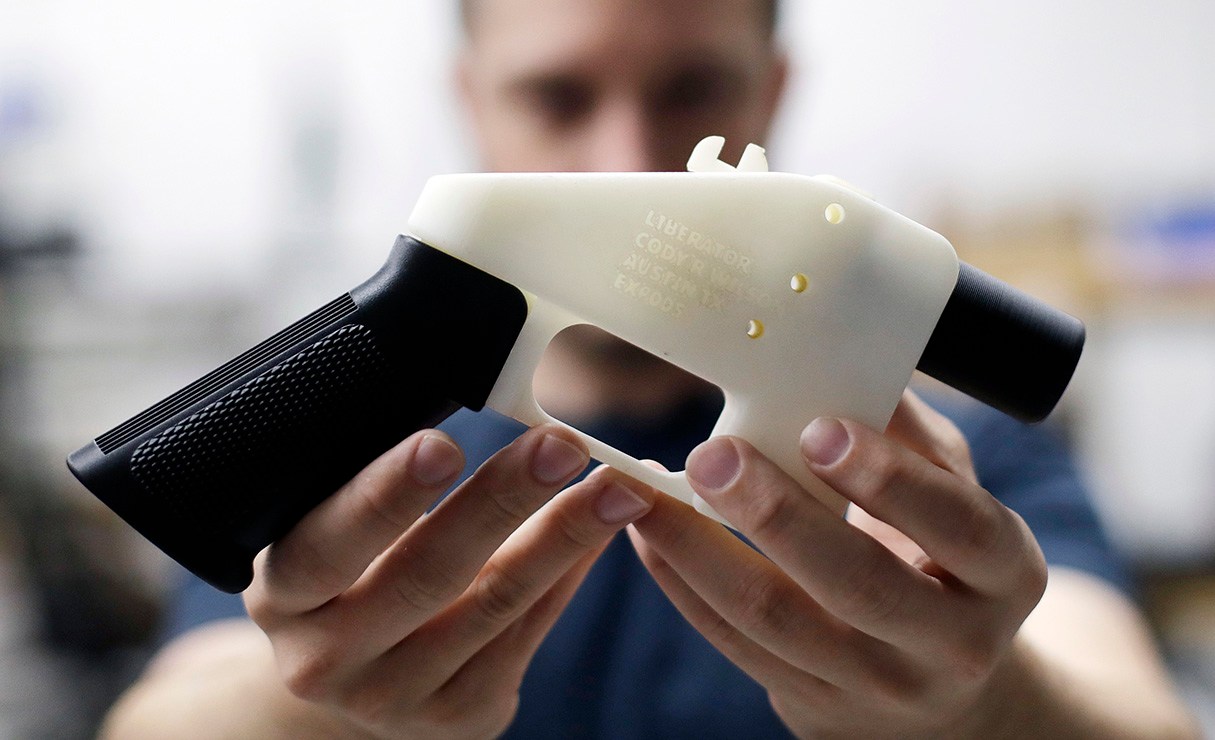
AUSTIN, Texas (AP) – The owner of a Texas company that makes untraceable 3D-printed guns said Tuesday that he has begun selling the blueprints through his website to anyone who wants to make one, despite a federal court order barring him from posting the plans online.
Cody Wilson said at a news conference that he started selling the plans Tuesday morning and that he had already received nearly 400 orders. He said he’ll sell the plans for as little as a penny to anyone in the U.S. who wants them.
“Anyone who wants to get these files is going to get them,” Wilson said, noting he can only sell to U.S. customers. “They can name their own price.”
Wilson said that blueprints purchased through his company’s website could be downloaded on a thumb drive and shipped to buyers by standard mail, sent by email or sent by some other secure download transfer. Some of his first sales included purchases made with crypto currency, he said.
Nineteen states and the District of Columbia had sought an injunction to stop a settlement that the State Department reached with Wilson’s Austin-based company, Defense Distributed, after the agency removed the 3D gun-making plans from a list of weapons or technical data that are not allowed to be exported. The states argued that online access to the undetectable plastic guns would pose a security risk and could be acquired by felons or terrorists.