
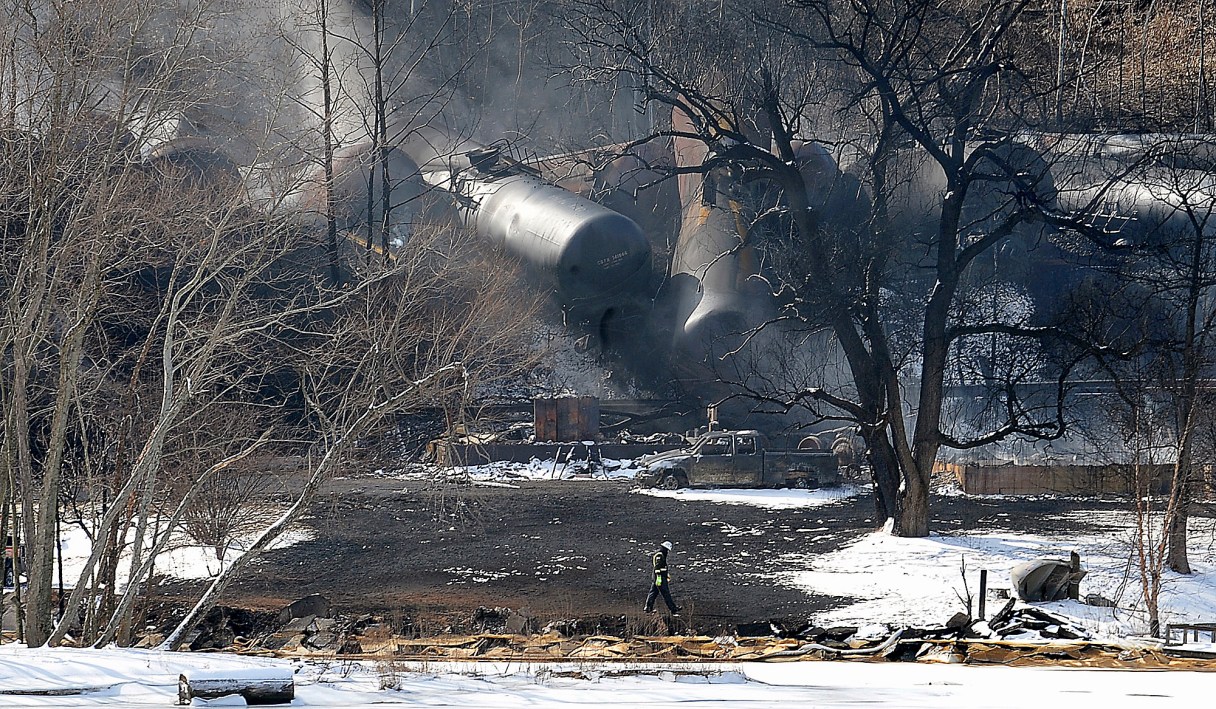
BILLINGS, Mont. (AP) – Tank cars carrying oil or ethanol by rail urgently need to be retrofitted or replaced to make them more fire-resistant after a spate of explosive accidents in recent months revealed the shortcomings of industry-backed safety standards, U.S. officials said Monday.
The National Transportation Safety Board issued a series of recommendations calling for tank cars to be fitted with protective systems better able to withstand fire than the bare steel construction now widely in use. It said a decade-long retrofit timeline that’s been suggested by the tank car industry was too long to wait.
“The longer we wait, the more we expose the public to the problems of these cars that aren’t especially robust,” NTSB Chairman Christopher Hart told The Associated Press.
One alternative cited by the safety board would equip flammable liquids cars with ceramic “thermal blankets” that surround the tank and shield it from intense heat should a nearby car catch fire. Those blankets already are used for transporting liquefied petroleum gas.
Also recommended were relief valves that can prevent pressure from building inside tank cars as they heat up from nearby fires.