
The original “Dumbo” was released in the summer of 1941 while Germany was spreading across Europe and war was breaking out in the Pacific. Crafted as a simpler Disney fable after the more extravagant “Fantasia” disappointed at the box office, “Dumbo” – only 64 minutes in length – took flight just as far more chilling creations were taking to the air.
Almost eight decades later, “Dumbo” is alight again in Tim Burton’s somber and sincere live-action remake of the animated classic. Burton has refashioned “Dumbo” as a sepia-toned show-business parable tailored to more animal rights-sensitive times.
“Dumbo” is the latest in a circus parade of Disney remakes (“The Lion King” and “Aladdin” are due out later this year) that brings classic characters into seemingly more real worlds with the aid of digital wizardry. None of them will overwhelm anyone by their necessity. Movies, after all, aren’t smart phones that require software updates.
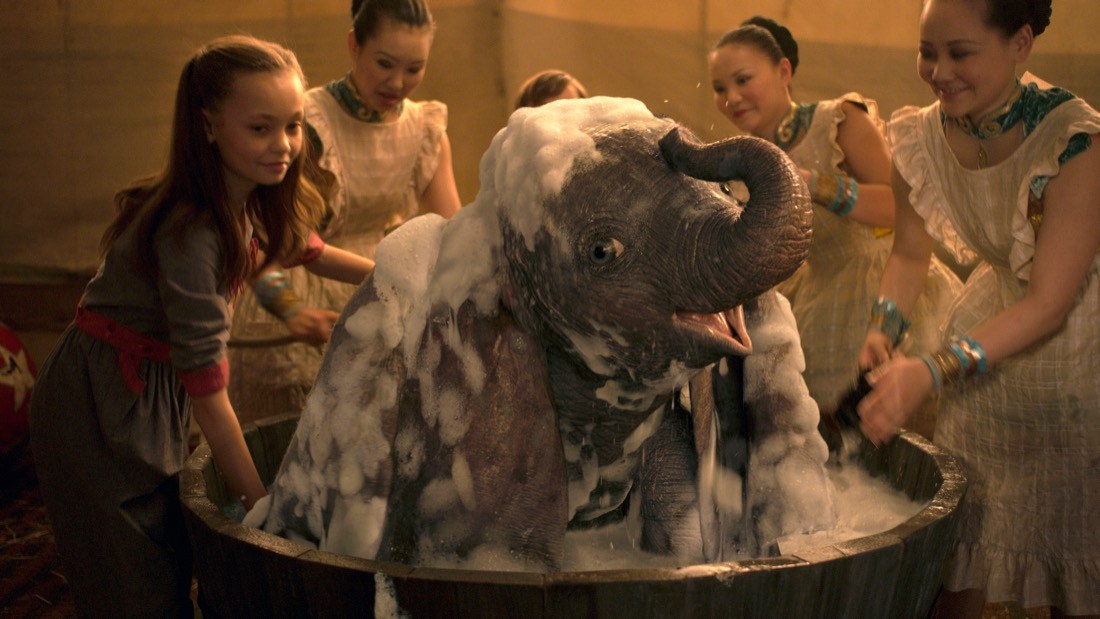
That said, Burton’s “Dumbo,” while inevitably lacking much of the magic of the original, has charms and melancholies of its own, starting, naturally, with the elephant in the room. Of all the CGI make-overs, this Dumbo is the most textured, sweetest and most soulful of creatures. Like the original, he doesn’t speak and trips over his floppy ears. Whether cowering at a new height or finding astonishment as he, with a sneeze, is sent airborne, the digitally rendered Dumbo is one precious pachyderm.
The film opens in 1919 on the heels of World War I. Holt Farrier (Colin Farrell, who has grown into the most sensitive and consistent of leading men) returns from war, minus an arm, to his two children, Milly (Nico Parker) and Joe (Finley Hobbins). Though Dumbo endures separation from his mother in Burton’s film, the deeper grief in “Dumbo” has been transferred to the humans: The children’s mother died while Holt was away at war from an influenza that, as one character says, “hit like a hurricane.”