
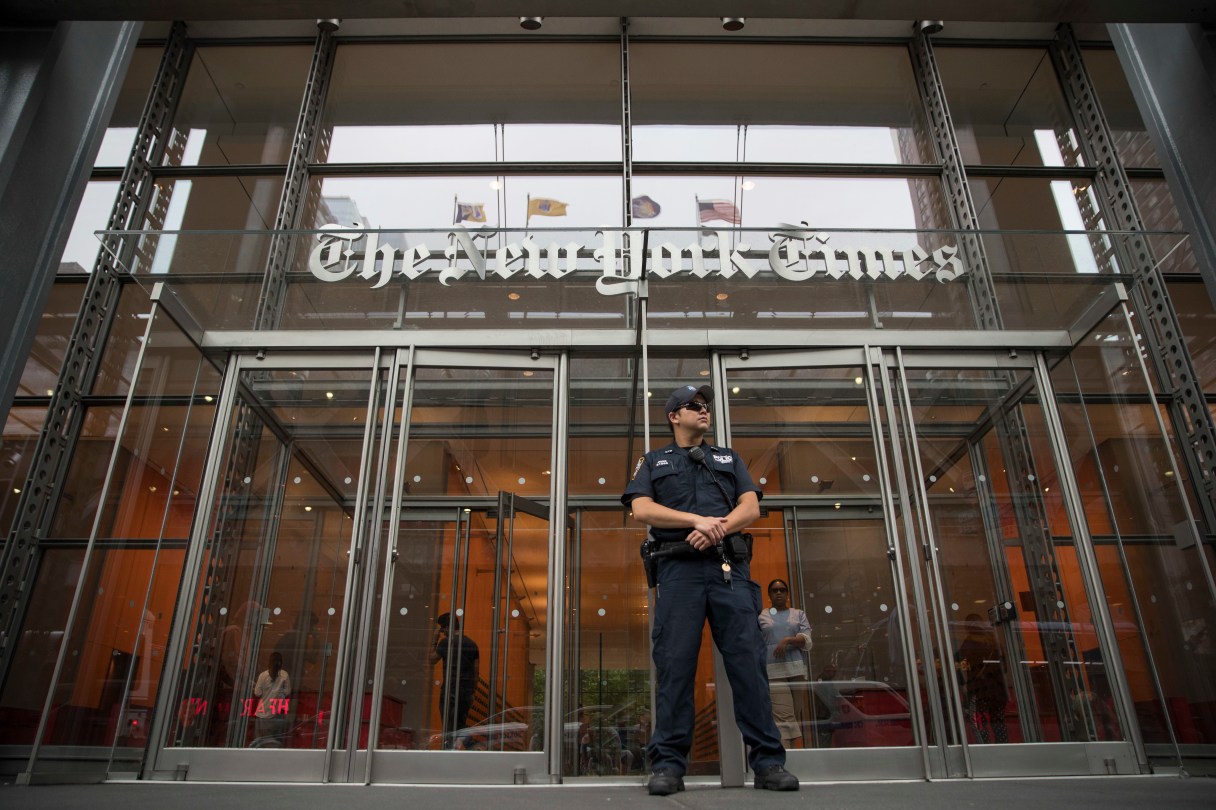
NEW YORK (AP) – The campaign to reelect President Donald Trump sued The New York Times for defamation Wednesday, saying it was responsible for an essay by a former executive editor for the newspaper that claimed the campaign made a deal with Russian officials to defeat Hillary Clinton in 2016.
In the lawsuit in state court in New York, Donald J. Trump for President Inc. said the newspaper knowingly published false and defamatory statements when the Op-Ed piece claimed the campaign had an “overarching deal” with “Vladimir Putin’s oligarchy” to defeat the Democratic candidate.
The lawsuit blamed the newspaper for the essay, saying the March 2019 article headlined “The Real Trump-Russia Quid Pro Quo,” by Max Frankel, said the deal called for “the quid of help in the campaign against Hillary Clinton for the quo of a new pro-Russian foreign policy.”
Frankel was executive editor of the Times from 1986 to 1994.
The lawsuit said Times reporters had confirmed the falsity of the statements, but the newspaper published them anyway because of its “extreme bias against and animosity toward the Campaign, and The Times’ exuberance to improperly influence the presidential election in November 2020.”