
Monday, November 16, 2026Nov 16

Hospital visitation rules: Families of COVID-19 patients want more access

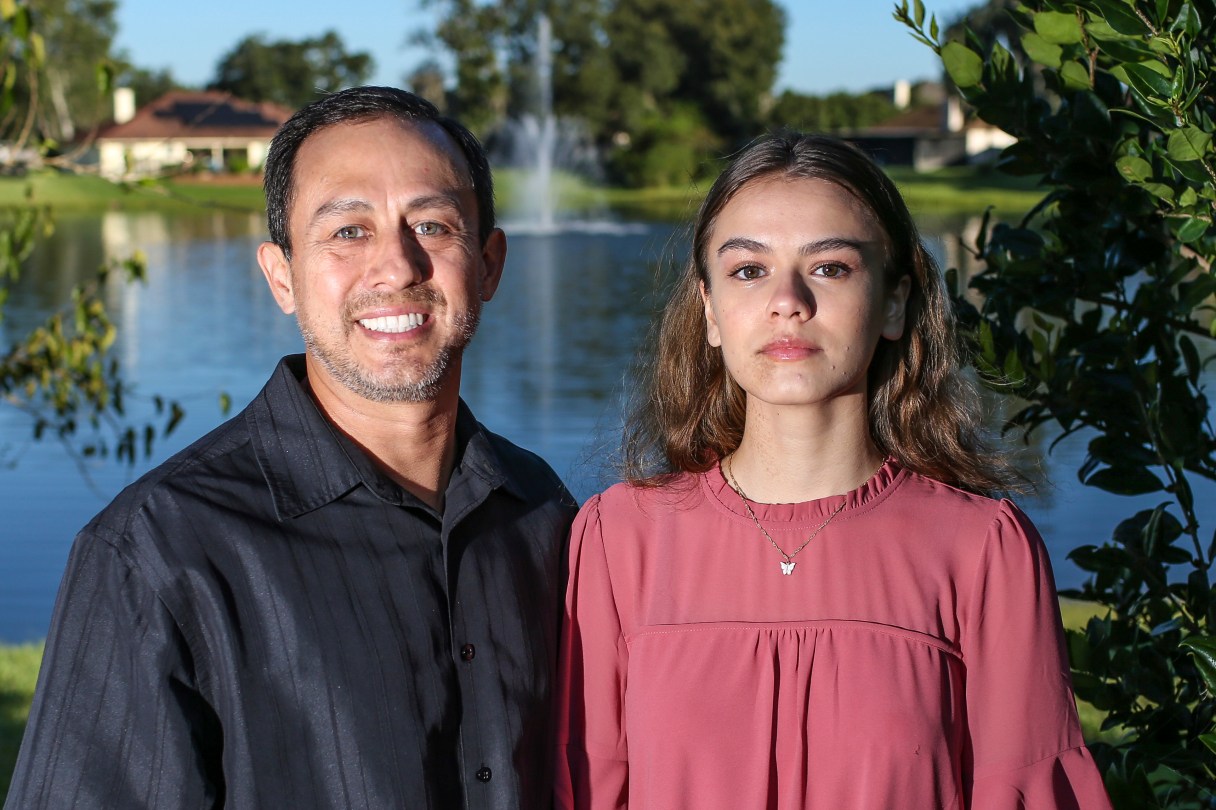
Portrait of Mitch Arbelaez and his daughter Jayden in Jacksonville, Fla., Wednesday, Oct. 13, 2021.  Banned from the Florida hospital room where her mother lay dying of COVID-19, Jayden Arbelaez pitched an idea to construction employees working nearby.  The workers gave the 17-year-old a yellow vest, boots, a helmet and a ladder to climb onto a section of roof so she could look through the window and see her mother, Michelle Arbelaez, alive one last time. (AP Photo/Gary McCullough)
Portrait of Mitch Arbelaez and his daughter Jayden in Jacksonville, Fla., Wednesday, Oct. 13, 2021. Banned from the Florida hospital room where her mother lay dying of COVID-19, Jayden Arbelaez pitched an idea to construction employees working nearby. The workers gave the 17-year-old a yellow vest, boots, a helmet and a ladder to climb onto a section of roof so she could look through the window and see her mother, Michelle Arbelaez, alive one last time. (AP Photo/Gary McCullough)

MIAMI (AP) – Banned from the Florida hospital room where her mother lay dying of COVID-19, Jayden Arbelaez pitched an idea to construction employees working nearby.

“Is there any way that I could get there?” Arbelaez asked them, pointing to a small third-story window of the hospital in Jacksonville.

The workers gave the 17-year-old a yellow vest, boots, a helmet and a ladder to climb onto a section of roof so she could look through the window and see her mother, Michelle Arbelaez, alive one last time.

A year and a half into a pandemic that has killed 700,000 people in the U.S., hospitals in at least a half-dozen states have loosened restrictions governing visits to COVID patients. Others, however, are standing firm, backed by studies and industry groups that indicate such policies have been crucial to keeping hospital-acquired infections low.

Some families of COVID-19 patients – and doctors – are asking hospitals to rethink that strategy, arguing that it denies people the right to be with loved ones at a crucial time.