
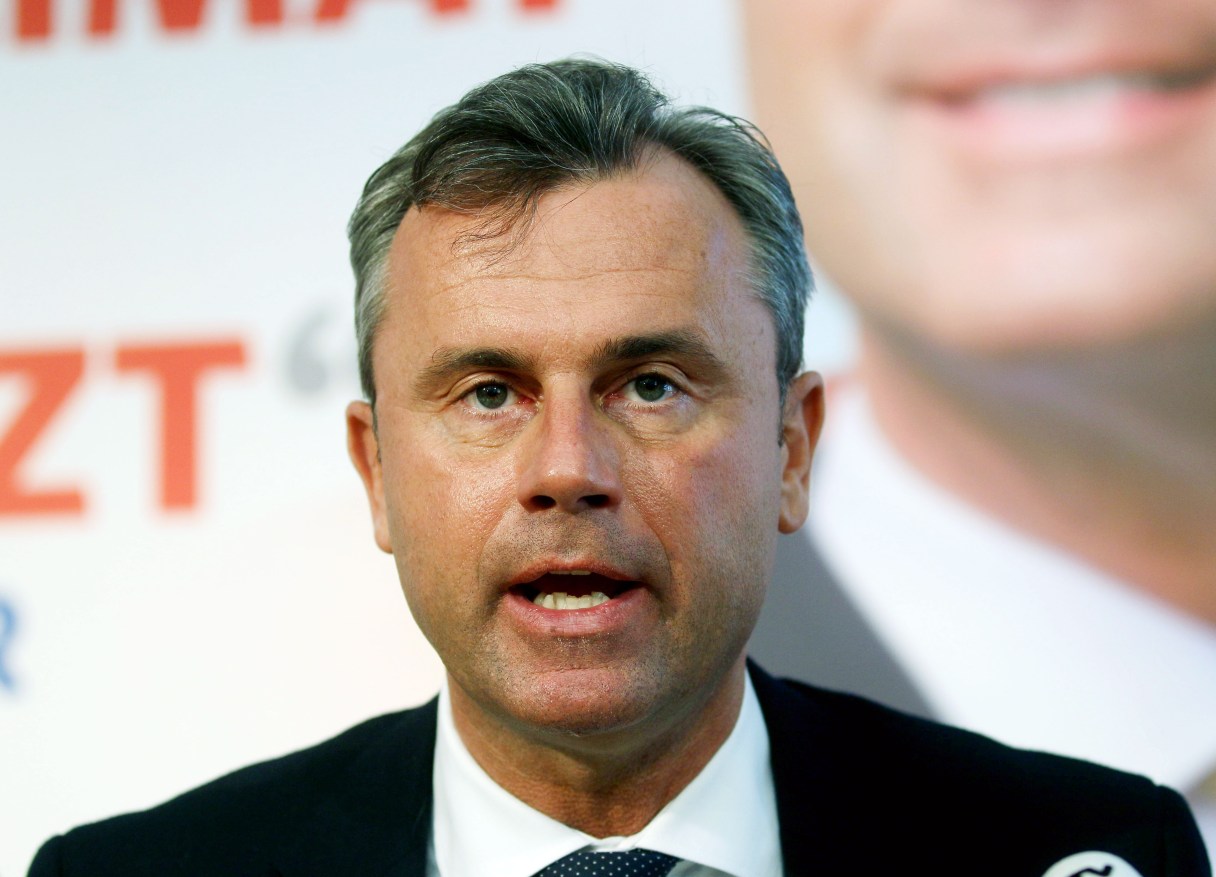
VIENNA (AP) – Even before a vehemently anti-EU party won strong support in Austria, the European Union’s top official acknowledged that the 28-nation bloc was in trouble.
“We are facing very tough times,” European Commission President Jean-Claude Juncker told parliamentarians this month. “We are not very popular when we advocate for Europe.”
Those comments were reinforced just days later with the victory Sunday of an anti-EU right-wing party in the first round of Austria’s presidential election.
Such parties are growing in strength and putting European unity under siege. Instead of moving closer toward the founding nations’ ultimate goal of “an ever-closer union,” the EU faces disconnect and drift as populists blame it for much of the continent’s ills.
At its worst, the EU faces a possible downsizing after Britain’s June 23 referendum on whether the country should stay in the bloc of 500 million people. But less immediate threats also loom, from Eurosceptic populist parties that are exploiting both domestic voter discontent and general disillusionment with the EU to gain in strength.