
Friday, November 13, 2026Nov 13

US economy, though sluggish, may now be sturdier

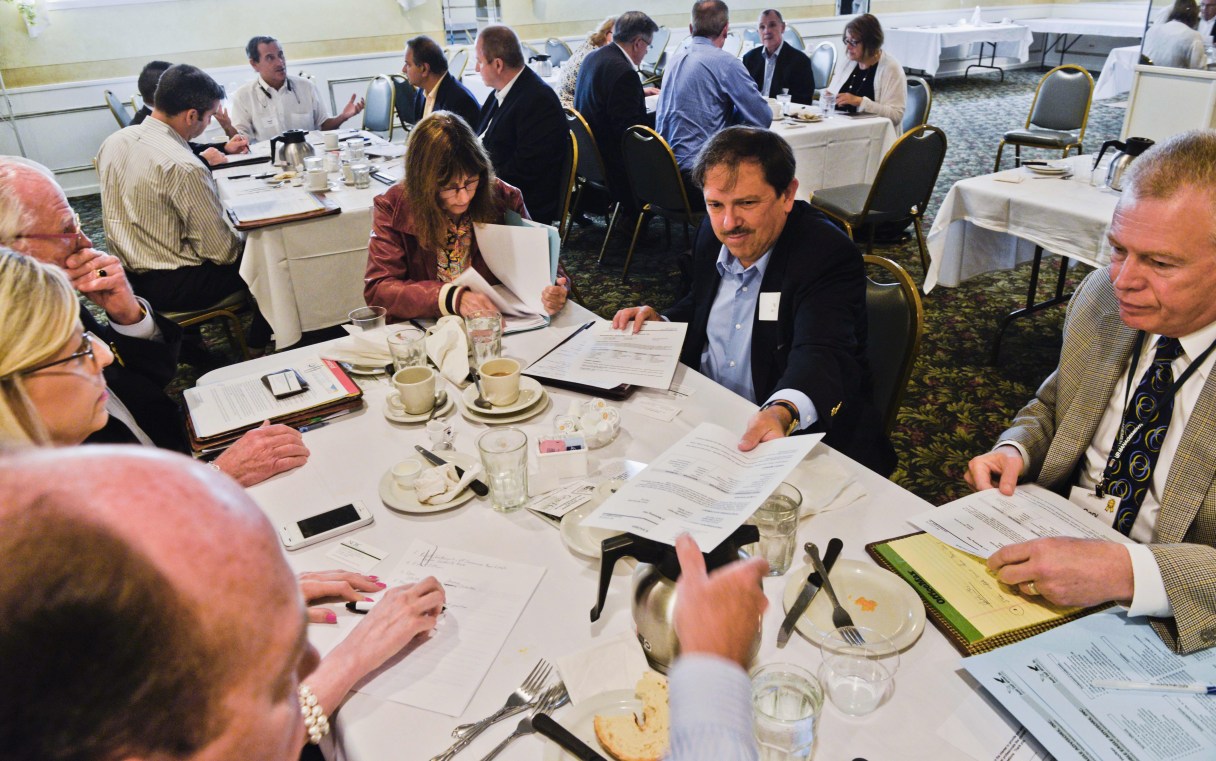
In this Tuesday, July 8, 2014 photo, Mark Ahlemann, center, passes out papers to participants during a during a breakfast networking session hosted by Gray Hair Management at a restaurant in Elk Grove Village, Ill. By continuing to draw a paycheck, older workers pay taxes and that ought to reduce the budgetary pressures on younger generations, Gary Burtless, a senior economics fellow at the Brookings Institution, concluded in a 2013 paper. But in a sluggish recovery where job gains have not kept pace with population growth, the persistence of older workers has actually hurt younger generations  (AP Photo/Matt Marton)
In this Tuesday, July 8, 2014 photo, Mark Ahlemann, center, passes out papers to participants during a during a breakfast networking session hosted by Gray Hair Management at a restaurant in Elk Grove Village, Ill. By continuing to draw a paycheck, older workers pay taxes and that ought to reduce the budgetary pressures on younger generations, Gary Burtless, a senior economics fellow at the Brookings Institution, concluded in a 2013 paper. But in a sluggish recovery where job gains have not kept pace with population growth, the persistence of older workers has actually hurt younger generations (AP Photo/Matt Marton) In this Tuesday, July 8, 2014 photo, Mark Ahlemann, center, passes out papers to participants during a during a breakfast networking session hosted by Gray Hair Management at a restaurant in Elk Grove Village, Ill. By continuing to draw a paycheck, older workers pay taxes and that ought to reduce the budgetary pressures on younger generations, Gary Burtless, a senior economics fellow at the Brookings Institution, concluded in a 2013 paper. But in a sluggish recovery where job gains have not kept pace with population growth, the persistence of older workers has actually hurt younger generations (AP Photo/Matt Marton)

WASHINGTON (AP) – Out of a seemingly hollow recovery from the Great Recession, a more durable if still slow-growing U.S. economy has emerged.

That conclusion, one held by a growing number of economists, might surprise many people. After all, in the five years since the recession officially ended, Americans’ pay has basically stagnated. Millions remain unemployed or have abandoned their job searches. Economic growth is merely plodding along.

Yet as the economy has slowly healed, analysts say it has replaced some critical weaknesses with newfound strengths. Among the trends:

– Fewer people are piling up credit card debt or taking on risky mortgages. This should make growth more sustainable and avoid a cycle of extreme booms and busts.

– Banks are more profitable and holding additional cash to help protect against a repeat of the 2008 market meltdown.