
WASHINGTON — A favorite Arab proverb goes something like this: A shepherd asks the Prophet: Should I let my camels loose and trust in God? No, answers the Prophet. Tie down your camels and trust in God.
The Obama administration has been operating with a loose strategy in Syria and Iraq. Washington said that Syrian President Bashar al-Assad must go, but missed its opportunity to make him leave. The U.S. bet on the ability of a mainly Shiite security force in Iraq to regain territory from the Islamic State, even when Sunnis there told Washington it wouldn’t work.
 David Ignatius
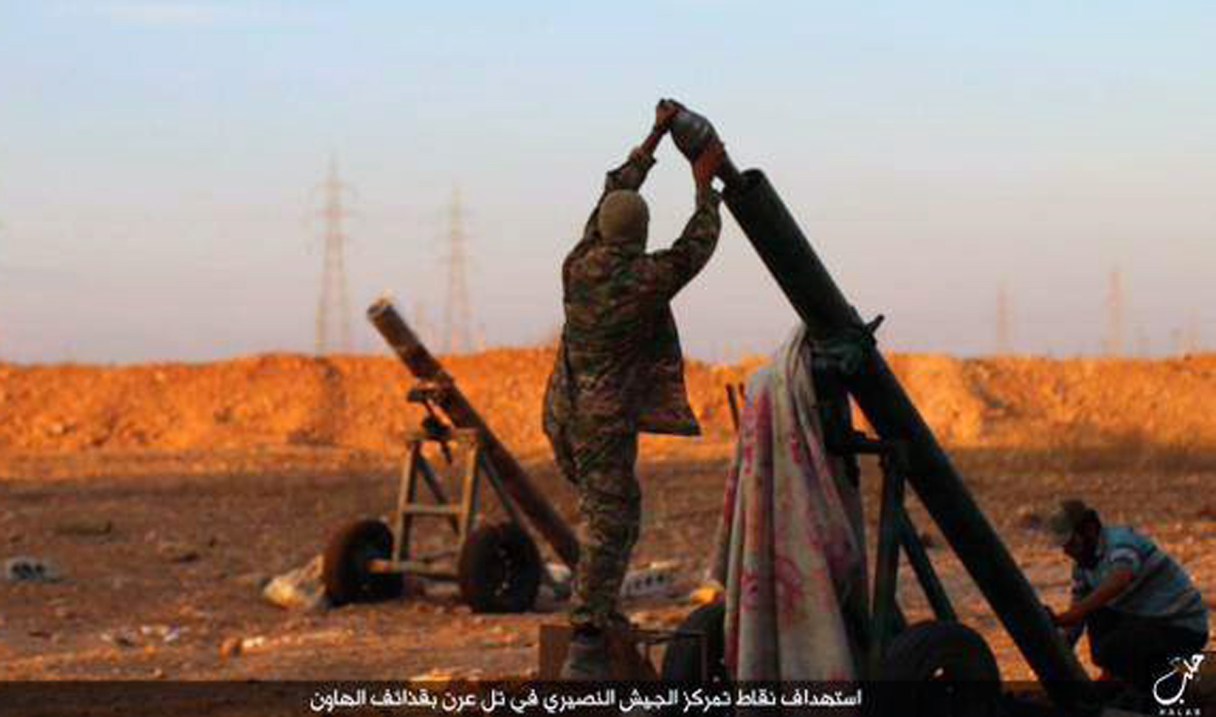
The loose camels have now wandered off. Russian President Vladimir Putin revealed the strategic disarray – the contradictions and unrealistic expectations in U.S. policy – when he intervened militarily in Syria last month. The question now is how the administration can tie down its policy to a more realistic set of objectives going forward.
Let’s make several starting assumptions: First, Putin, Assad and their friends in Iran cannot impose a military solution in Syria. Their alliance will deepen the Sunni world’s jihad against them, and will probably increase the terrorist and refugee threat to Europe. They can’t “win.” Second, everyone wants to contain and eventually, crush the Islamic State. It’s the one goal that unites Russia, America, Iran and Saudi Arabia.
What should the Obama administration do, in its remaining 16 months, to frame a strategy that could continue into the next administration and perhaps beyond?
The U.S. must first gather better intelligence about this battle space. We have been surprised too many times. Our military needs the kind of “ground truth” in Syria and Iraq that can only come from reliable, long-term intelligence sources.
A prime example of the intelligence shortfall is the train-and-equip program that was derailed so quickly this summer by Jabhat al-Nusra, the al-Qaeda affiliate, in northern Syria. The Pentagon needs to assess immediately why this overt, U.S.-backed program failed so badly, and whether it can be rebuilt. A better bet may be the CIA’s covert training program, whose fighters can make tactical battlefield deals with Jabhat al-Nusra without publicly allying with it.
What about safe zones in northern and southern Syria? That still seems like a good idea, so long as they’re established as corridors for humanitarian assistance and revived public services. Here, again, the U.S. needs better information. Scores of Syrians travel across the border from Turkey and Jordan every day to deliver basic supplies and keep water and other essential services operating. Talk to them! Maybe these zones could be the start of a managed transition to a post-Assad government.
The U.S. has lost its chance to make Assad’s departure a precondition for negotiations. But Washington should continue to insist that he must go eventually. Otherwise, no political deal can work.
Ground truth in Iraq is that Sunnis bitterly mistrust the Shiite government, and vice versa. Sadly, this won’t change for a generation. Now is the time for America to insist on a federal Iraq, and to arm Sunnis and Kurds unilaterally if Baghdad (pressed by Iran) continues to resist.
What Putin has done, perhaps without realizing it, is to deepen the sectarian character of the war raging across Syria and Iraq. It’s the Shiite team (Russia, Iran, Alawites in Syria, Shiites in Iraq) versus the Sunni team (America, Turkey, Saudi Arabia and Sunni rebels). Such a war is a disastrous mistake for everyone. The U.S. needs a strategy that begins to contain the sectarian violence, rather than adding more fuel.
Washington Post Writers Group