
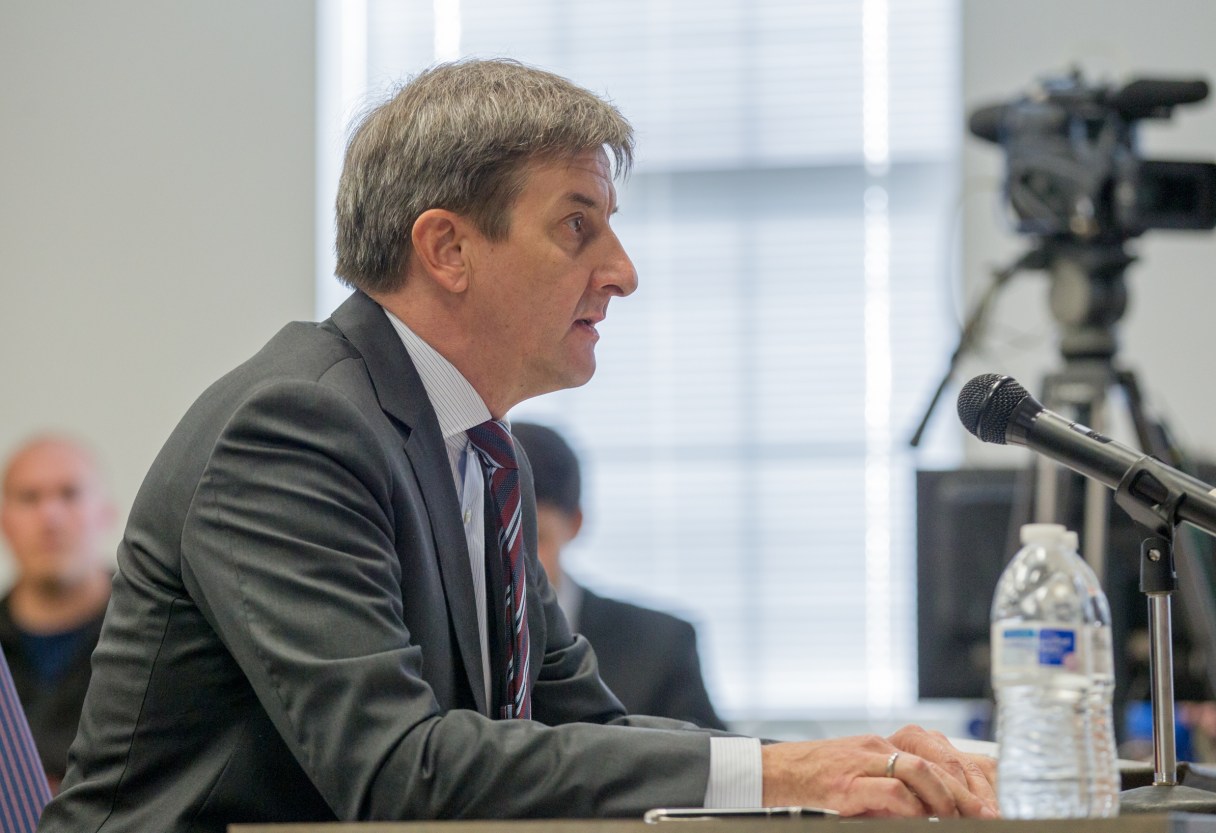
CHATTANOOGA, Tenn. (AP) – The head of Volkswagen’s lone U.S. plant in Tennessee told state lawmakers that the German automaker’s plans for the factory remain intact despite the fallout from the company’s diesel emissions cheating scandal.
Christian Koch, the plant’s president and CEO, said that diesels made up between 20 percent and 25 percent of the midsized Passat sedans produced in Chattanooga before sales were halted following the revelations. The plant has made more than 500,000 Passats since 2011.
But Koch said that the focus of production has been shifted to a gasoline version so that the factory is “not missing one car of production” in the aftermath of the scandal.
Koch said that the schedule of production of a new SUV at the plant remains on track. He told lawmakers that equipment is being installed for the production of a successor of the Passat which could be hybrid or electric vehicles.
The meeting was presided over by Sen. Bo Watson, R-Chattanooga, a longtime critic of the company for not taking a harder line against the United Auto Workers’ efforts to unionize the plant. But Watson opened the hearing by saying that labor issues were not the reason for the hearing, and the issue did not come up during the discussion.