
Monday, November 16, 2026Nov 16

Supreme Court takes up Texas law banning most abortions

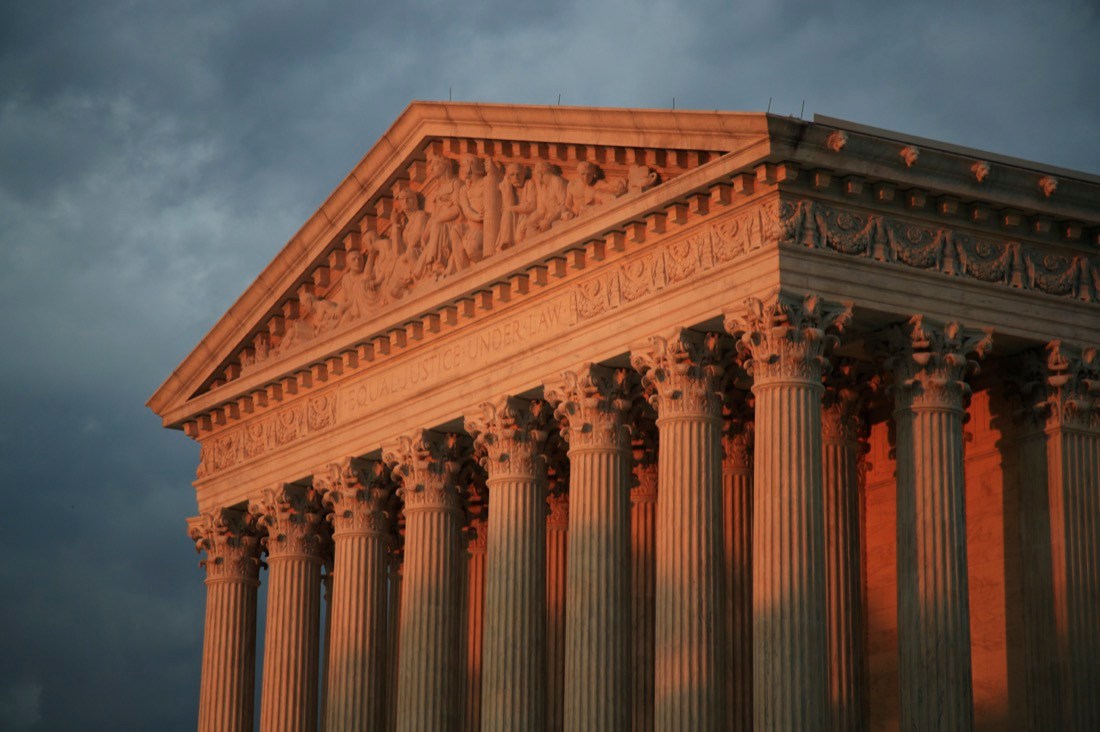
FILE - This Oct. 4, 2018, file photo shows the U.S. Supreme Court at sunset in Washington. Over the objections of the Biden administration, the Supreme Court has agreed to consider a climate change case that could limit the Environmental Protection Agency's authority to curb greenhouse gas emissions. The court also said Oct. 29, 2021, that it would hear a Republican-led immigration challenge. Both cases won't be argued until 2022 at the earliest. (AP Photo/Manuel Balce Ceneta, File)

WASHINGTON (AP) – The Supreme Court is taking up challenges to a Texas law that has virtually ended abortion in the nation’s second-largest state after six weeks of pregnancy.

The justices are hearing arguments Monday in two cases over whether abortion providers or the Justice Department can mount federal court challenges to the law, which has an unusual enforcement scheme its defenders argue shields it from federal court review.

In neither case is the right to an abortion directly at issue, but the motivation for lawsuits filed by abortion providers and the Justice Department is that the Texas law conflicts with landmark Supreme Court rulings that prevent a state from banning abortion early in pregnancy.

The justices will hear a separate challenge to the decisions in Roe v. Wade and Planned Parenthood v. Casey in a case over Mississippi’s ban on abortion after 15 weeks. Those arguments are set for Dec. 1.

The Texas law has been in effect since September, except for a 48-hour period in early October when it was blocked by a lower court.