
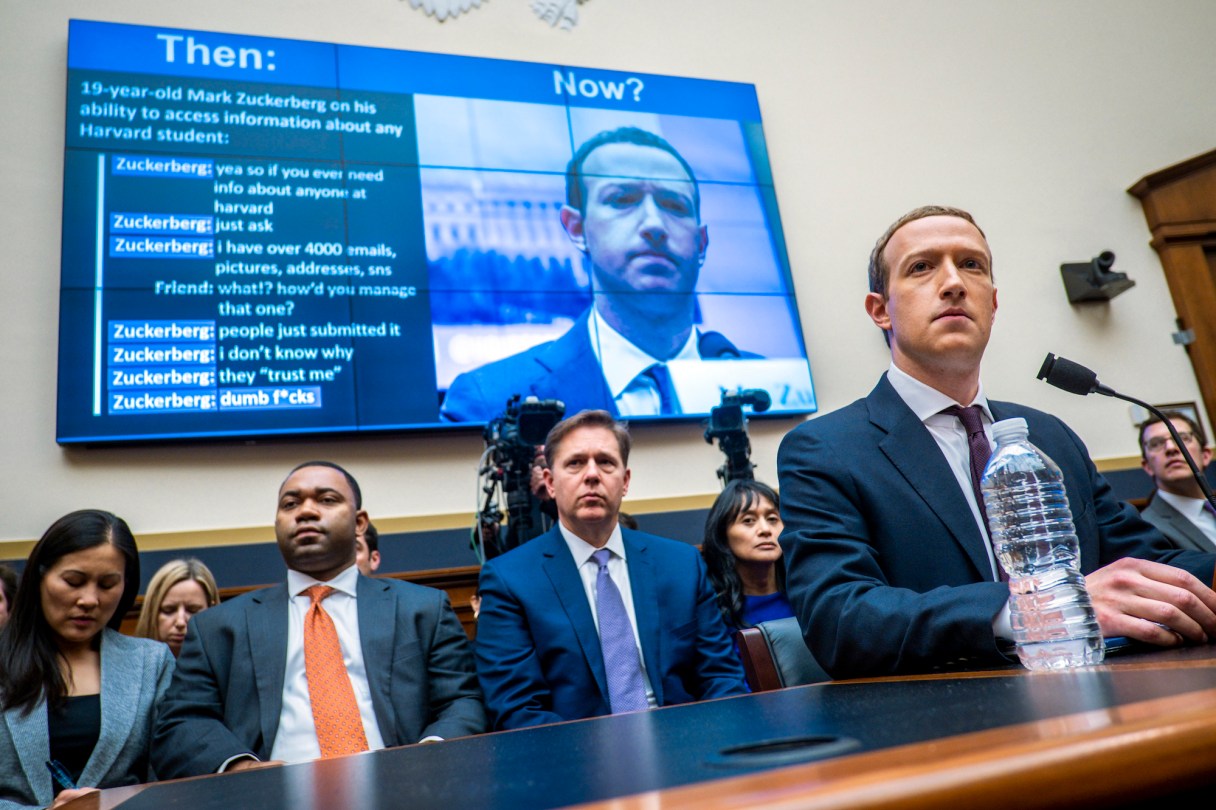
If Facebook were a religion, it would be the world’s largest faith, with just under a third of the planet, 2.4 billion people, tied into a network controlled largely by one man. It’s a business, of course, with a business model that makes much of its money by channeling tidings of sludge around, often to great harm.
After helping give us Donald Trump as president and mass killings in places where a lie can dash around the world before truth puts on its pants, Facebook has lately been playacting as a good citizen. Which is to say, it’s courting lawmakers and regulators in a bid to remain the world’s most powerful gatekeeper of information.
The highlight of the latest charm tour was the speech last week at Georgetown by Facebook’s chief executive, Mark Zuckerberg. He cited the Rev. Martin Luther King Jr. and Frederick Douglass, and painted himself as a defender of free expression in the marketplace of ideas.
“I think we’re in the right place on this,” Zuckerberg said, explaining why the company would not stop politicians from using Facebook to spread lies. “I think people should be able to hear for themselves what politicians are saying.”
Yes, of course – let the people hear for themselves, no matter if it’s true or not. They can decide. Except, they can’t, especially older users. A study in Science recently found that it’s possible “an entire cohort of Americans” lacks the digital smarts to distinguish made-up garbage from the truth on Facebook.
And what if these politicians push their exemption from fact-checking to devious extremes – a bundle of lies that results in voter suppression, or confusion on polling places and time, or violence?
Facebook is one of the main reasons democracy is in such peril. The company’s algorithms favor the echo chamber, backing a user’s bias. That black hole is so full of fantasies and half-truths that it’s impossible for millions of people to have a basic grasp of the facts needed to make informed decisions.
The Georgetown speech showed just how much Zuckerberg fears offending the politicians who depend on Facebook’s liars’ market. It was a profile in cowardice.
Granted, Facebook has done much to prevent the viral spread of hate, hoaxes and health scares; it’s hired an army of 35,000 to “remove content when it could cause real danger,” Zuckerberg said. And this week the company announced that it had taken down four state-backed disinformation campaigns.
That Facebook is now helping Trump’s bid for another term is no surprise, given that this president will be remembered for sitting atop the Mount Everest of lies. And since the impeachment inquiry started, the Trump campaign has been flooding Facebook with falsities that nice older citizens can share with other nice older citizens.
Zuckerberg is clearly afraid of politicians dismantling his company. It seems as if nearly every state attorney general is looking at Facebook’s oversized power to control users’ personal information.
Zuckerberg’s biggest fear has to be the Justice Department, which Trump uses as a private political tool to punish his enemies. Allowing Trump and other politicians free rein to free-associate reality on Facebook is Zuckerberg’s best leverage to keep the Justice Department dogs away.
After Facebook was shown to be a tool for Russians in the last election, Zuckerberg initially said it was no big deal. He later claimed some responsibility. But he still doesn’t get the big picture.
Every newspaper, online news site, radio or television station that feels any responsibility to its community of consumers will generally do the right thing and refuse a political ad that is defiantly and provably false. It’s not that difficult.
At Georgetown, Zuckerberg said Facebook’s focus was to “bring people together.” He can start by disarming the missiles of misinformation, under his control, that tear people apart.
The New York Times