
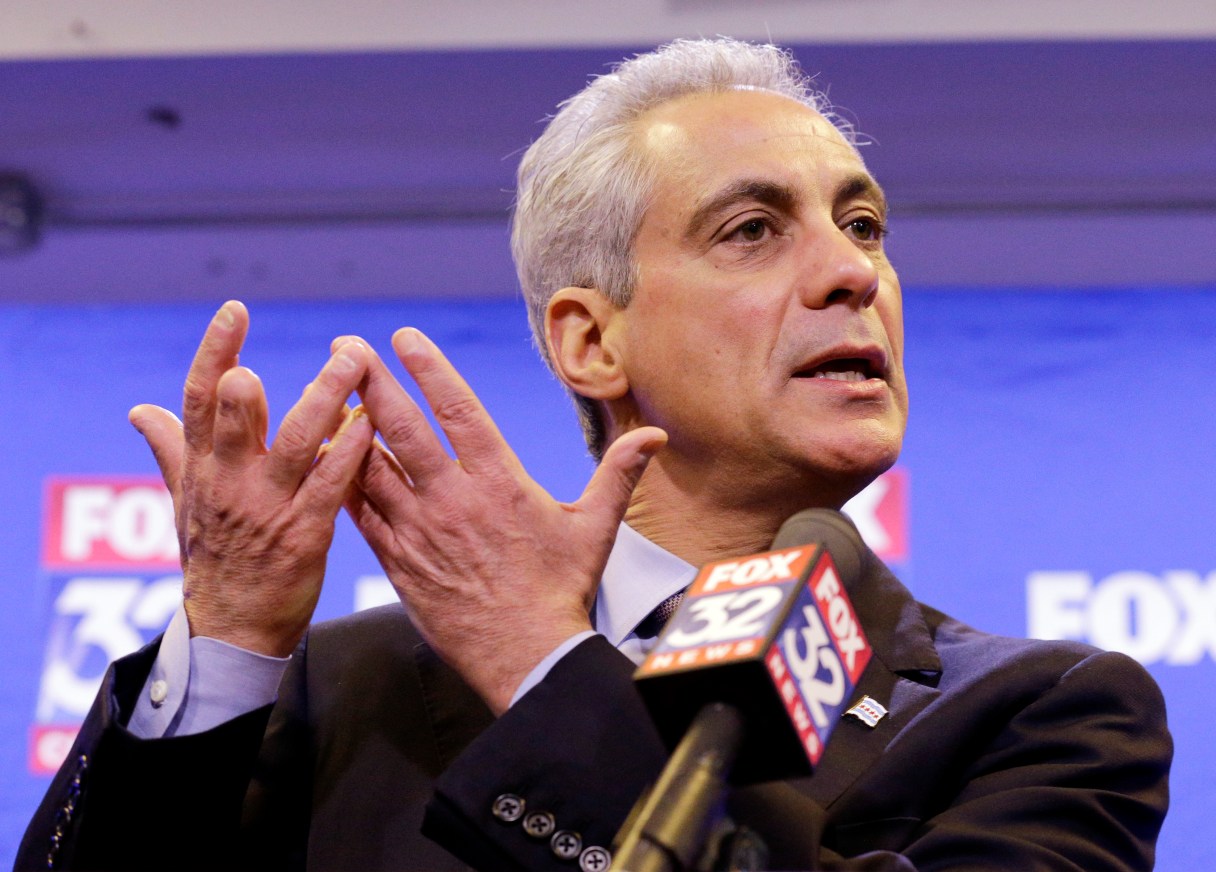
CHICAGO (AP) – A few years ago, violence on Chicago streets thrust a recently elected mayor into the national spotlight as shootouts in some of the city’s most troubled neighborhoods fueled nearly constant bloodshed.
Rahm Emanuel spent nearly $200 million over two years to flood those streets with police working overtime. His police department also collected a trove of information about individual gang members and set up meetings between gang members and the parents of homicide victims to illustrate the high human cost of gunfire.
Since then, the city’s overall violence has declined, but the number of slayings in some minority neighborhoods actually jumped. And while police boast of historic drops in the homicide rate, many frustrated families in those areas say their communities have seen little to no improvement or have actually deteriorated.
“It’s worse,” said Anthony Jackson, a 62-year-old retired maintenance man as he made his way to his home in the heart of a neighborhood that last year saw a dramatic spike in homicides – to about half the number of the entire city of Washington, D.C. “We’re just out here on our own.”
The stubborn violence contributes to the mayor’s overall challenge in his bid for a second term and puts him in the somewhat awkward position of simultaneously touting his success against crime while acknowledging that much more needs to be done.