
 Roxann Larson, president of the residents association at Dogwood Manor.
Some Dogwood Manor residents are so upset at its resident council president that they are circulating a petition to have her removed.
Dogwood Manor Resident Council President Roxann Larson told the Times Free Press last week that some units in the public housing complex had bedbugs. Officials with the Chattanooga Housing Authority, which manages the West Side facility for the city, confirmed that seven apartments in the 136-unit site had been treated for bedbugs. At least one apartment was treated as late as September.
However, some Dogwood Manor residents said the information should not have been made public, that the building is not infested with bedbugs and that the article harmed the reputation of everyone who lives there.
Jeanette Johnson, a Dogwood Manor resident of three years, started a petition on Monday to have Larson and the entire resident council removed. Johnson reported having 40 signatures by 5 p.m. Monday and said her goal is to collect 65 signatures.
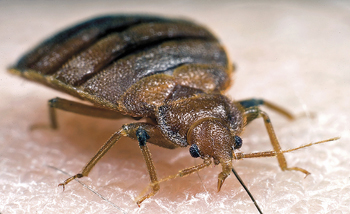 This 2006 photograph depicted a frontal view of an adult bed bug, Cimex lectularius, as it was in the process of ingesting a blood meal from the arm of a “voluntary” human host.
Bed bugs are not vectors in nature of any known human disease. Although some disease organisms have been recovered from bed bugs under laboratory conditions, none have been shown to be transmitted by bed bugs outside of the laboratory. Bed bug bites are difficult to diagnose due to the variability in bite response between people, and due to the change in skin reaction for the same person over time. It is best to collect and identify bed bugs to confirm bites. Bed bugs are responsible for loss of sleep, discomfort, disfiguring from numerous bites and occasionally bites may become infected. The common bed bug C. lectularius is a wingless, red-brown, blood-sucking insect that grows up to 7 mm in length and has a lifespan from 4 months up to 1 year. Bed bugs hide in cracks and crevices in beds, wooden furniture, floors, and walls during the daytime and emerge at night to feed on their preferred host, humans.
Bed bug bites can result in clinical manifestations; the most common are small clusters of extremely pruritic, erythematous papules or wheals that represent repeated feedings by a single bed bug. Less common but more severe manifestations include grouped vesicles, giant urticaria, and hemorrhagic bullous eruptions. Bites should be managed symptomatically with topical emollients, topical corticosteroids, oral antihistamines, or some combination of these treatments.