
Thursday, October 29, 2026Oct 29

This story is free to read.

Abcarian: Clarence Thomas as the voice of reason in the federal cannabis debate?

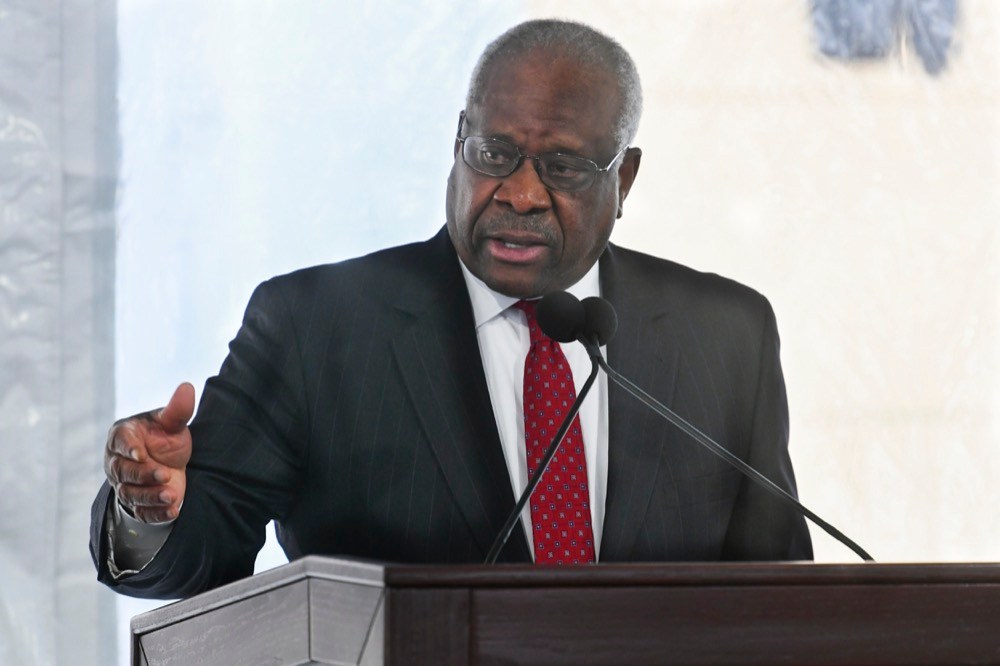
Supreme Court Justice Clarence Thomas delivers a keynote speech during a dedication of Georgia new Nathan Deal Judicial Center Tuesday, Feb. 11, 2020, in Atlanta. The center is named for a former governor and is the first state building in the history of Georgia that is devoted entirely to the judiciary. (AP Photo/John Amis)
Supreme Court Justice Clarence Thomas delivers a keynote speech during a dedication of Georgia new Nathan Deal Judicial Center Tuesday, Feb. 11, 2020, in Atlanta. The center is named for a former governor and is the first state building in the history of Georgia that is devoted entirely to the judiciary. (AP Photo/John Amis) Supreme Court Justice Clarence Thomas delivers a keynote speech during a dedication of Georgia new Nathan Deal Judicial Center Tuesday, Feb. 11, 2020, in Atlanta. The center is named for a former governor and is the first state building in the history of Georgia that is devoted entirely to the judiciary. (AP Photo/John Amis)

I was not expecting Supreme Court Justice Clarence Thomas to be the voice of reason on the federal government’s continuing and inane classification of cannabis as a dangerous drug with no currently accepted medical use.

But there he was late last month, the author of a five-page statement accompanying the court’s decision to turn down an appeal from a medical marijuana dispensary in Colorado.

The dispensary has challenged a provision in the tax code that prohibits businesses that “traffic in controlled substances” from deducting ordinary business expenses from their taxable income. Although the court did not take the case, Thomas had some choice words for the government’s illogical approach to pot.

“The Federal Government’s current approach is a half-in, half-out regime that simultaneously tolerates and forbids local use of marijuana,” Thomas wrote. “This contradictory and unstable state of affairs strains basic principles of federalism and conceals traps for the unwary.”

The case at hand, he wrote, “is a prime example.”