
Monday, November 16, 2026Nov 16

As Chinese yuan falls more, some see little cause for alarm

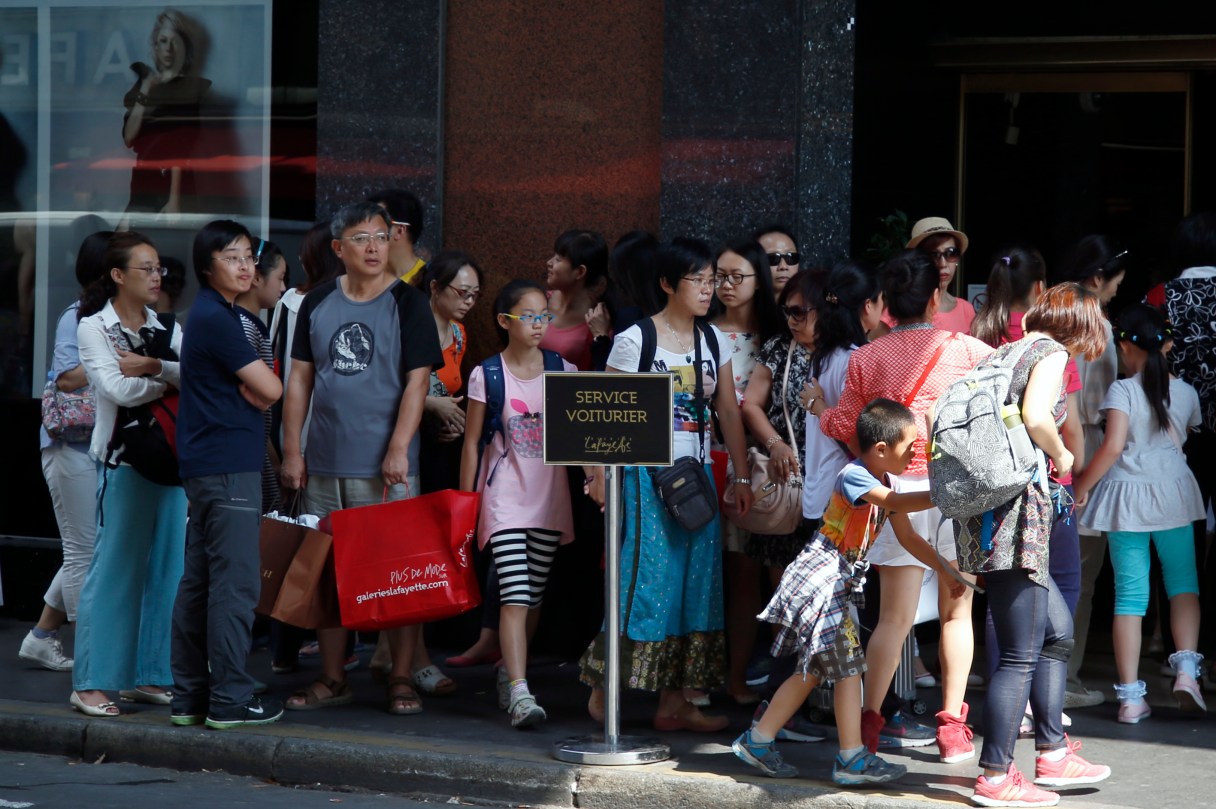
Chinese tourists queue to enter in a fashion store in Paris,  Wednesday, Aug. 12, 2015. China's currency fell further Wednesday following a surprise change in its exchange rate mechanism that rattled global markets and threatens to fan trade tensions with the United States and Europe. The central bank said the yuan's 1.9 percent devaluation Tuesday against the U.S. dollar, which was its biggest one-day fall in a decade, was due to changes aimed at making the tightly controlled currency more market-oriented. (AP Photo/Francois Mori)
Chinese tourists queue to enter in a fashion store in Paris, Wednesday, Aug. 12, 2015. China's currency fell further Wednesday following a surprise change in its exchange rate mechanism that rattled global markets and threatens to fan trade tensions with the United States and Europe. The central bank said the yuan's 1.9 percent devaluation Tuesday against the U.S. dollar, which was its biggest one-day fall in a decade, was due to changes aimed at making the tightly controlled currency more market-oriented. (AP Photo/Francois Mori)

WASHINGTON (AP) – A free-falling Chinese currency could make China’s goods cheaper for foreigners, squeeze Western companies, discourage Chinese tourism, increase China’s exports and complicate the Federal Reserve’s decision on whether to raise American interest rates.

If the yuan keeps falling, that is.

The Chinese currency sank again Wednesday, a day after Beijing engineered the biggest one-day decline in the yuan in a decade.

Behind the yuan’s fall is a worrisome backdrop: The Chinese economy is decelerating. Growth for 2015 is expected to be the slowest since 1990. Fearful Chinese investors are moving money abroad, thereby depressing the yuan. By devaluing its currency, Beijing was in some ways merely catching up with the market’s sentiment.

Though some economists fear Beijing’s move may trigger an uncontrollable fall in the yuan – one that could destabilize the global economy – others see little need to worry: They note that Beijing could tap nearly $3.7 trillion in foreign reserves to stop a free-fall if it felt the need to do so. Few doubt that China would intervene if necessary.