
Friday, October 30, 2026Oct 30

This story is free to read.

What we know so far about problems at the tallest US dam

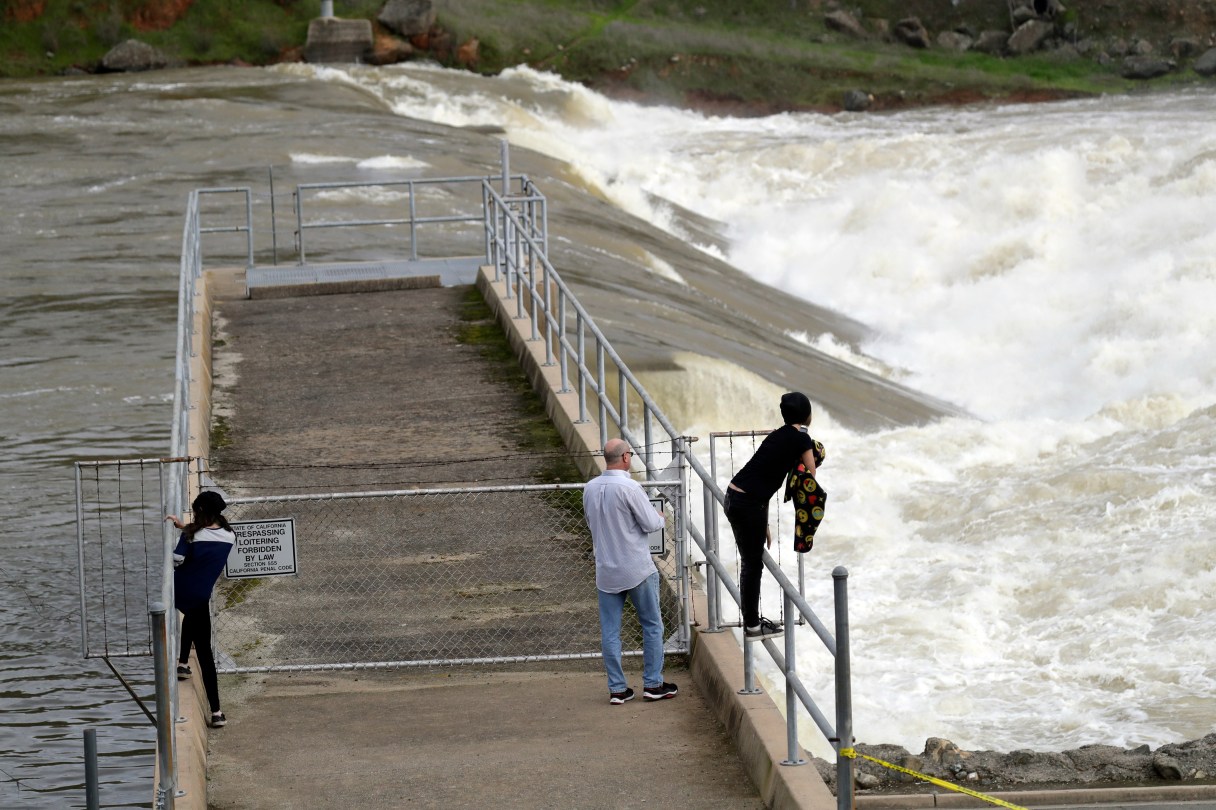
People watch the gushing waters of the Feather River from the town's fish hatchery a day after an evacuation was lifted Wednesday, Feb. 15, 2017, in Oroville, Calif. Authorities say the immediate danger has passed and allowed people living downstream of the Oroville Dam to go back home Tuesday after ordering an evacuation Sunday. But new storms forecast to hit Northern California this week will test quick repairs to the dam.  (AP Photo/Marcio Jose Sanchez)
People watch the gushing waters of the Feather River from the town's fish hatchery a day after an evacuation was lifted Wednesday, Feb. 15, 2017, in Oroville, Calif. Authorities say the immediate danger has passed and allowed people living downstream of the Oroville Dam to go back home Tuesday after ordering an evacuation Sunday. But new storms forecast to hit Northern California this week will test quick repairs to the dam. (AP Photo/Marcio Jose Sanchez) People watch the gushing waters of the Feather River from the town's fish hatchery a day after an evacuation was lifted Wednesday, Feb. 15, 2017, in Oroville, Calif. Authorities say the immediate danger has passed and allowed people living downstream of the Oroville Dam to go back home Tuesday after ordering an evacuation Sunday. But new storms forecast to hit Northern California this week will test quick repairs to the dam. (AP Photo/Marcio Jose Sanchez)

It’s been more than a week since engineers at the nation’s tallest dam noticed damage to an emergency spillway, starting a series of events that culminated with the two-day evacuation of nearly 200,000 California residents downstream from Oroville Dam.

Here’s what we know:

___

THE DAM

It straddles the Feather River about 70 miles north of Sacramento in rural Northern California. Construction was completed in 1968, creating Lake Oroville behind it. The lake is a major water supplier for farmers in the agricultural-rich Central Valley and Southern California residents.