
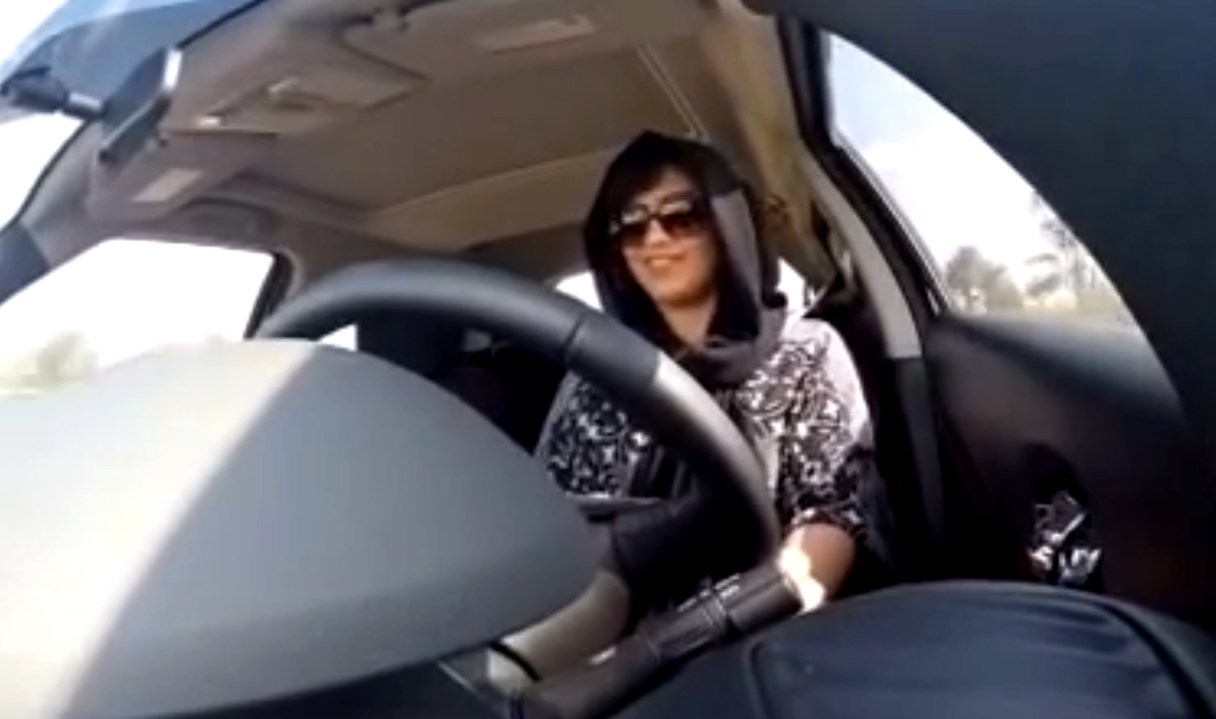
DUBAI, United Arab Emirates (AP) – Two Saudi women detained for nearly a month in defiance of a ban to keep females from driving were referred on Thursday to a court established to try terrorism cases, several people close to the defendants said.
Activists said it marks the first time that women drivers have been referred to the Specialized Criminal Court in Riyadh, and that their detention is the longest of female drivers in Saudi history.
Those close to Loujain al-Hathloul, 25, and Maysa al-Amoudi, 33, said the women are not being charged for defying the driving ban but for opinions they voiced online. They declined to elaborate on the specific charges due to the sensitivity of the case. All spoke anonymously for fear of government reprisal.
They told The Associated Press that the women’s defense lawyers immediately appealed the judge’s decision to transfer their cases to the court, which was established to try terrorism cases but has also been used to try peaceful dissidents and activists.
Human Rights Watch recently warned that “Saudi authorities are ramping up their crackdown on people who peacefully criticize the government on the Internet.” It said that judges and prosecutors are using “vague provisions of a 2007 anti-cybercrime law to charge and try Saudi citizens for peaceful tweets and social media comments.”