
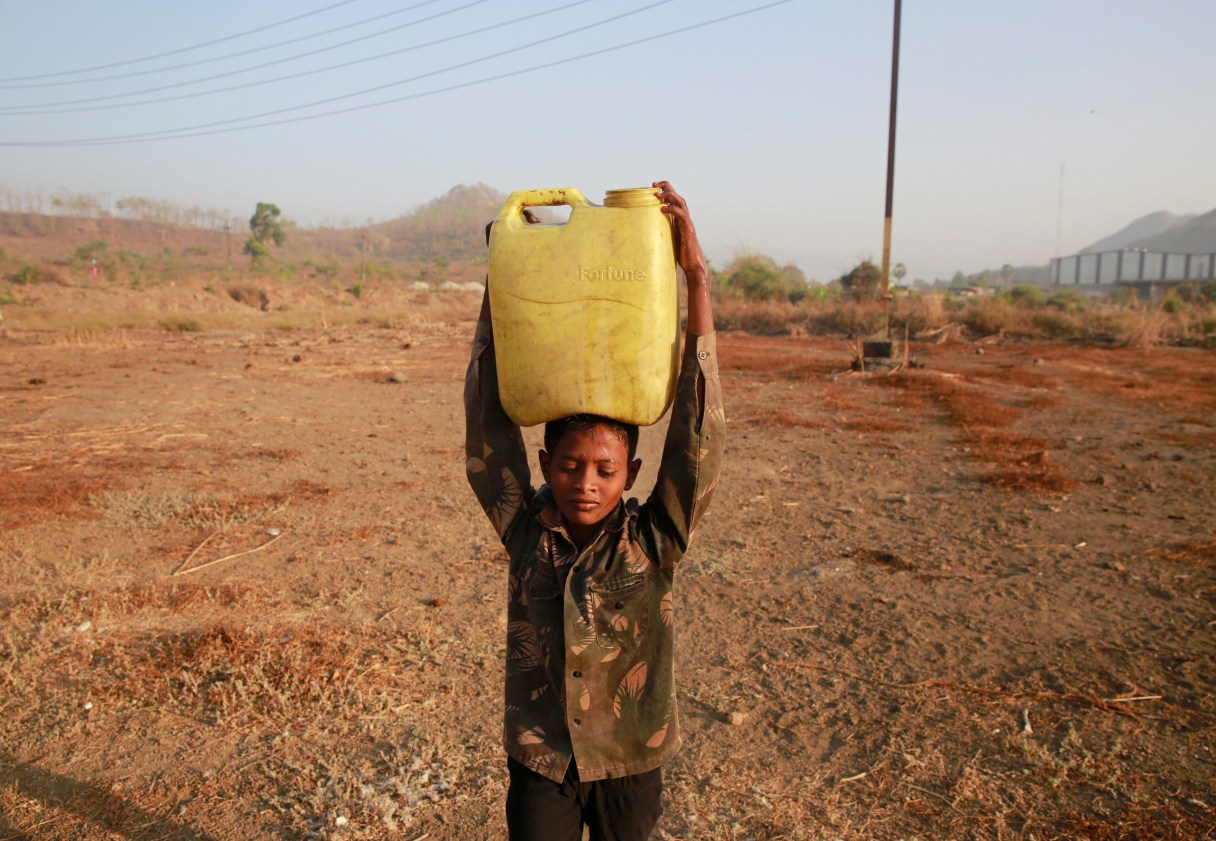
SHAHAPUR, India (AP) – Shantabai Babulkar’s day begins before dawn with a 5 kilometer (3 mile) trek across barren fields and dusty scrubland to fetch water from a distant well for her family.
The two metal pots of muddy water that Babulkar, 58, balances on her head and a third that she carries in the crook of her arm are the only source of water for her and the five members of her family for their day’s needs of drinking, cooking and washing.
Shahapur, Babulkar’s village, in the western Indian Maharashtra state’s Thane district, is in the grips of one of the worst droughts in decades. Parched fields, burnt crops and wasted cattle have seen a spike in suicides by distressed farmers unable to repay their loans. Tens of thousands of others have left their farms and along with their families moved in search of jobs to join the ranks of the unemployed poor in the cities.
The vast Indian hinterland has long faced water shortages, especially in the torrid months from April to June, before the monsoon rains bring some relief. The showers, which normally run from June to September, are crucial in a country where 60 percent of the population works in agriculture and less than half the farmland is irrigated. But decades of abuse of groundwater resources, flawed water policies and successive poor monsoons have turned large parts of central India into an arid dust bowl.
Hundreds of millions of people in at least 13 states are reeling from severe drought, a situation that is expected to worsen in the coming months. Last month, a thermal power station in West Bengal had to shut for 10 days because it ran out of water to cool the coal-fired plant’s heating pipes.