
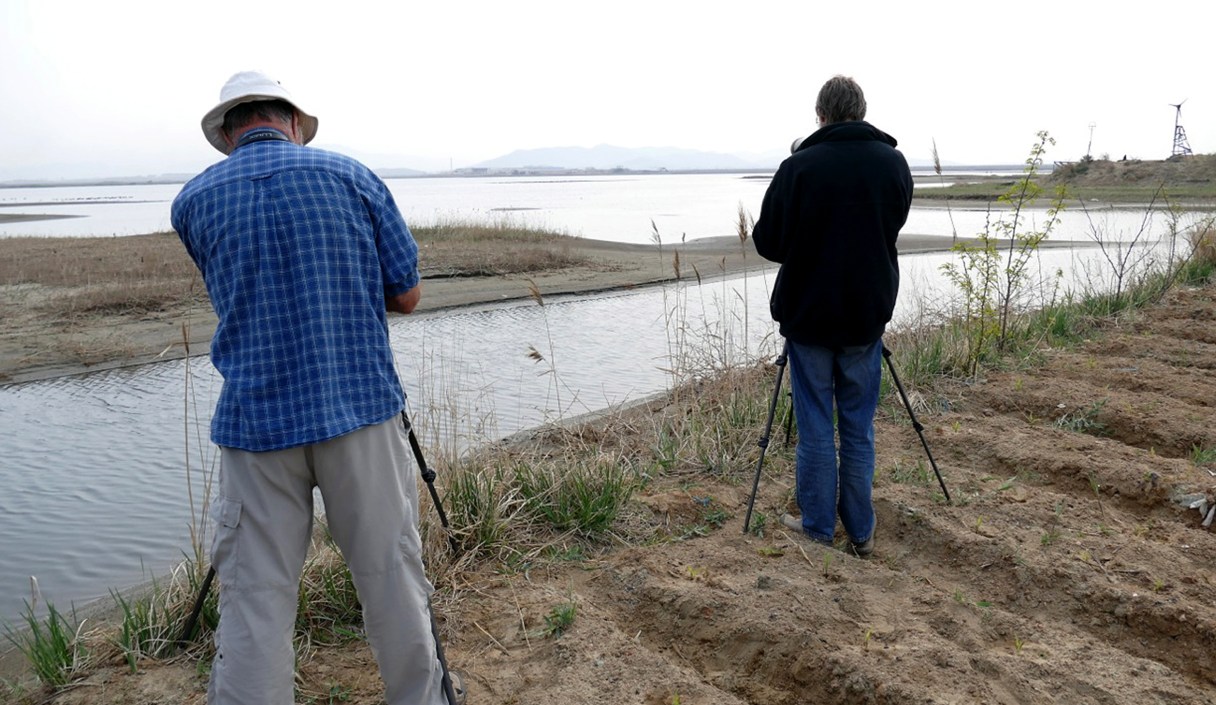
TOKYO (AP) – To the untrained eye, it’s just a lot of birds on an otherwise deserted stretch of muddy, flat coastline. But for ornithologists, North Korea’s west coast is a little piece of paradise each spring – and both the birds and a dedicated group of birdwatchers travel a long way to get there.
While North Korea is wary of letting foreigners inside its borders, a recent trip by a New Zealand research team to the mudflats near Nampo, southwest of the capital, Pyongyang, underscores some tentative but significant progress by outside scientists to conduct small-scale research projects – as long as they don’t rub up against sensitive topics and are seen as useful to North Korea itself.
Last year, for example, an international team of scientists was allowed to set up seismographs and other equipment to monitor ominous activity on Mount Paektu, a huge volcano that straddles North Korea’s border with China.
In typical North Korean style, the New Zealand ornithologists were told not to take photos of the birds in some places. Their mobile phone and computer access was also partly restricted. But the researchers say that overall, the trip went smoothly.
“They took us where we needed to go,” team member Keith Woodley, who is now back in New Zealand, told The Associated Press by phone. “They evaluate the places we need to go and they make it happen. It’s very good cooperation.”