
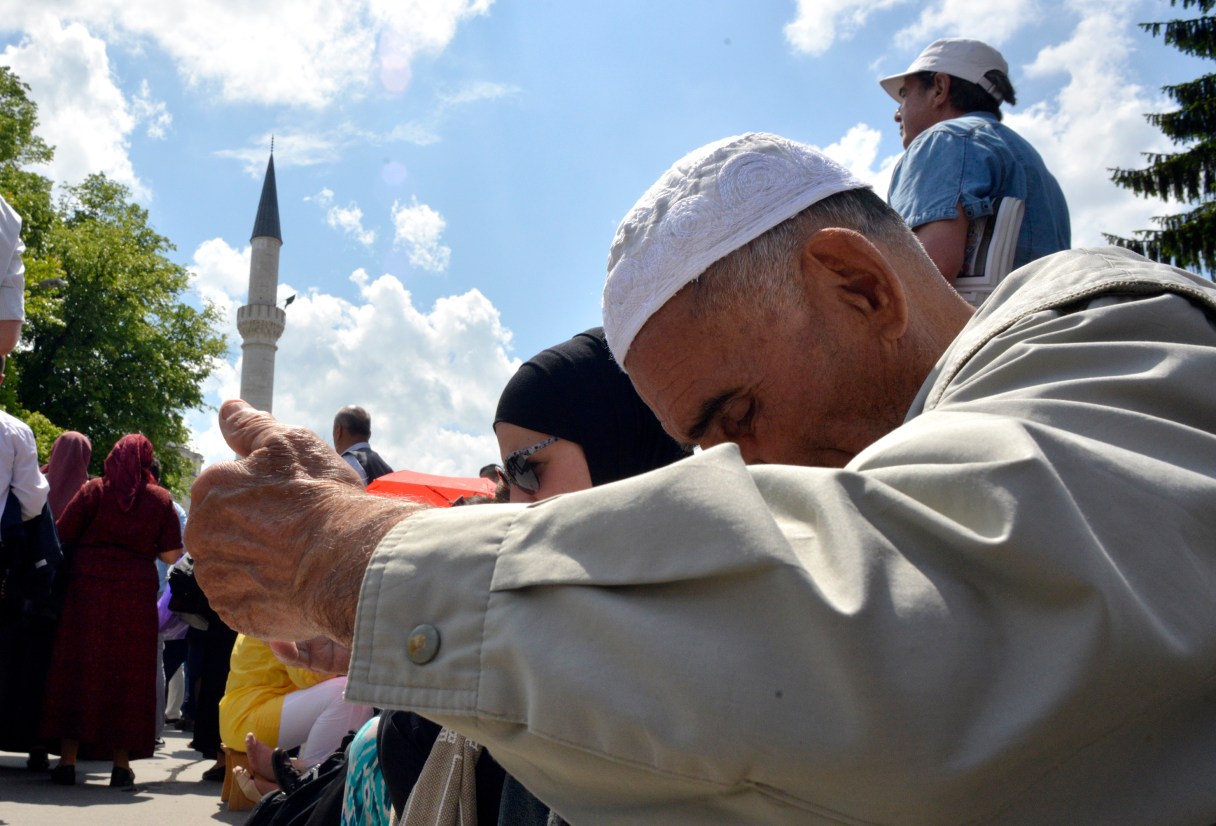
BANJA LUKA, Bosnia-Herzegovina (AP) – Over 10,000 people turned out Saturday for the re-opening of a mosque in Bosnia that was blown up by Christian Orthodox Serbs during the 1992-1995 war and that became a symbol of the effort to destroy Bosnia’s centuries-long multireligious fabric.
The Ferhat Pasha mosque – also called Ferhadija – was a masterpiece of 16th-century Ottoman architecture and one of the 16 mosques in Banja Luka – or one of the 534 throughout the country – that were destroyed or damaged by Bosnian Serbs in order to erase any traces of those they were expelling or killing.
Their aim was to make that part of Bosnia a apart of neighboring Serbia.
The so-called “ethnic cleansing” project, also targeting Roman Catholic Croats and other non-Serbs, included expelling people from their homes, looting their property, killing some and putting others in concentration camps.
The destruction of their heritage was an essential part of the plan, aimed also at discouraging survivors from returning.