
Friday, October 30, 2026Oct 30

This story is free to read.

Ebola in mind, US colleges screen some students

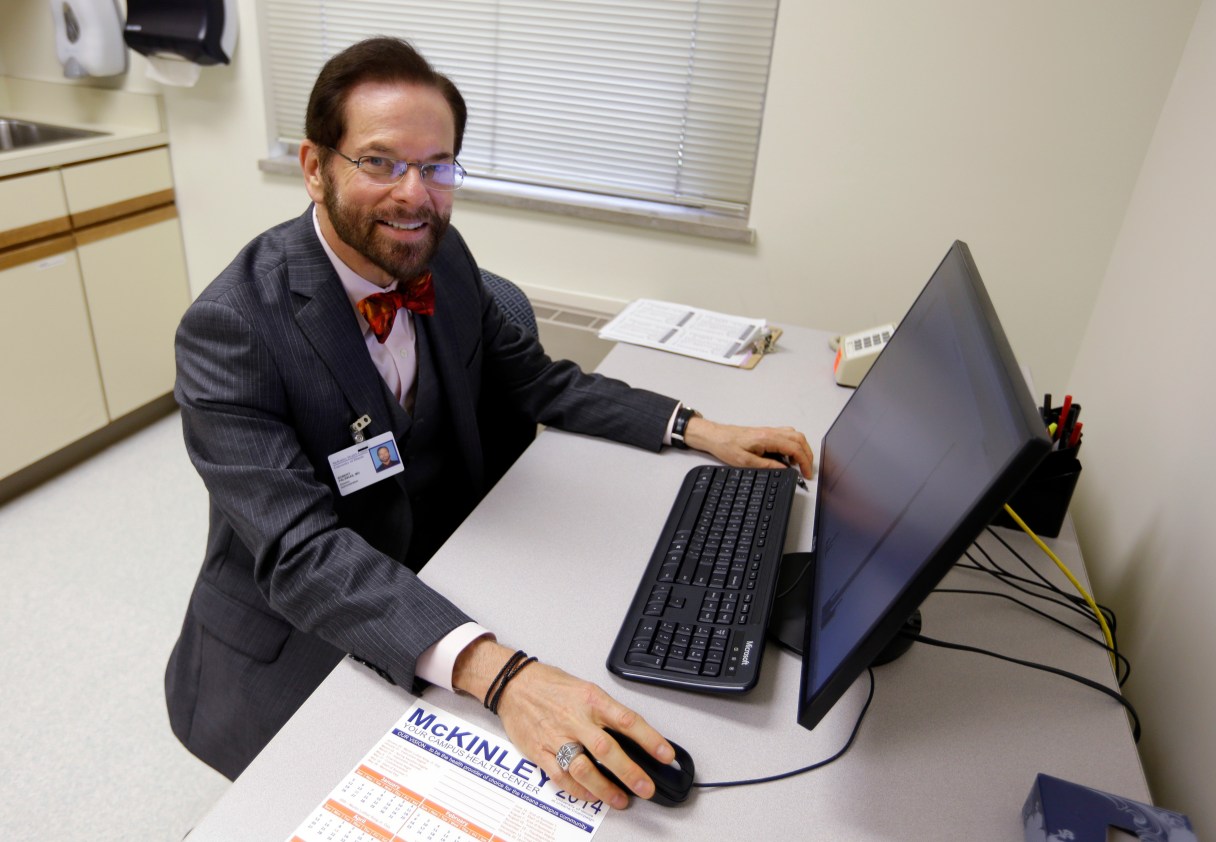
Dr. Robert Palinkas, director of the McKinley Health Center at the University of Illinois, poses in an exam room in Urbana, Ill., Thursday, Aug. 21, 2014. Extra health checks are part of protocols campuses throughout the United States have in place as they prepare for as many as 10,000 students from Nigeria, Guinea, Liberia and Sierra Leone, where more than 1,000 people have died in the worst Ebola outbreak in history. (AP Photo/Michael Conroy)
Dr. Robert Palinkas, director of the McKinley Health Center at the University of Illinois, poses in an exam room in Urbana, Ill., Thursday, Aug. 21, 2014. Extra health checks are part of protocols campuses throughout the United States have in place as they prepare for as many as 10,000 students from Nigeria, Guinea, Liberia and Sierra Leone, where more than 1,000 people have died in the worst Ebola outbreak in history. (AP Photo/Michael Conroy) Dr. Robert Palinkas, director of the McKinley Health Center at the University of Illinois, poses in an exam room in Urbana, Ill., Thursday, Aug. 21, 2014. Extra health checks are part of protocols campuses throughout the United States have in place as they prepare for as many as 10,000 students from Nigeria, Guinea, Liberia and Sierra Leone, where more than 1,000 people have died in the worst Ebola outbreak in history. (AP Photo/Michael Conroy)

BUFFALO, N.Y. (AP) – College students from West Africa may be subject to extra health checks when they arrive to study in the United States as administrators try to insulate their campuses from the worst Ebola outbreak in history.

With the virus continuing to kill in Guinea, Liberia, Sierra Leone and Nigeria, the expected arrival of thousands of students from those countries has U.S. authorities on alert but cautioning against alarm.

“I can see why there would be concern; there’s no vaccine for it,” said Fatima Nor, an 18-year-old freshman at the University at Buffalo, where about 25 students from Nigeria are enrolled for fall. But she said knowing that the virus is transmitted strictly through direct contact with bodily fluids of sick people, and not by sitting next to someone in class, should be enough to calm nerves.

“As long as everyone keeps their personal space, it should be OK,” said Nor, of Buffalo.

While the Centers for Disease Control and Prevention have issued no specific recommendations for colleges, some state health departments, including in South Carolina and North Dakota, have spelled out for administrators what symptoms to look for and how to react.