
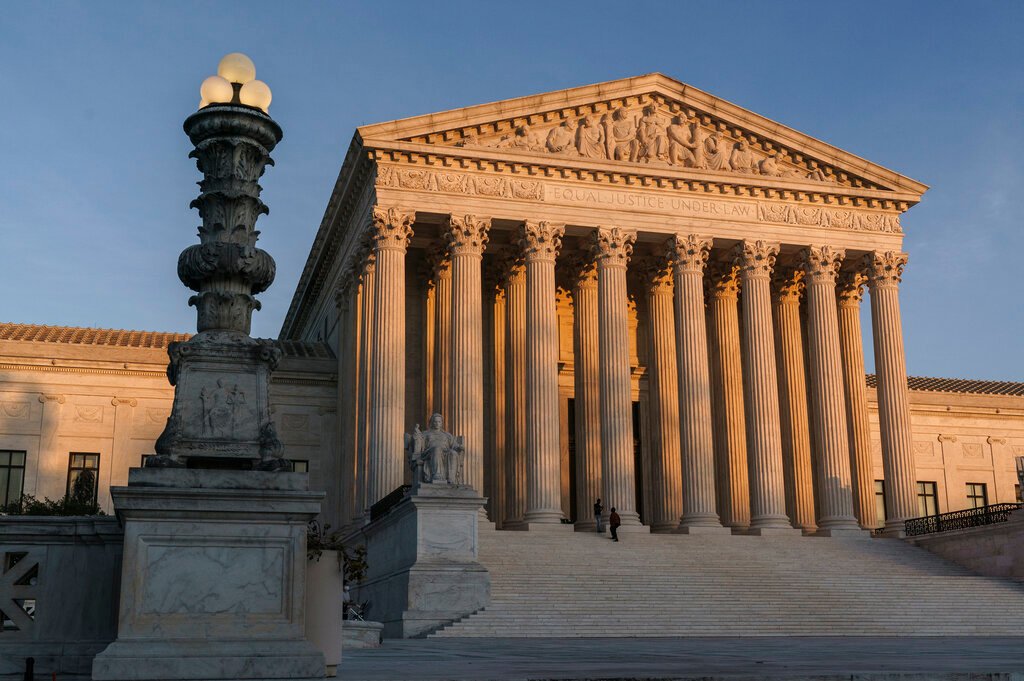
The three words that best describe the Supreme Court’s decisions this term are text, history and tradition. If that’s one word too many, try this: Originalism rules! And that’s a good thing.
The court considered several important constitutional cases this term. The split in most of these cases was 6-3, with the “conservative” justices in the majority and the “liberal” justices in dissent.
In the biggest case, Dobbs v. Jackson Women’s Health Organization, a five-justice majority ruled the Constitution has no right to obtain an abortion. This overturned Roe v. Wade (1973) and Planned Parenthood v. Casey (1992).
Nearly 50 years ago, Justice Byron White, in his Roe dissent, wrote that the errant ruling represented an “exercise of raw judicial power.” Similarly, John Hart Ely, an eminent scholar who supported abortion rights, stated that Roe was “not constitutional law and g(ave) almost no sense of an obligation to try to be.”
Those views were reflected in the majority opinion for Dobbs, written by Justice Samuel Alito. He noted that the right to an abortion is not in the Constitution’s text, nor was it part of our nation’s history or traditions. Indeed, virtually every state outlawed abortion when the Constitution and the 14th Amendment were ratified.