
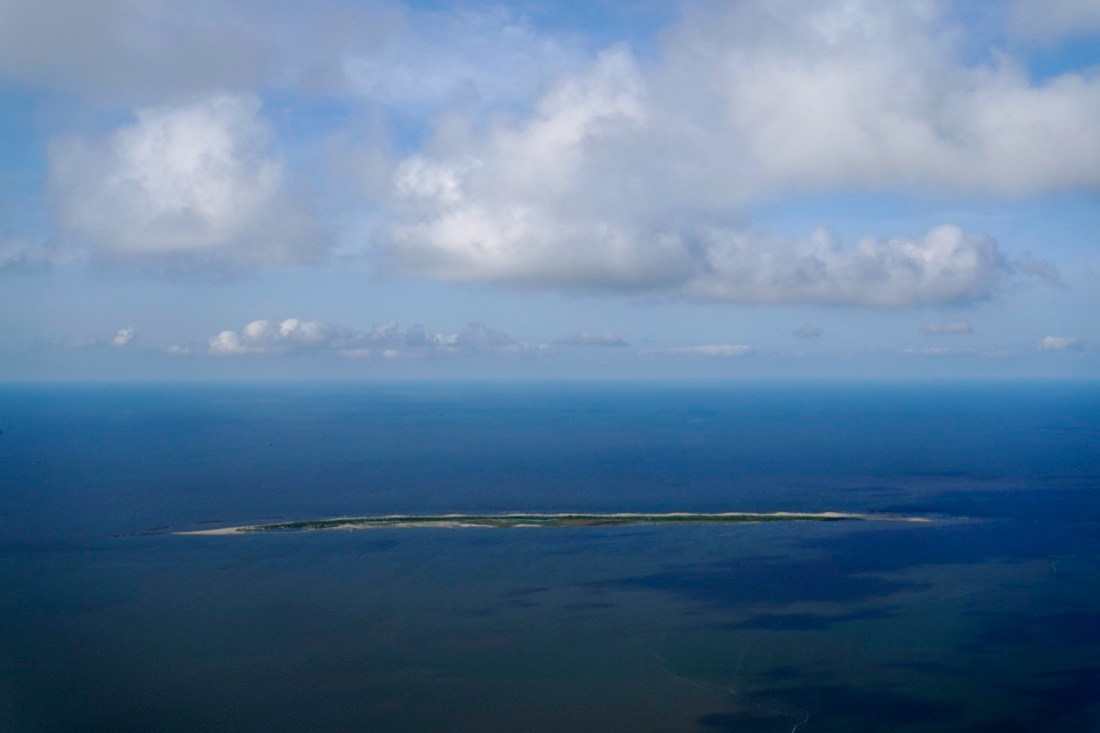
CHAUVIN, La. (AP) – Sliding off the side of her small boat, seabird biologist Bonnie Slaton wades through waist-high water, brown pelicans soaring overhead, until she reaches the shores of Raccoon Island.
During seabird breeding season, the place is a raucous symphony of noise and motion – and one of the few remaining refuges for the iconic pelicans.
The crescent-shaped island is the final sliver of land separating Louisiana from the Gulf of Mexico – a natural speed bump against storms that roll in from the sea. An hour’s boat ride from the mainland, the barrier island’s remoteness allows birds to nest on mangroves and sandy beaches a safe distance from most predators.
A dozen years ago, there were around 15 low-lying islands with nesting colonies of Louisiana’s state bird. But today, only about six islands in southeastern Louisiana harbor brown pelican nests – the rest have disappeared underwater.
“Louisiana is rapidly losing land,” said Slaton, a researcher at the University of Louisiana at Lafayette. “Subsidence and sea level rise are a double whammy.”